
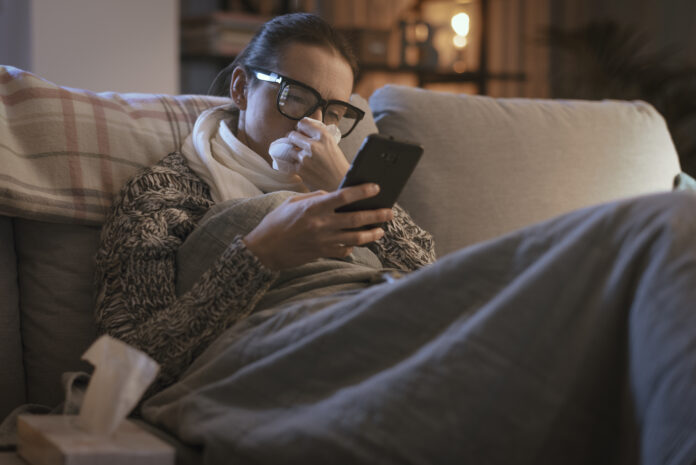
Blue light exposure after 8 PM can suppress melatonin production for up to three hours.
KEY STATISTICS
- Blue light exposure after sunset reduces melatonin by 22% within 90 minutes
- Adults aged 25-35 spend an average of 3.2 hours on screens after 7 PM
- Poor sleep quality affects 68% of young adults who use devices before bed
That Instagram scroll at 10 PM feels harmless, but your brain interprets your phone screen as daylight. Within 15 minutes of blue light exposure, your pineal gland begins shutting down melatonin production. The result is lying awake at midnight wondering why sleep won’t come.
How Blue Light Blocks Sleep
Blue light wavelengths between 400-490 nanometers directly suppress the pineal gland’s melatonin release. Your brain’s circadian rhythm relies on light cues to determine whether it’s day or night. When photosensitive retinal ganglion cells detect blue light, they send signals to the suprachiasmatic nucleus to halt melatonin synthesis.
This process happens remarkably fast. Even brief exposure to blue light can reduce melatonin levels by up to 50% within two hours. The suppression effect peaks around 460 nanometers, which is precisely the wavelength range emitted by smartphone screens.
Why Millennials Are Vulnerable
Adults in their late twenties and early thirties face unique sleep disruption risks from evening screen use. Career demands often push work emails and social media consumption into evening hours when melatonin should naturally rise. Your generation also grew up with technology, creating deeply ingrained habits of checking devices before bed.
Natural melatonin production begins declining in your early thirties. This makes your age group particularly vulnerable to external disruptions like blue light exposure. Combined with work stress and social obligations, evening screen time creates a perfect storm for chronic sleep deprivation.
Signs Your Melatonin Is Suppressed
- Taking longer than 30 minutes to fall asleep most nights
- Feeling tired but wired when lying in bed
- Waking up multiple times between 2-4 AM
- Needing caffeine after 2 PM to stay alert
- Feeling groggy despite getting 7-8 hours of sleep
Restore Your Natural Sleep Cycle
Creating a technology sunset dramatically improves natural melatonin production. Set all devices to night mode after 7 PM, reducing blue light emission by up to 80%. Better yet, establish a complete digital cutoff two hours before your target bedtime.
Physical environment changes amplify melatonin recovery. Install blackout curtains and replace bright overhead lights with warm-toned lamps after sunset. Keep your bedroom temperature between 65-68°F, as cooler environments support natural melatonin release.
Morning light exposure helps reset your circadian rhythm. Spend 15-20 minutes outside within an hour of waking, even on cloudy days. This natural light exposure reinforces your body’s day-night cycle.
Your Digital Sunset Protocol
- Enable night mode on all devices after 7 PM
- Stop all screen use 2 hours before bedtime
- Use amber-tinted glasses if evening screen use is unavoidable
- Replace bright bedroom lighting with warm LED bulbs
- Get 15 minutes of morning sunlight within one hour of waking
The Temperature Sleep Connection
Room temperature plays a crucial but overlooked role in melatonin optimization. Your core body temperature naturally drops 1-2 degrees as melatonin rises, signaling sleep readiness. Keeping your bedroom too warm disrupts this natural cooling process.
Even small temperature increases can interfere with melatonin effectiveness. A room temperature above 70°F can reduce sleep quality by up to 15%, even when melatonin levels are adequate. Cool environments actually enhance melatonin’s sleep-promoting effects.
Bottom Line
Evening blue light exposure creates a domino effect that disrupts your entire sleep-wake cycle. Simple changes like digital sunsets and cooler bedrooms can restore natural melatonin production within days. Your phone’s convenience isn’t worth the cascade of health problems that follow poor sleep.
Always consult a qualified healthcare provider before making changes to your health routine.
Sources
- Light exposure at night disrupts circadian rhythms and melatonin production — Harvard Health Publishing
- Blue light exposure and sleep quality in young adults — Journal of Clinical Medicine
- Evening use of light-emitting devices negatively affects sleep — Proceedings of the National Academy of Sciences

