
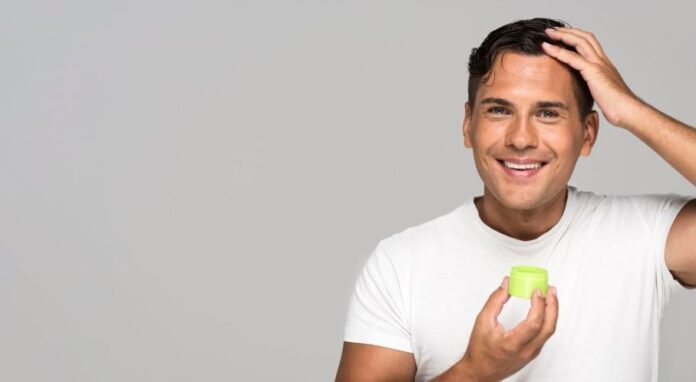
The endocrine-disrupting chemicals hiding in your favourite styling products may be quietly reshaping your gut microbiome — and your health.
KEY STATISTICS
- A 2021 study in Environmental Health Perspectives found that parabens and phthalates — common hair product ingredients — were detectable in the bloodstream within hours of skin application.
- Research published in Gut Microbes found that exposure to endocrine-disrupting chemicals (EDCs) significantly altered microbial diversity in human gut samples, reducing populations of beneficial Lactobacillus and Bifidobacterium strains.
- The Environmental Working Group estimates that the average person applies 9 personal care products daily, exposing themselves to over 120 unique chemical ingredients before 9am.
You read food labels carefully, choose organic where you can, and try to eat enough fibre. But there is a good chance you are absorbing gut-disrupting chemicals every single morning — and they are coming from your bathroom shelf, not your kitchen. The styling products many people apply daily, particularly gels and creams marketed for curly or textured hair, frequently contain parabens, phthalates, and synthetic fragrances that your skin absorbs far more efficiently than most people realise.
How Scalp Absorption Works
Your skin is not a barrier in the way most people imagine. It is a permeable membrane, and chemicals applied to the scalp — one of the most absorbent areas of the body — can enter systemic circulation within hours.
Once in the bloodstream, compounds like parabens and phthalates behave as endocrine disruptors. They mimic or block hormonal signals, interfering with the body’s chemical communication system in ways that extend well beyond reproduction.
The gut connection is where things get particularly relevant. Your gut microbiome is exquisitely sensitive to hormonal signals. Oestrogen receptors exist throughout the gastrointestinal tract, and when synthetic oestrogen-mimicking compounds flood the system, they can alter which bacterial strains survive and thrive.
Studies have found that EDC exposure is associated with reduced microbial diversity — a marker consistently linked to inflammation, poor digestion, weakened immunity, and mood disruption. The gut does not distinguish between a chemical from food and one absorbed through your scalp.
Why Your 20s and 30s Matter
Adults between 25 and 35 are in a particularly vulnerable window. This is the decade when hormone systems are operating at high capacity — fertility, metabolism, thyroid function, and stress response are all tightly regulated by hormonal balance.
Introducing synthetic hormone-mimicking compounds during this period creates a low-grade interference that accumulates over time. Unlike a single toxic exposure, daily application of these products means the body never fully clears the chemical load.
This age group also tends to use more styling products more consistently than older adults. Trends around curl care, textured hair routines, and multi-step styling have created longer ingredient lists and more frequent scalp contact — increasing cumulative exposure significantly.
Additionally, many people in this age group are planning for pregnancy or managing hormonal health conditions like PCOS or endometriosis, both of which involve oestrogen sensitivity. EDC exposure adds complexity to these already delicate systems.
Warning Signs to Watch For
- Unexplained bloating or digestive discomfort that is not clearly linked to specific foods
- Increased skin sensitivity, breakouts, or rashes appearing on the scalp or neck after product use
- Hormonal irregularities such as cycle disruption, mood swings, or unexplained fatigue
- Persistent gut symptoms — loose stools, constipation, or alternating patterns — with no clear dietary cause
- Brain fog or low energy that worsens in the mornings, following your grooming routine
What Actually Helps
Switching products is the most direct action, but understanding what to look for matters more than chasing a clean-beauty label. Many products marketed as natural still contain synthetic fragrances, which are classified as trade secrets and can legally contain hundreds of undisclosed chemical compounds.
Look specifically for products that declare fragrance-free status, not just unscented. Unscented can mean masking chemicals were added to neutralise a smell — fragrance-free means none were used at all.
Supporting your gut barrier directly also helps. A diet high in diverse plant fibres — at least 30 different plant foods per week, according to research from the American Gut Project — builds microbial resilience that can better withstand low-level chemical stressors.
Fermented foods like kefir, kimchi, and plain yoghurt have been shown to increase microbial diversity markers in clinical trials. They will not neutralise EDC exposure, but they do strengthen the gut environment that those chemicals are disrupting.
Action Plan Checklist
- Audit your hair products: check ingredient lists for parabens (methylparaben, propylparaben), phthalates (often listed as ‘fragrance’), and synthetic preservatives like DEHP
- Replace high-risk products gradually — start with leave-in products that stay on the scalp longest, as these have the highest absorption potential
- Choose certified fragrance-free alternatives and verify claims using the Environmental Working Group’s Skin Deep database
- Add 2–3 servings of fermented foods per week to actively support gut microbiome recovery and diversity
- Eat 30+ different plant foods weekly — varied fibres feed different bacterial strains and improve overall microbiome resilience against environmental stressors
The Heat Styling Factor
There is one factor that amplifies EDC absorption that almost nobody talks about: heat. Blow-drying immediately after applying a product that contains endocrine disruptors significantly increases the rate at which those compounds penetrate the scalp.
Heat opens hair follicles and dilates the blood vessels beneath the scalp, accelerating absorption into systemic circulation. If you use a diffuser, hooded dryer, or any heat tool after applying a gel or cream, your exposure window multiplies.
This does not mean you need to air-dry exclusively. But if you are transitioning to cleaner products, prioritise replacing the ones you use before heat styling first. That single swap reduces your highest-absorption exposure event of the day.
Bottom Line
Your gut health is not shaped only by what you eat — it is shaped by everything your body absorbs, including what you apply to your skin and scalp. Switching to fragrance-free, paraben-free styling products is a small, practical change that reduces one consistent source of chemical interference your gut microbiome does not need. Pair that with a more diverse diet and you are working on two fronts at once.
Always consult a qualified healthcare provider before making changes to your health routine.
Sources
- Phthalate and paraben exposure via personal care products and systemic absorption — Environmental Health Perspectives
- Endocrine-disrupting chemicals and gut microbiota composition: a review of human and animal data — Gut Microbes
- Skin absorption of chemicals: scalp vs body site differences — Journal of Investigative Dermatology
- American Gut Project: diet diversity and microbiome richness in adult populations — mSystems — American Society for Microbiology
- Fragrance ingredients in personal care products: regulatory gaps and consumer exposure — Environmental Working Group — Skin Deep Database

