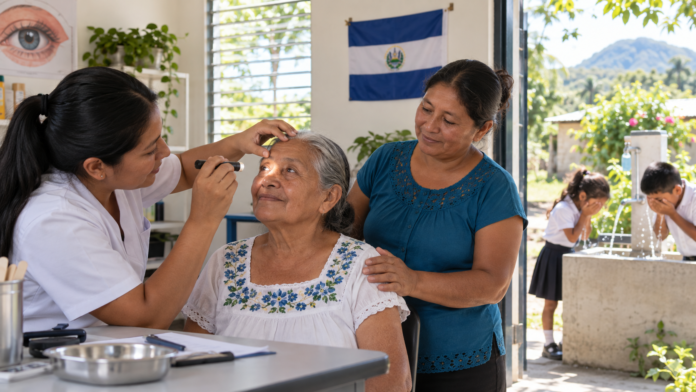
*How one nation eliminated the world’s leading infectious eye disease—and what it means for global health*
KEY STATISTICS
- Trachoma is the world’s leading infectious cause of blindness, yet most people have never heard of it.
- El Salvador has been validated by the WHO as having eliminated trachoma as a public health problem.
- Early detection and basic hygiene interventions can prevent trachoma-related vision loss.
You’ve probably never heard of trachoma. That’s partly because it’s rare in wealthy countries—but it’s also partly because it quietly steals sight from people across the developing world, often without fanfare or attention. Recently, El Salvador became the latest nation to officially eliminate trachoma as a public health threat, a milestone validated by the World Health Organization.
This quiet victory reveals something important about infectious disease: prevention works, and sometimes it’s simpler than we think.
What Trachoma Actually Does
Trachoma is a bacterial eye infection caused by Chlamydia trachomatis. It starts as mild inflammation but can progress to scarring and blindness if left untreated or repeatedly re-infected. Understanding how it damages vision helps explain why elimination is possible.
- Bacterial infection inflames the inner eyelid, causing discomfort and crusting; repeated infections scar eyelid tissue permanently.
- Scarring pulls the eyelid inward, causing lashes to scratch the cornea—this process, called trichiasis, leads to blindness over years.
- Early-stage trachoma responds well to antibiotics; advanced scarring cannot be reversed, making prevention and early treatment critical.
- The infection spreads through contact with eye and nose secretions, especially among children in crowded or unsanitary conditions.
Why Your Age Group Matters
Adults aged 25 to 35 aren’t typically at high risk for trachoma in developed nations, but understanding this disease matters for global health awareness and travel. If you work internationally or have family connections to endemic regions, awareness can help protect yourself and others.
- Trachoma mostly affects children under five in endemic areas; adults in your age group are more likely to have acquired immunity.
- If you travel to or work in regions where trachoma persists, basic hygiene and clean water access reduce infection risk significantly.
- Healthcare workers and volunteers in developing regions benefit from knowing early warning signs in patients they encounter.
- Understanding disease elimination success stories like El Salvador’s builds appreciation for global health infrastructure you may take for granted.
Signs to Watch For
- Persistent eye redness, itching, or crusting that doesn’t resolve within a few days.
- Discharge from the eye that is thick, cloudy, or purulent (pus-like).
- Light sensitivity or blurred vision developing over weeks or months.
- Eyelid swelling, particularly of the inner eyelid, or visible scarring of eyelid tissue.
- Sensation of something scratching the eye, even when nothing is present (corneal irritation).
- Recurrent eye infections in the same eye without clear trigger or resolution.
Practical Prevention Steps
Prevention of trachoma relies on simple, foundational health habits. Clean water access, good hygiene, and early medical care are the backbone of elimination efforts. Even in regions where trachoma is rare, these habits support overall eye health.
- Wash your face and hands regularly with clean water and soap, especially before touching your eyes or face.
- Avoid sharing towels, pillows, or eye cosmetics with others, particularly during any eye infection.
- Ensure access to clean water for daily washing; trachoma thrives where sanitation is poor.
- Seek prompt medical care for any persistent eye symptoms; early antibiotics can halt progression.
What You Can Do Now
- If you experience eye redness or discharge lasting more than 3 days, schedule an appointment with an eye care provider.
- Teach children consistent face-washing habits, especially in household settings with limited water access.
- When traveling to resource-limited regions, bring clean towels and hand sanitizer to reduce infection risk.
- If you work in international health or development, familiarize yourself with trachoma symptoms and refer patients for antibiotic treatment.
- Support organizations working on water access and sanitation—these address root causes of trachoma and many other diseases.
Why Infrastructure Wins
El Salvador’s success reveals a overlooked truth: some diseases are eliminated not by expensive high-tech breakthroughs, but by sustained commitment to basic infrastructure. Water, sanitation, and access to antibiotics—combined with public health campaigns—turned the tide. This same pattern holds for many infectious diseases affecting low-income regions worldwide.
- Trachoma elimination requires reliable clean water access and sanitation systems that serve entire communities consistently.
- Antibiotic availability through public health programs makes early treatment affordable, preventing progression to blindness.
- Community education campaigns that normalize hygiene and eye care increase demand for prevention—awareness drives behavior change.
- National commitment and tracking over decades creates the sustained pressure needed; El Salvador’s milestone reflects decades of steady effort.
Bottom Line
Trachoma’s elimination in El Salvador is a reminder that global health progress happens quietly, and that infectious blindness is preventable. While it’s rare in your world, the strategies that eliminated it—clean water, hygiene, and early medical care—are universal. If you travel internationally, stay informed and practice basic eye hygiene.
If you work in global health or development, knowing this disease’s signs and solutions empowers you to help. Progress is possible, and it starts with knowledge.
365 Live Long — always consult a qualified healthcare provider before making changes to your health routine.
Sources
- El Salvador validated by WHO as having eliminated trachoma as a public health problem — World Health Organization
- General guidance on trachoma and eye health — CDC
- Infectious eye diseases and prevention — Mayo Clinic