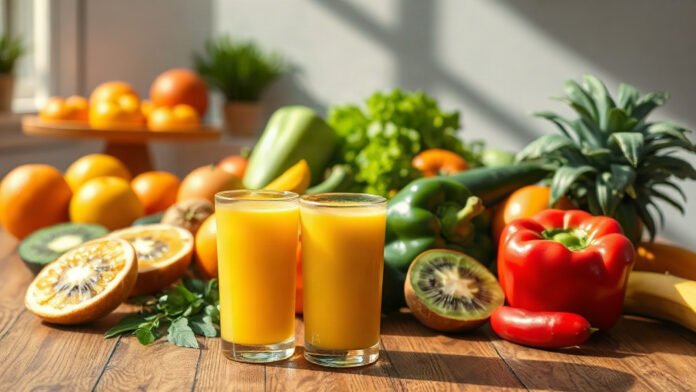
Your supplement habit might be costing you more than your grocery bill — and delivering less than a single orange.
KEY STATISTICS
- According to the NIH, the body absorbs vitamin C from whole foods with greater efficiency than from most synthetic ascorbic acid supplements at high doses.
- A study published in the American Journal of Clinical Nutrition found that smokers who ate vitamin C-rich foods had significantly better plasma levels than those relying on supplements alone.
- The CDC reports that nearly 6% of U.S. adults are vitamin C deficient — despite supplement use being at an all-time high.
You have a bottle of vitamin C tablets on your kitchen counter, and you feel like your health is covered. But research keeps pointing in the same direction: the vitamin C inside a kiwi, a red pepper, or a handful of strawberries does something a capsule simply cannot replicate. The reason comes down to how your body actually absorbs and uses nutrients — and it changes everything about how you shop.
How Vitamin C Actually Works
Vitamin C — also known as ascorbic acid — is a water-soluble vitamin that your body cannot produce on its own. Every milligram must come from what you eat or drink, which makes your food choices matter far more than most people realise.
Whole food sources of vitamin C come packaged with a matrix of compounds: bioflavonoids, polyphenols, and plant-based co-factors that research suggests enhance absorption and extend the vitamin’s activity in the body. Synthetic ascorbic acid in supplement form is chemically identical to natural vitamin C, but it arrives without that biological context.
At doses above 200mg, the body’s absorption rate of supplemental vitamin C drops sharply — excess is flushed out through urine. Whole food sources typically deliver smaller, consistent doses across the day, which keeps blood plasma levels steadier and more functional.
Why Your 20s Matter
Adults between 25 and 35 are navigating genuinely high-demand lives: demanding jobs, inconsistent sleep, frequent social drinking, and high stress — all of which accelerate vitamin C depletion. Stress hormones, particularly cortisol, are known to consume vitamin C reserves rapidly.
This age group also tends to underestimate dietary gaps. Grabbing a supplement feels like a complete solution, but if your meals are low in fresh produce, no tablet fully bridges that gap at the cellular level.
Collagen synthesis — the process that keeps your skin firm, joints resilient, and wounds healing quickly — depends entirely on vitamin C. Starting to under-fuel this process in your late 20s creates compounding effects that show up clearly in your 40s.
Warning Signs to Watch For
- Slow-healing cuts or skin that bruises more easily than it used to
- Dry, rough, or dull skin that does not respond well to topical skincare products
- Persistent fatigue that feels disproportionate to your sleep and activity levels
- Bleeding or swollen gums, especially after brushing or flossing
- Frequent colds or infections that seem to linger longer than they should
What Actually Helps
The simplest shift you can make is adding one vitamin C-rich whole food to every main meal. Red bell peppers contain nearly three times the vitamin C of an orange — and they are easy to slice raw into a lunch bowl or stir through a quick stir-fry.
Other strong sources include guava, kiwi, broccoli, papaya, and strawberries. Variety matters here because each food brings a different set of supporting compounds that work alongside vitamin C in the body.
Heat degrades vitamin C significantly — up to 50% is lost in prolonged cooking. Eating these foods raw or lightly cooked preserves the most nutritional value and keeps your actual intake closer to what the label suggests.
Action Plan Checklist
- Add half a red bell pepper, sliced raw, to your lunch at least four times per week — it delivers around 95mg of vitamin C with full bioavailability
- Eat at least one vitamin C-rich fruit daily, rotating between kiwi, strawberries, papaya, and citrus to vary your phytonutrient intake
- Steam or lightly stir-fry vegetables rather than boiling them — this preserves significantly more vitamin C than submerging them in water
- If you currently take a high-dose vitamin C supplement above 500mg daily, consider switching to a lower-dose option and prioritising food sources for the remainder
- Track your fresh fruit and vegetable intake for one week using a free food diary app — most people are surprised by how far below the recommended five daily servings they actually fall
The Overlooked Depletion Factor
One factor almost nobody talks about when discussing vitamin C is alcohol. Regular drinking — even at socially acceptable levels — meaningfully depletes vitamin C stores by increasing urinary excretion and impairing intestinal absorption.
If your weekends regularly involve a few drinks, your vitamin C baseline may be chronically lower than you think — regardless of how many oranges you eat on Monday. This is not about eliminating alcohol, but about recognising that your body may need consistent food-based vitamin C on more days than you account for.
Sunlight is the other overlooked angle. UV exposure accelerates vitamin C breakdown in the skin, which is precisely where it performs some of its most important antioxidant and collagen-protective work. People who spend significant time outdoors or in sunny climates may benefit from prioritising topical and dietary vitamin C simultaneously.
Bottom Line
Supplement bottles are convenient, but they are a backup plan — not a strategy. Whole food sources of vitamin C deliver the nutrient inside a biological environment your body is designed to work with, leading to better absorption, steadier plasma levels, and real outcomes for your skin, immune system, and energy. Make fresh produce non-negotiable, and let supplements fill in the gaps rather than carry the whole load.
Always consult a qualified healthcare provider before making changes to your health routine.
Sources
- Vitamin C — Fact Sheet for Health Professionals — National Institutes of Health Office of Dietary Supplements
- Bioavailability of vitamin C from food versus supplements in healthy adults — American Journal of Clinical Nutrition
- Dietary vitamin C and plasma ascorbic acid concentrations in US adults — CDC National Health and Nutrition Examination Survey
- Vitamin C and immune function — Nutrients — MDPI Open Access Journal
- Collagen synthesis and the role of vitamin C in dermal health — Harvard Health Publishing