
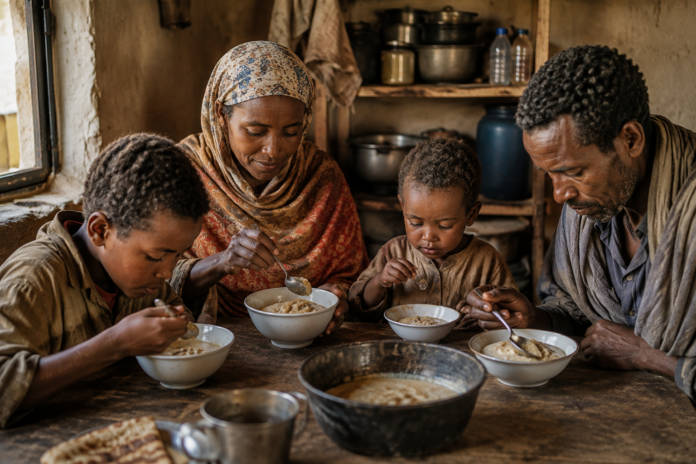
*Understanding how severe calorie restriction affects you—and what recovery actually requires*
KEY STATISTICS
- The body can survive weeks without food, but organ damage begins within days of severe restriction.
- Young adults often underestimate how quickly muscle loss and metabolic disruption accelerate during prolonged calorie deficit.
- Recovery from severe caloric deprivation requires careful, gradual refeeding—not immediate full meals.
You’ve probably heard stories about survival during famine or extreme food scarcity. What’s less talked about is what happens inside your body when calories drop dangerously low—and more importantly, how long the damage lingers after food becomes available again. Recent public health research examining historical and contemporary food crises offers surprising insights into how the human body adapts, fails, and recovers during starvation.
If you’ve ever struggled with undereating, disordered patterns, or even just curiosity about resilience, understanding these dynamics can help you recognize what your body needs.
How Starvation Changes
Starvation isn’t a simple on-off switch; it’s a series of metabolic stages your body moves through as fuel becomes scarce. During the first days, your liver breaks down stored glycogen for quick energy. When that runs out, your body shifts to burning fat and then muscle protein for survival—a process called catabolism.
- Glycogen (stored carbs) depletes within 12–24 hours; liver then converts fat and amino acids into glucose.
- Basal metabolic rate drops as the body conserves energy, sometimes falling 20–30% below normal.
- Muscle tissue breaks down to supply amino acids; lean mass loss accelerates after 3–5 days of severe restriction.
- Electrolyte imbalances (sodium, potassium, magnesium) develop, affecting heart rhythm and nerve function.
Why Youth Isn’t Protection
Adults aged 25–35 often feel invincible, which can mask how quickly starvation harms younger bodies. This age group is also more likely to adopt extreme dieting, skip meals for work, or experience food insecurity without recognizing the cumulative toll. Your metabolic flexibility—the ability to switch between fuel sources—is still high, but that doesn’t mean your organs are immune to damage.
- Young adults may not feel sick immediately, delaying recognition of serious caloric deprivation until organ stress is advanced.
- High metabolic rate in your 20s and 30s can mask how quickly micronutrient stores (iron, B vitamins, minerals) deplete.
- Bone density still building at this age; prolonged undereating accelerates bone loss that may not reverse fully.
- Recovery takes longer in younger bodies due to higher baseline energy demands and lean muscle recovery needs.
Signs Starvation Is Taking Hold
- Persistent cold intolerance, especially in hands and feet, even in warm environments—a sign of reduced circulation.
- Hair loss, brittle nails, or pale skin reflecting depleted protein and micronutrient stores.
- Dizziness on standing, irregular heartbeat, or shortness of breath during light activity—possible electrolyte or heart strain.
- Extreme fatigue that doesn’t improve with sleep, or brain fog and inability to concentrate.
- Absent or irregular menstrual cycle (in menstruating individuals)—a sensitive marker of severe energy deficit.
- Swelling in legs or face (edema), which can occur during refeeding if done too quickly.
- Constipation or severe digestive distress from prolonged low intake.
How to Rebuild Safely
Recovery from starvation or severe undereating isn’t about jumping straight back to normal portions. Public health research on famine recovery shows that gradual, structured refeeding—with attention to specific nutrients—prevents dangerous complications and restores metabolic function more effectively than rapid eating.
- Begin refeeding with small, frequent meals (every 2–3 hours) to avoid overwhelming a weakened digestive system.
- Prioritize protein and minerals (potassium, magnesium, phosphorus) early; these stabilize organ function and muscle recovery faster than carbs alone.
- Introduce foods gradually: broths and soft proteins first, then gradual increase in fiber and whole grains to prevent digestive shock.
- Monitor weight gain carefully—rapid gain in first weeks is often water and glycogen, not fat; expect 1–2 lbs per week as normal.
Your Recovery Checklist
- ✓ Consult a doctor or registered dietitian before starting refeeding; blood work checks electrolytes and organ function.
- ✓ Eat 4–6 small meals daily, starting at 1,200–1,500 calories if severely malnourished; increase by 200–300 calories weekly.
- ✓ Track hunger and fullness cues; initial fullness may be psychological; eat to planned amounts regardless.
- ✓ Include salt in early refeeding (within medical guidance) to restore sodium; add potassium-rich foods (avocado, spinach, sweet potato) daily.
- ✓ Avoid intense exercise for at least 1–2 weeks of refeeding; walk gently to support circulation without taxing weakened heart.
- ✓ Sleep 8–10 hours nightly; recovery is metabolically expensive and requires adequate rest.
- ✓ Schedule follow-up labs 2–4 weeks in to confirm electrolyte and organ recovery.
Sleep & Stress in Recovery
Sleep and stress management are often overlooked in starvation recovery, yet they’re critical to metabolic restoration. During prolonged undereating, your nervous system stays in a chronic stress state, triggering cortisol elevation and further metabolic suppression. Refeeding without addressing sleep and emotional safety can stall recovery.
- Sleep deprivation during undereating worsens metabolic dysregulation; restoring 8–9 hours nightly rebuilds hormonal balance faster.
- High cortisol from chronic food scarcity impairs nutrient absorption; calming practices (gentle yoga, meditation) support digestive healing during refeeding.
- Refeeding anxiety is common—fear of weight gain or loss of control can trigger undereating again; mental health support is essential, not optional.
- Social eating and food security (knowing food is available) are powerful metabolic signals; eating with trusted people supports recovery.
Bottom Line
Starvation is a cascade of metabolic changes your body can survive in the short term—but the path to full recovery is slow, deliberate, and deeply individual. Whether you’re recovering from a period of undereating, exploring how the body adapts to scarcity, or supporting someone else’s recovery, remember that healing requires patience, proper nutrition, medical oversight, and compassion. Your body wants to recover; it just needs the right support to get there.
365 Live Long — always consult a qualified healthcare provider before making changes to your health routine.
Sources
- Modeling the dynamics of human starvation: incorporating lessons from famines past and present — Journal of Public Health Policy
- General nutrition and metabolic guidance — CDC

