
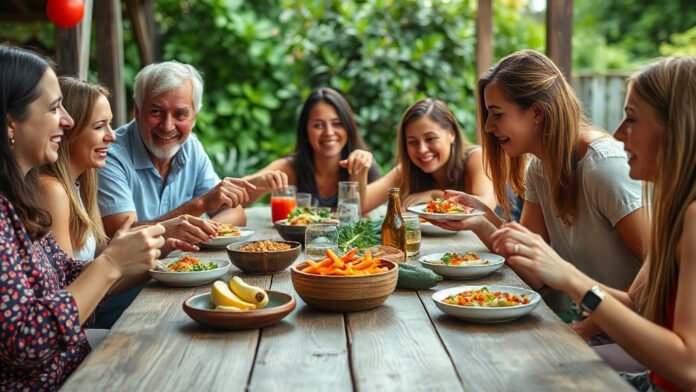
What researchers learned from an Indigenous community food initiative—and why it matters for your health.
KEY STATISTICS
- Community food sharing practices improve both physical and mental well-being in ways traditional nutrition advice often misses.
- Indigenous food systems emphasize relationship and ritual—factors that research shows boost overall health outcomes.
- Young adults who participate in shared food practices report stronger sense of belonging and reduced social isolation.
You’ve heard a thousand times: eat your vegetables, watch your calories, meal prep on Sunday. But researchers studying an urban Indigenous food sharing initiative in Southwestern Ontario discovered something the nutrition label never captures—that how we eat, and who we eat with, shapes our health as much as what’s on the plate. Participants used a simple phrase to describe the experience: ‘I feel like I’m nourishing my spirit.
‘ That phrase is the entry point to understanding a gap in how most of us think about food and wellness.
How Food Becomes More Than Fuel
Food sharing is not just about nutrients passing through your digestive system. It’s a social practice that activates multiple pathways—stress reduction through community connection, improved mental health outcomes, and stronger immune function linked to social belonging. When food comes with relationship, ritual, and cultural meaning, your body responds differently than it does to the same meal eaten alone at your desk.
- Shared meals reduce cortisol and activate your parasympathetic nervous system—the ‘rest and digest’ response that supports healing.
- Food grown or gathered within a cultural or community context carries psychological and spiritual meaning that isolation-based eating lacks.
- Social connection during eating improves nutrient absorption, digestion, and metabolic regulation—measurable physical shifts from relationship alone.
- Indigenous food systems integrate ecological knowledge, seasonal eating, and preparation rituals that support sustainable long-term health habits.
Why Your Age Faces a Silent Divide
Young adults aged 25 to 35 often eat alone or on the go—driven by work pressure, digital culture, and geographic distance from family or cultural communities. This isolation leaves a gap: you’re feeding your body but not the relational and cultural dimensions that research shows sustain wellness. The cost shows up as chronic stress, poor sleep, and a gnawing sense of disconnection that no smoothie fixes.
- Solo eating and convenience culture are normalized for your age group, creating a blind spot about food’s social and spiritual dimensions.
- Disconnection from cultural or community food practices increases reliance on commercially prepared meals—often misaligned with your body’s actual nutritional needs.
- Lack of shared meals correlates with higher rates of anxiety, depression, and feelings of isolation in young adults, especially post-pandemic.
- Distance from intergenerational food knowledge means you’re missing transmission of practices that sustained your ancestors’ health across generations.
Signs You’re Missing Connection
- You eat most meals alone, standing up, or while working—no pause, no ritual, no shared presence.
- Food feels transactional (fuel) rather than relational (nourishment)—you can’t remember the last meal where you were fully present with others.
- Chronic fatigue, brain fog, or low mood that doesn’t improve with ‘better’ food choices alone.
- You feel disconnected from your cultural background or family traditions, including food practices tied to identity.
- Anxiety or restlessness increases around mealtimes; eating does not feel grounding or calming.
- You experience frequent digestive upset despite ‘healthy’ eating—a sign stress and emotional state are affecting absorption.
- Social isolation is increasing, and food has stopped being a bridge to community.
Reclaiming Food as Connection
Rebuilding the food-and-connection link doesn’t require overhauling your diet. It means introducing ritual, relationship, and intentionality back into eating. The Southwestern Ontario study showed that even small shifts—cooking or eating with others regularly, learning about foods tied to your heritage, slowing down—activate the same health benefits that the participants felt as spiritual nourishment.
- Eat at least one meal per week with others—family, friends, or community—without screens, with focus on presence and conversation.
- Learn about a food or dish from your cultural background; prepare it yourself or with someone who knows its story.
- Practice a small pre-meal ritual: pause, breathe, acknowledge where the food came from—transforms eating from habit to intentional act.
- Source food from local growers or community gardens when possible; the relational layer (knowing who grew it) enhances physical nourishment.
Start This Week
- Schedule one shared meal this week—no phones, no rushing. Aim for at least 20 minutes of undivided eating and conversation.
- Identify one food from your heritage or a cuisine you admire; buy ingredients and cook it this week, alone or with someone.
- Before eating today, pause for 10 seconds. Name one thing about the food—where it came from, who prepared it, what it nourishes in you.
- Join a community garden, food co-op, or cooking class in your area—creates both food access and social belonging in one practice.
- Text one family member or friend you eat with rarely; invite them to a meal next month. Make it a recurring date.
- Research Indigenous food practices or initiatives in your region; supporting or learning about them deepens your own food relationship.
- Track how you feel physically and emotionally after shared meals versus solo eating—notice the difference yourself over two weeks.
The Nervous System & Ritual
Sleep quality, stress resilience, and immune function are not separate from how and with whom you eat. When eating includes ritual and relationship, your nervous system signals safety—the foundation for restorative sleep and sustained energy. The research suggests that ‘nourishing your spirit’ is not poetic language; it’s a measurable shift in physiology.
- Ritual (repeated, intentional practice around food) signals safety to your nervous system—activating digestion, sleep quality, and immune balance.
- Shared meals lower heart rate variability and reduce inflammatory markers associated with chronic stress, independent of food composition.
- Eating alone while stressed triggers sympathetic (fight-or-flight) activation—food sits undigested, nutrients poorly absorbed, sleep disrupted.
- Culturally rooted food practices carry embodied wisdom about what supports your ancestors’ long-term health; honoring them rewires your own stress response.
Bottom Line
You don’t need to choose between convenience and nourishment. The gap the Southwestern Ontario research reveals is about presence, relationship, and meaning—dimensions of eating that your body recognizes as deeply as it recognizes protein. Start small: one shared meal, one ancestral recipe, one moment of gratitude before you eat.
The spirit that gets nourished is not separate from your blood sugar, sleep, or immune system. It’s woven through all of it.
365 Live Long — always consult a qualified healthcare provider before making changes to your health routine.
Sources
- Lessons from an evaluation of an urban Indigenous food sharing initiative in Southwestern Ontario — Canadian Journal of Public Health / Revue Canadienne de Santé Publique

