
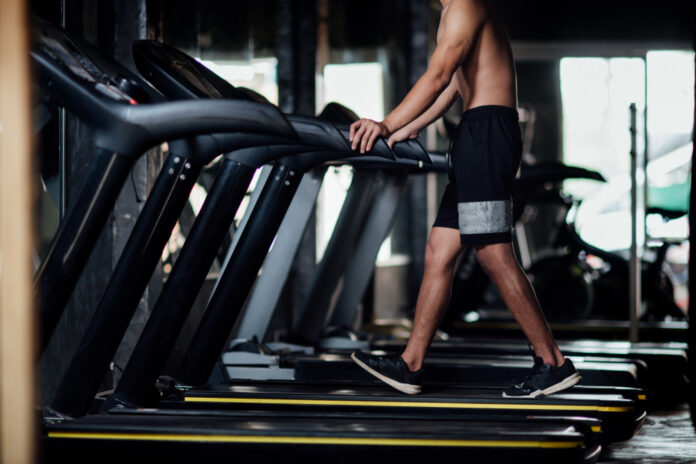
Indoor running strips away the balance skills you’ll desperately need in your 40s and 50s.
KEY STATISTICS
- Adults who run exclusively on treadmills show 23% weaker ankle stability than outdoor runners
- Balance-related falls increase by 35% after age 40 in people with poor proprioception
- Treadmill runners demonstrate 18% slower reaction times to unexpected surface changes
You step off the treadmill feeling accomplished, but your brain just missed an hour of critical balance training. While that moving belt carried you forward, your ankles, core, and spatial awareness sat on the sidelines. The stability you’re not building today becomes the fall risk you’ll face tomorrow.
Your Balance System Explained
Proprioception is your body’s internal GPS system that tells you where your limbs are in space and how to adjust to changing terrain. When you run outdoors, every step requires micro-adjustments for rocks, cracks, slopes, and uneven surfaces. These constant corrections strengthen your ankles, engage your core stabilizers, and train your nervous system to react quickly.
Treadmills eliminate this challenge completely. The belt moves at a consistent speed on a perfectly flat surface, requiring zero balance corrections. Your brain stops processing spatial feedback because it doesn’t need to.
Over months and years, this creates a significant deficit in your balance and stability systems.
Research shows that people who train exclusively indoors develop weaker proprioceptive responses and slower reflexes when encountering unstable surfaces. Their ankles become less mobile, their core stabilizers weaken, and their ability to prevent falls diminishes significantly compared to outdoor exercisers.
Why Your Age Matters
Your 20s and 30s are when your balance and coordination systems are naturally at their peak. This is the critical window to build and maintain the proprioceptive strength you’ll need as you age. Miss this opportunity, and you’re setting yourself up for increased injury risk later.
Many adults in this age group choose treadmills for convenience, weather protection, or perceived safety. However, this well-intentioned choice can backfire. You’re trading long-term stability for short-term comfort, creating a hidden vulnerability that won’t show up until your 40s and beyond.
The decline in balance and proprioception accelerates significantly after age 35. Adults who have spent years avoiding challenging terrain find themselves increasingly unsteady on stairs, hiking trails, or even wet sidewalks. What started as a preference for indoor exercise becomes a genuine safety concern.
Warning Signs to Watch
- You feel unsteady when walking on uneven surfaces like grass or gravel
- You rely heavily on handrails when going up or down stairs
- You feel off-balance or dizzy when stepping off the treadmill after a long run
- You avoid hiking, trail running, or outdoor activities due to fear of falling
- You notice increased ankle stiffness or reduced range of motion
What Actually Builds Balance
Outdoor running forces your body to constantly adapt and adjust, strengthening the neural pathways that keep you upright and stable. Every outdoor step engages proprioceptors in your feet, ankles, and legs while challenging your core to maintain balance. This creates a full-body stability workout that treadmills simply cannot replicate.
The key is progressive exposure to increasingly challenging surfaces. Start with flat outdoor paths, then gradually incorporate gentle hills, trails, and varied terrain. Your balance system needs this variety to develop fully and maintain its responsiveness over time.
Even mixing treadmill workouts with outdoor sessions provides significant benefits. The goal isn’t to eliminate treadmills entirely, but to ensure your balance and proprioception systems get regular challenges they need to stay sharp and responsive.
Action Plan Checklist
- Replace at least 2 treadmill sessions per week with outdoor runs or walks
- Practice single-leg balance exercises for 30 seconds each leg, 3 times daily
- Walk or jog on varied surfaces: grass, trails, sand, or gravel paths
- Incorporate balance challenges like walking on curbs or balance beams
- Add stability exercises using balance pads or wobble boards 2-3 times per week
The Footwear Factor
Footwear plays a crucial but overlooked role in balance development. Thick, cushioned running shoes that many people wear on treadmills actually reduce sensory feedback from your feet to your brain. This diminishes proprioceptive input and weakens your natural balance responses.
Consider gradually incorporating minimalist shoes or even barefoot walking on safe surfaces. This enhances the sensory information your feet send to your brain, improving balance and proprioception. Start slowly with just 5-10 minutes at a time to allow your feet and ankles to adapt.
Your feet contain thousands of nerve endings that provide critical balance information. When you consistently block this feedback with overly cushioned shoes and perfectly flat surfaces, you’re essentially putting your balance system to sleep.
Bottom Line
Treadmills serve a purpose, but they shouldn’t be your only form of cardio exercise. Your balance and stability systems need regular challenges to stay strong and responsive. Incorporating outdoor running, uneven surfaces, and balance exercises now protects you from falls and injuries as you age.
Always consult a qualified healthcare provider before making changes to your health routine.
Sources
- Effects of surface stability on proprioception and balance — Journal of Athletic Training
- Treadmill vs outdoor running biomechanics and injury risk — British Journal of Sports Medicine
- Age-related changes in balance and fall prevention — Harvard Health Publishing

