
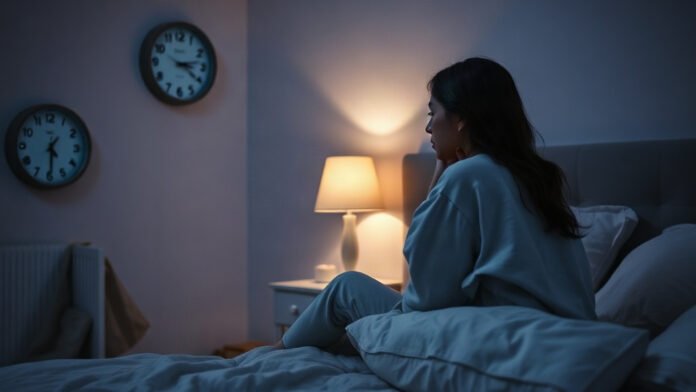
Your late-night habits are silently accelerating biological aging — and most people have no idea it is happening.
KEY STATISTICS
- Adults who regularly sleep after midnight show measurably shorter telomeres — a direct biological marker of faster aging — compared to those who sleep before 11 PM, according to research published in the journal Aging.
- A 2023 study in Nature Communications found that people with irregular sleep timing had a biological age up to 2.6 years older than their chronological age.
- The NIH reports that late-night eating shifts the body’s circadian clock, increasing metabolic stress markers associated with accelerated cellular aging.
Most people in their twenties and early thirties assume aging is something to worry about later. But your cells are already keeping score — and the habits you repeat after 9 PM are quietly writing the results. The damage does not show up on your face overnight, but it is building inside your body right now.
What Happens After 9PM
Your body runs on a circadian rhythm — an internal 24-hour clock that controls nearly every biological function, from hormone release to DNA repair. This clock is not just about when you feel tired. It orchestrates when your cells clean up damage, when your brain flushes out waste, and when your tissues regenerate.
After around 9 PM, your body expects one thing: preparation for rest. Cortisol drops, melatonin rises, and your core temperature begins to fall. These signals tell your organs to shift from active metabolism into repair mode.
When you override that shift — by eating, scrolling, or staying stimulated — you are essentially sending your biology a false signal. The repair processes get delayed or disrupted, and over time that disruption adds up at the cellular level.
Why Your Twenties Matter
Adults between 25 and 35 are in a biological window that feels forgiving. Recovery seems fast, energy bounces back, and the consequences of bad nights are easy to brush off. That resilience can be deeply misleading.
This is actually the decade when your long-term health trajectory is being set. Telomere length, mitochondrial efficiency, and inflammatory baseline are all being shaped right now by your daily and nightly habits.
Research shows that chronic circadian disruption in young adults — even mild disruption from inconsistent sleep timing — accelerates biological aging markers well before any external signs appear. By the time you notice the effects, the pattern has already been running for years.
Warning Signs to Watch For
- You regularly feel tired in the morning even after 7 or 8 hours of sleep — a sign your sleep quality, not just quantity, is compromised
- You get a second wind of energy after 10 PM that keeps you awake longer than intended — this is a cortisol rebound triggered by delayed sleep timing
- You crave sugar, carbs, or salty snacks after dinner — late-night hunger is often driven by circadian misalignment disrupting ghrelin and leptin
- Your skin looks dull or puffy in the morning, especially around the eyes — a sign that your body’s nighttime cellular repair cycle is being cut short
- You feel mentally foggy or emotionally flat for the first hour or two of the day — the brain’s glymphatic cleaning system, which clears metabolic waste, operates best in deep early sleep
What Actually Helps
The most effective change you can make is not radical. It is about closing the stimulation window earlier in the evening. Aim to dim lights, reduce screen brightness, and stop eating at least two hours before you plan to sleep.
Late-night snacking is a particularly underestimated problem. When you eat after 9 PM, your digestive system is forced to stay active during a period when your body expects fasting. This delays fat metabolism, raises blood sugar at the wrong time, and interferes with the hormonal signals that initiate repair.
Screen exposure matters too — but not just because of blue light. The act of scrolling keeps your nervous system in a state of low-level arousal. Your brain treats novel information as mildly stimulating, suppressing the wind-down process your biology needs.
Simple swaps work better than strict rules. Swap your phone for a book. Swap a late snack for a herbal tea.
Swap bright overhead lights for a lamp. These are not dramatic changes — but they send your body the right signals at the right time.
Action Plan Checklist
- Set a hard stop for eating at 8:30 PM — your last meal or snack should be finished at least 90 minutes before sleep
- Switch your phone to night mode or greyscale at 9 PM to reduce visual stimulation, not just blue light
- Dim the lights in your home after 9 PM — overhead lighting suppresses melatonin as strongly as screen exposure
- Choose one wind-down habit that has no outcome attached — reading, light stretching, or a warm shower — and repeat it every night at the same time
- Aim for a consistent sleep time within a 30-minute window every night, including weekends — sleep timing consistency has a stronger link to biological aging markers than total sleep duration alone
The Overlooked Evening Factor
There is one overlooked factor that silently makes late-night habits worse: alcohol. Many people in this age group have a drink or two in the evening and assume it helps them relax and fall asleep faster. It does — but the quality of that sleep is significantly degraded.
Alcohol suppresses REM sleep, the stage most critical for emotional regulation, memory consolidation, and cellular repair. Even one drink within three hours of sleep can reduce REM sleep by up to 24 percent, according to research from the Sleep Foundation.
If you regularly drink in the evening and also struggle with morning fatigue, poor focus, or mood instability, the combination of late-night habits and alcohol is likely compressing the repair window your biology depends on. Cutting alcohol out on weeknights alone can produce noticeable changes in energy and cognitive clarity within two weeks.
Bottom Line
Aging is not something that happens to you in your forties — it is something your nightly habits are quietly building toward right now. The good news is that biological aging markers are responsive to change, and even small consistent improvements in your evening routine can shift the trajectory. Start with one habit, keep the same sleep time every night, and give your body the repair window it is designed to use.
Always consult a qualified healthcare provider before making changes to your health routine.
Sources
- Circadian rhythm disruption and telomere shortening in healthy adults — Aging (Albany NY)
- Sleep irregularity and biological aging: evidence from UK Biobank — Nature Communications
- Circadian misalignment increases C-reactive protein and cortisol in young adults — NIH National Library of Medicine
- Alcohol and sleep quality: effects on REM architecture — Sleep Foundation
- Late-night eating alters circadian clock gene expression and metabolic risk — Harvard Health Publishing

