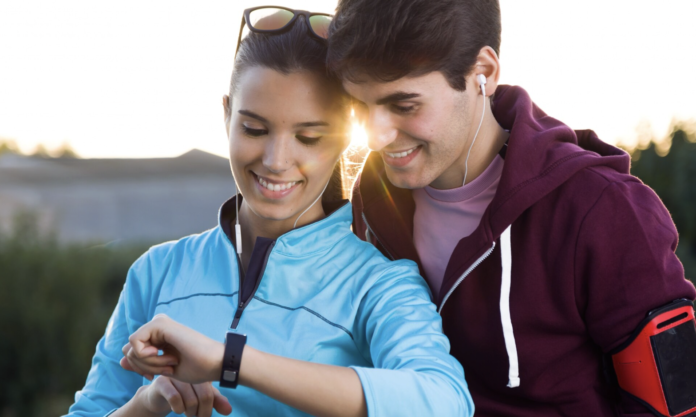
Your fitness tracker feels trustworthy — but the data it shows you may be doing more harm than good.
KEY STATISTICS
- A 2023 study published in JAMA Cardiology found that consumer wearables misclassified heart rate in up to 34% of readings during physical activity.
- Research from the University of California San Francisco found that popular fitness trackers overestimated sleep duration by an average of 35 to 67 minutes per night.
- The American Heart Association notes that no consumer-grade wearable has received FDA clearance as a primary diagnostic device for heart rhythm disorders.
You glance at your wrist after a workout and feel reassured — your heart rate looks good, your sleep score was decent, your steps are on track. But what if those numbers are quietly steering you in the wrong direction? Consumer fitness trackers are more popular than ever, and most people in their 20s and 30s treat them like medical devices — when the science says they are something much less reliable.
How Wearables Actually Work
Most consumer wearables use a technology called photoplethysmography, or PPG, to measure heart rate. This involves shining a light through your skin and detecting blood flow changes — a method that works reasonably well at rest but becomes significantly less accurate during movement, when sweat, skin tone, and wrist position all interfere with the signal.
Sleep tracking is an even messier picture. Wearables estimate sleep stages by detecting movement and heart rate variability — but they cannot directly observe brain activity the way a clinical sleep study does. Studies consistently show that wearables struggle to correctly identify light sleep, deep sleep, and REM, often inflating deep sleep estimates or miscounting wake periods.
The gap between what a wearable reports and what is actually happening inside your body is not a minor technical glitch. It is a structural limitation of the technology itself — one that device manufacturers do not always communicate clearly in their marketing.
Why This Age Group Suffers
Adults aged 25 to 35 are the heaviest users of fitness wearables. This age group is also at a stage where establishing accurate health baselines matters enormously for long-term prevention.
When a device consistently tells you your resting heart rate is lower than it actually is, or that your recovery is better than it truly is, you may push harder in training than your body is ready for. Over time, this creates a cycle where you are optimising for a number on a screen rather than for how your body genuinely feels and functions.
There is also a psychological dimension. Research published in the International Journal of Environmental Research and Public Health found that wearable users who received inaccurate sleep data reported higher anxiety around sleep quality — a phenomenon sometimes called orthosomnia, where the pursuit of a perfect sleep score begins to disrupt sleep itself.
Warning Signs To Watch
- You feel exhausted after a night your tracker rated as high quality — a consistent mismatch between device data and how you actually feel
- Your heart rate readings vary wildly during the same workout depending on how tightly the device is worn or where it sits on your wrist
- You have started making training or rest decisions based entirely on your wearable score rather than physical sensations like fatigue, soreness, or energy
- You feel anxious or frustrated when your sleep score drops, even when you woke up feeling rested and alert
- Your step count or calorie burn feels dramatically inconsistent from device to device or app to app — a known accuracy gap across brands
What Actually Helps
The most effective recalibration you can make is to treat your wearable as a trend tool, not a truth tool. Looking at whether your resting heart rate has been gradually rising over three weeks tells you something useful. Panicking because today’s reading was two beats higher than yesterday tells you very little.
For sleep specifically, subjective quality matters more than any score. Clinical sleep researchers use the term sleep efficiency — how rested, focused, and emotionally stable you feel within the first hour of waking. No wearable can measure that.
You can.
For heart rate, context is everything. A reading taken mid-movement with a loose wrist band in cold air is not comparable to a calm morning reading taken correctly. If you want a more accurate resting heart rate, measure it manually at your wrist or neck immediately upon waking, before you check your phone.
Action Plan Checklist
- Use your wearable for weekly and monthly trends only — not for day-to-day decisions about rest, training intensity, or health status
- Take your resting heart rate manually once per week on waking, and compare it over time to spot genuine changes worth discussing with a doctor
- Rate your own sleep quality on a simple 1 to 5 scale each morning before you check your device score — then notice when the two consistently disagree
- If your tracker shows concerning heart rhythm data such as possible atrial fibrillation, treat it as a prompt to see a doctor — not a confirmed diagnosis
- Recalibrate your relationship with data by taking a two-week wearable break and journalling how you feel — energy, sleep, stress — without the numbers
The Body Literacy Problem
There is a subtler problem that rarely gets discussed: wearables can shift your attention away from your body and toward a screen. This is sometimes called body illiteracy — a growing inability to interpret internal signals like fatigue, hunger, or stress because a device has been doing that interpretation for you.
Your body sends accurate, real-time data constantly. The tightness in your chest after a poor night. The heavy legs that tell you recovery is incomplete.
The mental fog that signals a stressed nervous system. These signals predate technology and remain your most reliable health indicators.
Using a wearable intelligently means treating it as one input among many — not the final word. The goal of health tracking should be to understand yourself better, not to become dependent on a device to tell you how you feel.
Bottom Line
Fitness trackers are useful tools when used with realistic expectations and healthy skepticism. They are not medical devices, and the data they provide is an estimate — sometimes a rough one. Trust the trends, trust your body’s signals, and when something genuinely concerns you, see a qualified clinician rather than refreshing your app.
Always consult a qualified healthcare provider before making changes to your health routine.
Sources
- Accuracy of Wrist-Worn Heart Rate Monitors During Exercise — JAMA Cardiology
- Consumer Sleep Tracking Devices and the Clinical Sleep Study Gap — Journal of Clinical Sleep Medicine
- Orthosomnia: Are Some Patients Taking the Quantified Self Too Far? — Journal of Clinical Sleep Medicine
- Wearable Technology and Cardiovascular Health: Current Evidence and Limitations — American Heart Association Scientific Statements
- Fitness Tracker Accuracy and User Anxiety: A Cross-Sectional Analysis — International Journal of Environmental Research and Public Health