
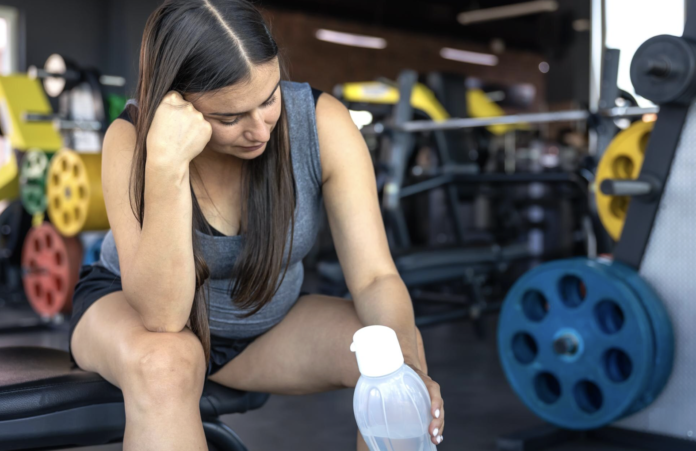
You think you’re getting fitter — but too much high-intensity training may be quietly disrupting the hormones that keep your energy, mood, and metabolism running.
KEY STATISTICS
- Research published in the Journal of Endocrinology found that chronic overtraining can elevate cortisol levels by up to 50% above baseline, suppressing key hormonal functions.
- A study in the European Journal of Applied Physiology found that athletes training at high intensity without adequate recovery showed measurable suppression of thyroid hormone T3 within just four weeks.
- The American College of Sports Medicine estimates that up to 60% of regular exercisers experience at least one symptom of overtraining syndrome at some point — yet most never connect it to their hormones.
You show up five or six days a week, push hard through every HIIT session, and still feel exhausted, foggy, and stuck on a plateau. The problem might not be your effort — it might be what all that effort is doing to your hormones. Emerging research suggests that excessive high-intensity interval training, without proper recovery, can dysregulate the very systems designed to keep you strong, sharp, and energised.
What HIIT Does Inside
Every time you do a high-intensity workout, your body triggers a stress response. Cortisol — your primary stress hormone — spikes to mobilise energy and help your muscles perform.
In the short term, this is completely normal and even beneficial. Acute cortisol rises signal adaptation, which is how your body gets stronger.
The problem starts when that cortisol signal never switches off. When you train too hard, too often, without giving your body time to recover, cortisol remains chronically elevated.
Chronic cortisol elevation disrupts a chain of hormonal events. It can suppress the hypothalamic-pituitary-thyroid axis, reducing output of the active thyroid hormone T3, which governs your metabolic rate.
It also interferes with reproductive hormones. In women, this can disrupt oestrogen and progesterone balance. In men, it can lower testosterone — even in their twenties and thirties.
The result is a body stuck in a low-grade survival state: holding onto fat, breaking down muscle, and running on empty despite hours of effort.
Why Your Decade Matters
Adults aged 25 to 35 are particularly vulnerable because this is typically when ambition and fitness culture collide. Many people in this age group discover HIIT through apps, social media, or group classes — and more always feels like better.
Life demands in this decade are also high. Work pressure, poor sleep, and social stress already push cortisol levels up before you even step onto a treadmill.
Adding five or six HIIT sessions a week on top of a stressed nervous system creates a compounding problem. Your body cannot distinguish between a deadline and a sprint interval — it simply reads both as threat.
For women in this age group, hormonal disruption from overtraining can show up as irregular periods, low libido, or worsening PMS. For men, it may present as reduced drive, slower recovery, and creeping body fat despite training hard.
Warning Signs To Watch For
- You feel tired all the time, even after a full night of sleep — especially in the morning
- Your performance has plateaued or declined despite consistent training
- You are getting sick more often than usual, suggesting immune suppression
- You feel irritable, anxious, or emotionally flat around your workouts
- You are gaining fat or holding weight around your midsection despite exercising regularly
What Actually Restores Balance
The fix is not to stop exercising. It is to stop treating rest as weakness and high intensity as the only valid workout.
Research consistently shows that a mix of training intensities produces better hormonal outcomes than doing hard sessions back to back. Zone 2 cardio — a comfortable, conversational pace — actively supports cortisol regulation and thyroid function without adding to your stress load.
Strength training two to three times per week also supports hormonal health by promoting testosterone and growth hormone release in a more controlled, recovery-friendly way.
For most adults in this age group, two to three HIIT sessions per week is the ceiling, not the floor. Anything beyond that, without very structured recovery, tips the balance from adaptation into dysfunction.
Nutrition plays a critical role here too. Undereating — especially carbohydrates — while training intensely amplifies cortisol output and further suppresses thyroid function. Fuelling adequately before and after sessions is not optional; it is part of the hormonal equation.
Your Action Plan Checklist
- Cap HIIT sessions at two to three per week maximum, with at least one full rest day between each
- Add one or two low-intensity sessions such as walking, yoga, or Zone 2 cycling to actively support recovery
- Eat enough carbohydrates — especially around workouts — to prevent cortisol from rising as a stress signal to your liver
- Prioritise seven to nine hours of sleep per night, as most hormonal repair happens during deep sleep stages
- Track how you feel across two to four weeks — energy, mood, sleep quality, and performance are better indicators of hormonal balance than step counts
The Recovery Window You Are Missing
Sleep is where hormonal recovery actually happens — and it is the most underused performance tool in any fitness routine.
During deep sleep, the body releases the majority of its growth hormone, repairs muscle tissue, and resets the cortisol rhythm for the following day. Cutting sleep short to fit in an early HIIT session is one of the fastest ways to accelerate hormonal disruption.
Alcohol compounds the problem significantly. Even moderate drinking in the evening reduces growth hormone release by up to 70% during that night’s sleep, according to research from the National Institute on Alcohol Abuse and Alcoholism.
If you are training hard, drinking regularly, and sleeping fewer than seven hours, your hormonal environment may be running in deficit no matter how clean your diet or consistent your workouts are. The recovery window is not a bonus — it is where the actual results are built.
Bottom Line
High-intensity training is a powerful tool — but only when your body has the recovery resources to adapt. If you are pushing hard multiple times a week and feeling worse, not better, your hormones may be sending you a signal worth listening to. Dial back the intensity, protect your sleep, eat enough, and let your body catch up — that is where real fitness gains actually live.
Always consult a qualified healthcare provider before making changes to your health routine.
Sources
- Overtraining Syndrome and Hypothalamic-Pituitary-Adrenal Axis Dysfunction — Journal of Endocrinology
- Thyroid Hormone Suppression in Response to Prolonged High-Intensity Exercise — European Journal of Applied Physiology
- Overtraining Syndrome: A Practical Guide — American College of Sports Medicine — Current Sports Medicine Reports
- Effects of Alcohol on Sleep and Hormonal Recovery — National Institute on Alcohol Abuse and Alcoholism
- Cortisol and Reproductive Hormone Interaction During Chronic Stress and Exercise — NIH — National Library of Medicine

