
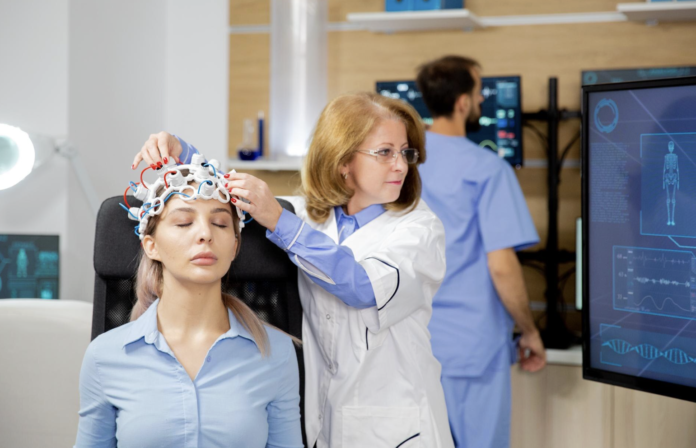
Transcranial magnetic stimulation is showing measurable results in reversing early cognitive decline — and researchers are paying close attention.
KEY STATISTICS
- A 2023 study published in Nature Mental Health found that TMS improved working memory performance by up to 20% in adults showing early cognitive aging patterns.
- The NIH estimates that subtle cognitive changes can begin as early as the late 20s, long before any clinical diagnosis is made.
- Researchers at Harvard found that targeted magnetic brain stimulation strengthened neural connectivity in regions linked to memory and executive function within just two weeks of treatment.
You are not imagining the brain fog, the slower word recall, or the feeling that your focus just is not what it used to be. Emerging neuroscience is confirming what many adults in their late 20s and 30s quietly suspect — the brain starts showing measurable aging patterns earlier than most people realise. And now, a non-invasive technology called transcranial magnetic stimulation is giving researchers their most promising early-intervention tool yet.
How Magnetic Stimulation Works
Transcranial magnetic stimulation, or TMS, works by delivering focused magnetic pulses through the scalp to targeted regions of the brain. These pulses stimulate neurons and can either excite or inhibit activity depending on frequency, allowing clinicians to essentially recalibrate areas of the brain that have become underactive or dysregulated.
The hippocampus and prefrontal cortex — two regions central to memory, decision-making, and attention — are among the first areas to show age-related slowdown. TMS allows researchers to directly stimulate these zones without surgery or medication.
What makes recent findings especially significant is neuroplasticity. The brain retains the ability to reorganise and strengthen its own neural pathways well into adulthood. TMS appears to accelerate this process, encouraging the brain to build stronger connections in areas that early aging has begun to erode.
Why Your 30s Matter
Most people assume cognitive decline is something to worry about at 60 or 70. But brain imaging studies now show that structural and functional changes begin in the prefrontal cortex as early as age 27 to 30.
Adults aged 25 to 35 are also navigating some of the highest-pressure years of their lives — demanding careers, financial stress, disrupted sleep, and poor nutrition habits all accelerate the very neural changes that TMS research is working to reverse.
The window between early cognitive changes and diagnosable decline is long, which is exactly why this age group represents the most strategically important moment for intervention. Catching and addressing these patterns early is far more effective than attempting to reverse deeper damage later.
Warning Signs To Watch
- Forgetting words mid-sentence more frequently than you used to
- Struggling to hold multiple pieces of information in mind at the same time
- Feeling mentally foggy or slow even after a full night of sleep
- Difficulty concentrating for longer than 20 to 30 minutes without your attention drifting
- Noticing that learning new skills or retaining new information feels noticeably harder than it did a few years ago
What Actually Helps Now
While TMS is still primarily a clinical and research tool, the principles behind it point to a clear lifestyle message — protecting and stimulating the brain consistently through daily habits is not optional after a certain age, it is structural maintenance.
Aerobic exercise, particularly sustained cardio for 30 minutes or more, has been shown to increase BDNF, a protein that supports neuron growth and mimics some of the brain-stimulating effects seen in TMS studies. Running, cycling, swimming, and brisk walking all qualify.
Cognitive challenges matter too. Learning a new instrument, language, or complex skill actively recruits the prefrontal cortex and hippocampus — the exact regions TMS targets. Passive screen time does the opposite.
Sleep is where the brain consolidates memory and clears metabolic waste via the glymphatic system. Without consistent, high-quality sleep, even the gains from TMS or exercise are partially undone overnight.
Your Brain Action Plan
- Aim for at least 150 minutes of moderate aerobic exercise each week to support natural BDNF production and brain blood flow
- Introduce one cognitively challenging activity into your weekly routine — a new language app, a musical instrument, or a strategy-based game
- Protect 7 to 9 hours of sleep per night and keep your wake time consistent to support glymphatic brain cleaning
- Reduce chronic stress by identifying your top two daily stressors and applying a consistent management strategy such as breathwork, journalling, or structured downtime
- If you are experiencing persistent cognitive symptoms, speak with a neurologist about whether a TMS assessment or referral is appropriate for your situation
The Inflammation Connection
One factor that is easy to overlook in the TMS conversation is chronic inflammation. Neuroinflammation is increasingly recognised as a driver of early cognitive aging, and it is heavily influenced by diet.
Ultra-processed foods, excess sugar, and low omega-3 intake all contribute to low-grade brain inflammation that accelerates the same neural slowdown TMS research is working to reverse. A diet rich in oily fish, leafy greens, berries, and healthy fats works as a daily anti-inflammatory strategy for the brain.
Researchers studying TMS outcomes have also noted that patients with lower baseline inflammation tend to respond more strongly to stimulation protocols. In other words, what you eat may directly influence how well your brain responds to any form of cognitive intervention — clinical or lifestyle-based.
Bottom Line
Magnetic therapy is not a consumer product you can buy next week, but the science behind it is telling you something you can act on right now. Your brain is more plastic, more responsive, and more treatable in your 30s than it will be in your 50s. The habits you build today — exercise, sleep, diet, and cognitive challenge — are the most accessible version of what TMS is trying to achieve in a clinical setting.
Always consult a qualified healthcare provider before making changes to your health routine.
Sources
- Transcranial magnetic stimulation in cognitive aging and memory enhancement — Nature Mental Health
- Neuroplasticity and prefrontal cortex changes in early adulthood — NIH National Institute on Aging
- Brain-derived neurotrophic factor and exercise-induced neuroprotection — Harvard Health Publishing
- Glymphatic system function, sleep, and cognitive decline — National Library of Medicine
- Dietary patterns, neuroinflammation, and cognitive performance in young adults — JAMA Network Open

