
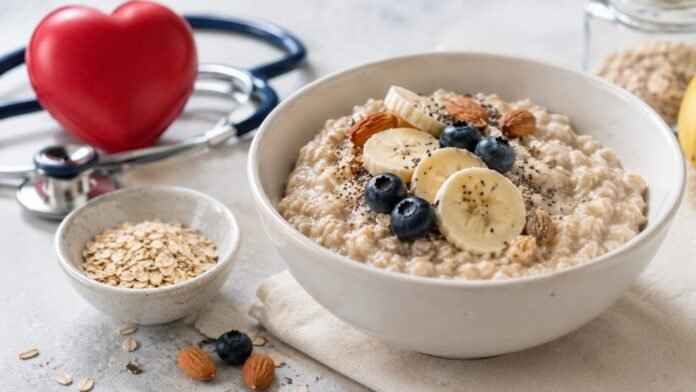
*Why this pantry staple is quietly protecting your heart—and how to make it work for you*
KEY STATISTICS
- Heart disease remains a leading health concern for adults in their late 20s and 30s, often developing silently from habits formed earlier.
- Regular consumption of fiber-rich foods is associated with meaningful improvements in cholesterol and blood pressure profiles.
- Most adults fall short of daily fiber intake targets, missing out on protective benefits that compound over time.
You’ve probably heard that oats are good for you. But here’s what you might not realize: cardiologists across the board recommend oats not because they’re trendy, but because the research backs them up. At 25 to 35, you’re at a prime age to build habits that keep your heart strong for decades.
Oats are one of the easiest places to start—and the payoff is real.
How Oats Work for Your Heart
Your heart health depends on what happens inside your blood vessels and how efficiently your body manages cholesterol and inflammation. Oats contain a soluble fiber called beta-glucan that actively works to lower your LDL cholesterol—the kind that builds up in arteries. This isn’t flashy nutrition; it’s preventive work your body does while you eat breakfast.
- Beta-glucan (soluble fiber in oats) binds to cholesterol in your digestive tract and helps remove it from your body.
- Regular oat consumption can lower LDL cholesterol by 5–10%, a meaningful reduction for long-term arterial health.
- Oats also contain antioxidants and polyphenols that reduce inflammation in blood vessel walls.
- The effect is modest but cumulative—small daily choices compound into significant cardiovascular protection over years.
Why Your 20s and 30s Matter
Your 20s and 30s feel far removed from heart problems, but this is exactly when arterial damage often begins. Poor eating habits, stress, and sedentary lifestyles during this decade silently accelerate plaque buildup. The good news: your age also means your body is remarkably responsive to positive changes right now.
- Arterial stiffness and plaque accumulation begin in young adulthood, often without any symptoms or warning signs.
- Habits formed now—diet, exercise, stress management—are the strongest predictor of heart health at 40, 50, and beyond.
- Young adults who adopt one protective habit (like eating oats regularly) are more likely to stick with other healthy behaviors.
- Starting early means you avoid the scramble to reverse damage that could have been prevented in the first place.
Watch for These Early Signals
- Unusual shortness of breath during normal activity or climbing stairs—mention this to your doctor.
- Persistent fatigue that doesn’t improve with rest, especially if it’s new or worsening.
- Unexplained chest discomfort or pressure, even if it feels minor or comes and goes.
- High blood pressure readings on home monitors (consistently above 120/80) or at checkups.
- Swelling in your legs, ankles, or feet that doesn’t improve by the end of the day.
- Irregular or noticeably rapid heartbeat that you can feel in your chest.
- Family history of early heart disease (before age 55 in men, before 65 in women)—signal this to your primary care provider.
What Diet and Habit Changes Help
Adding oats to your routine doesn’t require a complete diet overhaul. The key is consistency and pairing oats with other heart-protective habits. Think of it as one pillar of a broader approach to cardiovascular health.
- Eat oats at least 3–4 times per week, aiming for rolled or steel-cut varieties (instant oats work, but contain less fiber per serving).
- Pair oats with heart-healthy additions: nuts, berries, or ground flax seeds boost fiber, omega-3s, and polyphenols.
- Move your body for at least 150 minutes per week—walking, cycling, or strength training all count toward cardiovascular benefit.
- Reduce processed foods, sugary drinks, and excess salt, which undo the protection that oats provide.
Your Starting Checklist Today
- Buy one container of rolled oats this week and commit to eating them at least 3 mornings.
- Check your last blood pressure reading—if you don’t have one from the past year, schedule a checkup.
- Add one other whole grain or high-fiber food to your week (brown rice, quinoa, or lentils work).
- Identify one 30-minute block during your week to move your body—no gym required, a walk counts.
- Download a free food-tracking app for one week to see where added sugars and salt hide in your current diet.
Sleep and Recovery Matter More
Sleep quality is one of the most overlooked factors in heart health, yet it’s as important as diet. Poor sleep disrupts the hormones that regulate blood pressure, inflammation, and hunger. If you’re eating oats but sleeping 5 hours a night, you’re missing half the equation.
- Adults sleeping fewer than 6 hours per night have higher blood pressure and increased arterial inflammation.
- Aim for 7–9 hours of consistent sleep; your cardiovascular system repairs and rebalances during deep sleep stages.
- Poor sleep makes it harder to stick with diet changes—sleep deprivation increases cravings for sugar and processed foods.
- If you struggle with sleep, address it alongside diet changes; the two changes amplify each other’s benefit.
Bottom Line
Oats are not a cure-all or a shortcut to heart health. They’re one of the simplest, most evidence-backed tools you have to reduce cholesterol and inflammation starting today. At 25 to 35, building this habit now—paired with movement, sleep, and stress management—sets you up for decades of stronger cardiovascular health.
Start small, be consistent, and let the cumulative benefit do the work.
365 Live Long — always consult a qualified healthcare provider before making changes to your health routine.
Sources
- Cardiologists Agree—This Common Food Is Fantastic for Heart Health — Google News (EatingWell)
- Heart Disease Overview — CDC
- Dietary Fiber and Cardiovascular Health — Mayo Clinic

