
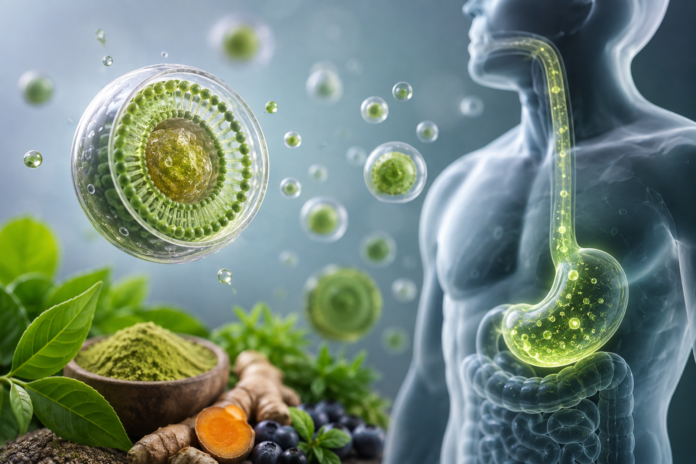
*New delivery systems are changing how plant compounds work in your body—here’s what you need to know.*
KEY STATISTICS
- Plant phytochemicals have been shown to support cellular health, but absorption challenges limit their effectiveness in the body.
- Emerging nano-scale delivery systems are designed to improve how your cells access beneficial plant compounds.
- Adults in their 25–35 age range are building cellular patterns now that influence long-term wellness outcomes.
You’ve probably heard that plant-based foods are good for you—berries, green tea, turmeric, and dozens of others contain powerful compounds called phytochemicals. But here’s the catch: most of what you eat doesn’t actually reach the cells that need it. Your digestive system breaks down and discards much of these benefits before they can do their job.
A new frontier in health science is changing that equation through nano-scale delivery systems—tiny capsules designed to protect plant compounds and deliver them directly where they work best. This isn’t science fiction; it’s real research that could reshape how we think about getting the most from our food.
The science: cellular barriers
Your body’s cells are protected by barriers that most nutrients struggle to cross. Phytochemicals—the active compounds in plants—are fragile and often broken down by stomach acid, enzymes, and the digestive process before they can be absorbed. Nano-scale delivery systems work by packaging these plant compounds into microscopic carriers made from lipids (fats) or biocompatible polymers, allowing them to bypass degradation and reach living cells intact.
- Lipid-based nanoparticles mimic your cell membranes, making it easier for plant compounds to cross into cells.
- Polymer-based systems act like protective capsules, shielding phytochemicals from stomach acid and digestive enzymes.
- These delivery systems can be engineered to release compounds slowly, prolonging their beneficial effects in your body.
- The technology allows targeting specific tissues and organs where these compounds have the most impact.
Why 25–35 matters most
Your twenties and early thirties are when your cells are still highly responsive to protective compounds, but lifestyle patterns you build now directly influence cellular aging later. If you’re relying on standard food consumption alone, you’re likely missing out on optimal levels of phytochemical protection—especially if you have a busy schedule or inconsistent diet. This age group has the most to gain from improved nutrient delivery because cellular investment now pays dividends for decades.
- Your cells are most responsive to preventive compounds during your twenties and thirties, before age-related decline accelerates.
- Poor absorption of plant nutrients now means missed protection against oxidative stress and cellular damage that compounds over time.
- Building consistent healthy eating patterns in this decade establishes the metabolic foundation for the next 50+ years.
- Emerging delivery technologies make it possible to get more impact from the same food—or less food overall.
Warning signs to watch
- Chronic fatigue that doesn’t improve with rest may signal inadequate micronutrient absorption or cellular oxidative stress.
- Persistent inflammation (joint discomfort, skin issues, slow wound healing) often reflects suboptimal antioxidant levels.
- Difficulty recovering from workouts or frequent illness suggests your immune system isn’t receiving optimal plant-based support.
- Brain fog, poor concentration, or mood changes can indicate insufficient neuroprotective compounds reaching brain cells.
- Early signs of skin aging (loss of elasticity, dullness) may reflect inadequate delivery of phytochemicals that support collagen health.
- Digestive discomfort despite eating well suggests nutrient absorption challenges in your gut.
What diet and habits help
While nano-delivery technology is advancing in research labs, your current eating habits have immediate impact on how much plant benefit you actually absorb. Focusing on whole foods that naturally contain these compounds, combined with habits that support digestion, optimizes what your body can use right now. The goal isn’t waiting for a pill—it’s maximizing your current intake while understanding how future delivery innovations might enhance your wellness.
- Eat phytochemical-rich foods with healthy fats (olive oil, avocado, nuts) to improve natural absorption of plant compounds.
- Support gut health through fermented foods and fiber to enhance overall nutrient bioavailability across your digestive tract.
- Time your plant-rich meals mindfully—consuming them with protein and fat slows digestion and improves phytochemical absorption.
- Stay consistently hydrated to support cellular function and the transport of nutrients throughout your body.
Your action plan starts now
- ✓ Assess your current diet: track phytochemical-rich foods (berries, leafy greens, cruciferous vegetables, green tea, turmeric) you consume weekly.
- ✓ Pair plants with fat: add olive oil to salads, eat nuts with fruit, include avocado—absorption improves dramatically.
- ✓ Optimize meal timing: eat plant-heavy meals with protein and fat to slow digestion and maximize nutrient uptake.
- ✓ Support your gut: add fermented foods (yogurt, sauerkraut, kimchi) or a fiber-rich breakfast to strengthen absorption capacity.
- ✓ Stay informed: follow emerging research on phytochemical delivery systems to understand when practical innovations reach consumers.
- ✓ Consult your doctor: discuss your current intake of plant compounds and whether targeted supplementation makes sense for your health profile.
Sleep and stress amplify benefits
Sleep and stress management are often overlooked factors in how well your body can absorb and use nutrients from food. When you’re sleep-deprived or chronically stressed, your digestive system becomes less efficient at breaking down and absorbing phytochemicals, and your cells become more resistant to their protective effects. Creating a stable sleep routine and managing stress actively improves the real-world benefit of every healthy meal you eat.
- Poor sleep reduces digestive enzyme production, cutting nutrient absorption by up to 30% according to circadian biology research.
- Chronic stress diverts blood away from digestion and reduces the efficiency of nutrient transport across your intestinal barrier.
- Consistent sleep (7–9 hours) and stress management (meditation, exercise, time in nature) make every healthy meal work harder for you.
- Your body can only use the nutrients it can actually absorb—sleep and stress directly determine that capacity.
Bottom Line
Plant-based phytochemicals are powerful, but most of what you eat doesn’t reach your cells due to digestive barriers and breakdown. Nano-scale delivery systems—using lipid and polymer-based carriers—represent the future of optimizing how these compounds work in your body. Right now, you can maximize absorption through smart food pairings, gut support, consistent sleep, and stress management.
In your twenties and thirties, these habits compound into decades of cellular protection. The technology is advancing in labs, but your actions today don’t require waiting—they’re available and effective right now.
365 Live Long — always consult a qualified healthcare provider before making changes to your health routine.
Sources
- Lipid- and Polymer-Based Nanoscale Delivery of Anti-Aging Phytochemicals — Wiley Interdisciplinary Reviews: Nanomedicine and Nanobiotechnology
- General guidance on cellular health and nutrient absorption — NIH — National Institutes of Health
- Sleep and digestive health overview — Mayo Clinic

