
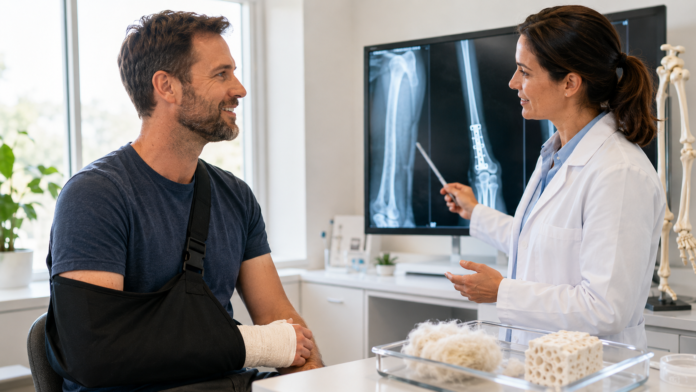
*How scientists discovered that sheep’s wool could outperform standard bone-repair materials in the lab—and what it might mean for fracture recovery.*
KEY STATISTICS
- Keratin scaffolds produced bone tissue that was more organized and structurally similar to healthy bone than conventional collagen-based materials.
- Sheep’s wool is an abundant agricultural byproduct, making keratin a potentially low-cost source for regenerative medicine applications.
- Bone injuries in young adults can have lasting effects on mobility and quality of life if not supported by effective healing strategies.
You broke your arm falling off a bike, or maybe a stress fracture sidelined your running routine. Standard fracture care works—most bones heal fine on their own—but scientists are now asking: what if we could help them heal *better*? Recent research shows that keratin, a protein extracted from sheep’s wool, prompted damaged bone to regenerate with a more organized structure than the current gold standard in bone scaffolds.
It’s not a cure-all, but it’s a glimpse into how everyday agricultural waste might one day reshape how we treat bone injuries.
What the wool discovery reveals
When bone fractures, your body naturally tries to fill the gap with new tissue. In regenerative medicine, doctors sometimes use scaffolds—temporary structures made of biocompatible material—that guide bone growth. Scientists tested keratin from wool as a scaffold material in animal studies and found something promising: bone grown around keratin scaffolds resembled healthy, natural bone more closely than bone grown around the conventional collagen scaffolds typically used today.
- Keratin scaffolds guided bone regeneration with superior tissue organization compared to standard collagen-based alternatives.
- The new material better mimics the structure and function of healthy bone tissue at the microscopic level.
- Keratin is a naturally occurring protein in wool, making it biocompatible and less likely to trigger immune rejection.
- This finding opens the door to repurposing agricultural byproducts into functional medical materials.
Why your bones matter now
If you’re in your mid-twenties to mid-thirties, bone fractures might feel like a temporary setback—and they often are. But this age window is critical for bone strength later in life. Young adults who suffer serious fractures, delayed healing, or repeated minor breaks are more likely to experience long-term mobility issues and may be at higher risk for bone density problems down the road.
- Peak bone density is reached around age 30; injuries and poor healing during this window can have lasting effects.
- Young adults often underestimate fracture recovery time, leading to premature activity and incomplete healing.
- Sports injuries, high-impact activities, and repetitive stress are common in your 20s and 30s, making injury prevention critical.
- How well you heal from bone injuries now sets the foundation for skeletal health in your 40s and beyond.
Signs your bone injury needs attention
- Swelling, bruising, or deformity at the injury site that doesn’t improve within the first few days of rest and ice.
- Sharp, persistent pain that worsens with weight-bearing or movement after the initial injury phase.
- Limited range of motion or significant weakness in the affected limb weeks after injury.
- A fracture that doesn’t feel stable or shows signs of instability when you try to move it.
- Previous fractures in the same area that healed slowly or incompletely.
- Signs of infection (increased warmth, redness, or drainage) around a fracture site or surgical site.
How to support bone healing now
While keratin scaffolds are still in research stages and not yet available for routine clinical use, you can support bone healing today through diet, movement, and recovery practices. The foundation of good bone healing is the same as the foundation of bone health: adequate nutrition, controlled activity, and time. These steps work whether you’re recovering from a fracture or building resilience against future injuries.
- Eat adequate protein (aim for 0.8–1.0 gram per pound of body weight daily) and include calcium-rich foods to fuel bone repair.
- Stay hydrated and avoid smoking and excessive alcohol, both of which interfere with bone regeneration.
- Follow your healthcare provider’s guidance on activity progression; premature loading can disrupt healing.
- Include vitamin D through sunlight exposure or supplementation—it’s essential for calcium absorption and bone strength.
Action plan for bone health
- If you suspect a fracture, seek imaging (X-ray or ultrasound) within 48 hours to confirm and guide treatment.
- Follow RICE protocol (rest, ice, compression, elevation) for the first 48–72 hours after acute injury.
- Work with a physical therapist to design a safe progression back to normal activity; don’t guess on timing.
- Ensure your diet includes 1,000–1,200 mg of calcium and 600–800 IU of vitamin D daily during healing.
- Track your recovery milestones; if healing stalls beyond expected timelines, ask your provider about advanced imaging or specialist referral.
The sleep-healing connection
One factor many young adults overlook is the role of sleep in bone healing. When you sleep, your body ramps up collagen synthesis and cellular repair—the exact processes needed to knit bone back together. Disrupted sleep or chronic sleep deprivation can slow fracture healing by weeks or even months, making recovery feel longer and more frustrating.
- Aim for 7–9 hours of consistent sleep each night during bone recovery; your body needs this time to build new bone tissue.
- Sleep deprivation lowers growth hormone and increases inflammatory markers, both of which interfere with fracture healing.
- Quality matters as much as quantity; prioritize a dark, cool room and a regular sleep schedule.
- If pain disrupts sleep after injury, talk to your doctor about short-term pain management strategies that don’t compromise recovery.
Bottom Line
Keratin scaffolds from sheep’s wool represent an exciting frontier in regenerative medicine, but they’re still in the research phase. For now, your best strategy is to support your body’s natural healing capacity through smart nutrition, controlled activity, adequate sleep, and professional guidance. If you’re recovering from a bone injury, think of yourself as being in an investment phase—the care you take today directly shapes your bone health for decades to come.
Keep an eye on emerging bone-repair technologies, but don’t wait to act on the proven strategies you can start using right now.
365 Live Long — always consult a qualified healthcare provider before making changes to your health routine.
Sources
- Scientists turn sheep’s wool into a material that helps regrow bone — ScienceDaily — Health & Medicine
- Bone Health and Osteoporosis — General Information — NIH National Institute of Arthritis and Musculoskeletal and Skin Diseases
- Fracture Care and Recovery — Mayo Clinic

