
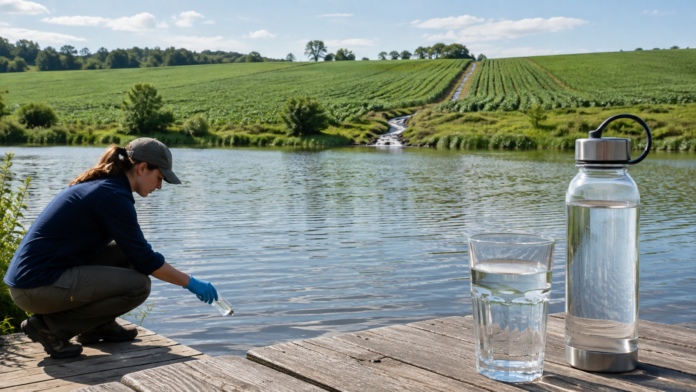
*What you need to know about herbicide exposure from drinking water and how to protect yourself*
KEY STATISTICS
- The herbicide 2,4-D is one of the most widely used agricultural chemicals in North America, applied to millions of acres annually.
- Aquatic plants are sensitive indicators of water contamination—their health directly reflects the safety of the ecosystems we rely on for drinking water.
- Young adults aged 25–35 with regular tap water consumption and outdoor water exposure face cumulative lifetime risk from persistent environmental toxins.
You probably don’t think about herbicides when you fill a glass of tap water or go for a swim in a lake. But agricultural runoff—particularly from a common weedkiller called 2,4-D—quietly makes its way into aquatic ecosystems and, eventually, into water supplies that millions of people depend on. Understanding this pathway and what it means for your health today is the first step toward smarter choices about the water you drink and the environments you spend time in.
How Herbicides Damage Water Ecosystems
When herbicides like 2,4-D enter waterways, they don’t simply vanish. These chemicals accumulate in aquatic plants, which form the foundation of freshwater food webs and water filtration systems. Scientists study how sensitive different plant species are to these toxins to understand the real-world risks to entire ecosystems—and, by extension, to human water safety.
- 2,4-D disrupts photosynthesis and nutrient uptake in aquatic plants, reducing their ability to filter and oxygenate water
- Plant sensitivity to herbicides varies widely by species; some aquatic plants collapse at low concentrations while others tolerate higher levels
- When aquatic plant communities collapse, water filtration capacity decreases and contaminant buildup accelerates downstream
Why Your Age Group Faces Real Risk
Your 25–35 age group carries unique vulnerability. You’ve grown up with tap water as your default, you’re likely to spend time outdoors (lakes, rivers, recreational water), and your lifetime exposure window is just beginning. Unlike older adults who may have already developed some tolerance patterns, your body’s baseline tolerance to persistent environmental toxins is still being established.
- Younger adults typically have 40–50+ years of cumulative exposure ahead, magnifying lifetime toxin accumulation
- Active outdoor water use (swimming, boating, fishing) increases direct and indirect exposure routes during peak lifestyle years
- Developing reproductive and immune systems remain more sensitive to endocrine-disrupting compounds found in some herbicide formulations
Signs of Potential Exposure
- Unexplained gastrointestinal symptoms after swimming or water sports in agricultural regions
- Persistent fatigue or immune dysfunction correlated with high tap water consumption in herbicide-heavy areas
- Skin irritation or rashes after contact with recreational water bodies near farmland
- Hormonal irregularities or reproductive health changes without clear cause
- Joint or muscle pain that worsens seasonally (spring/summer when herbicide application peaks)
Practical Steps to Lower Your Risk
The good news: you have actionable control over your exposure. Water filtration technology has advanced dramatically, and informed choices about where you source your water and how you recreate can meaningfully reduce your lifetime risk. The key is matching your intervention to your actual risk level based on where you live and how you use water.
- Install a whole-house or point-of-use water filter certified to reduce herbicide residues (NSF/ANSI Standard 53)
- Avoid swimming in lakes or rivers during peak agricultural spray season (late spring through early summer) or after heavy rainfall
- Choose organic or locally-sourced produce when possible to reduce dietary herbicide intake through food
Your Action Plan This Week
- Check your local water quality report (available from your municipal water authority) to identify 2,4-D or other herbicide presence
- Test your tap water through a certified lab if you have private well water or live in an agricultural area
- Research and install NSF-certified carbon or reverse-osmosis filtration if your water test shows herbicide detection
- Reduce outdoor water exposure during agricultural spray windows by planning recreation outside those peak seasons when feasible
- Join or support local watershed monitoring groups to track water safety trends in your region
Sleep & Stress Amplify Toxin Risk
One overlooked factor: your stress level and sleep quality directly affect how well your body can process and eliminate toxin exposures. When you’re chronically stressed or sleep-deprived, your liver and kidney function—the organs responsible for detoxifying environmental contaminants—operates at reduced capacity. This means the same level of exposure becomes more harmful.
- Chronic sleep deprivation impairs the body’s Phase 1 and Phase 2 detoxification pathways, reducing herbicide clearance efficiency
- High cortisol from ongoing stress dampens immune response and reduces mucous membrane integrity in the GI tract (a primary absorption barrier)
- Prioritizing 7–9 hours of sleep and daily stress-management practice strengthens your body’s resilience to unavoidable environmental exposures
Bottom Line
Herbicide contamination in drinking water and recreational ecosystems is a real health concern for your age group, but it’s not inevitable or unmanageable. By understanding your local water safety, choosing the right filtration technology, timing outdoor activities strategically, and supporting your body’s detoxification capacity through sleep and stress management, you can meaningfully reduce your lifetime risk. Start with a water test this month—it’s the single best first step toward informed protection.
365 Live Long — always consult a qualified healthcare provider before making changes to your health routine.
Sources
- Ecotoxicological responses of aquatic macrophytes to 2,4-D: A global synthesis of species sensitivity and ecological risk — Aquatic Toxicology (Amsterdam, Netherlands)
- General guidance on water quality and contaminant testing — CDC
- Information on herbicide safety and exposure — NIH

