
What your video game preferences reveal about your social health—and why it matters
KEY STATISTICS
- Adults who prefer solo, story-driven games show elevated isolation markers compared to multiplayer-focused players
- Strategic gameplay preferences correlate with reduced real-world social engagement patterns
- Cooperative game avoidance may signal underlying social withdrawal rather than simple entertainment choice
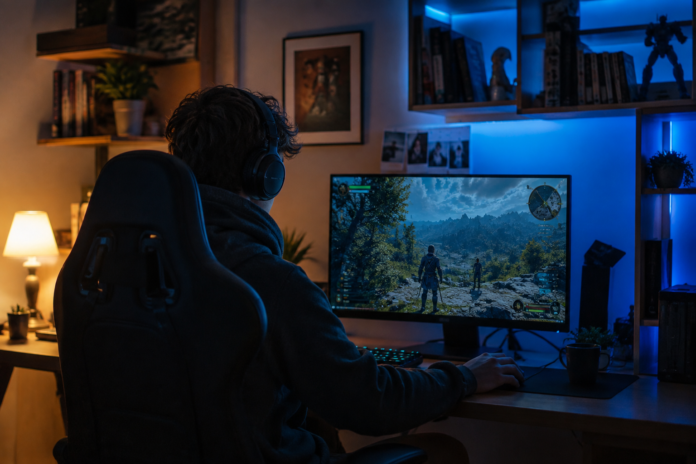
You’ve noticed it yourself: some friends can’t stop talking about squad-based games and raid nights, while others are deep in single-player campaigns. New research suggests these gaming preferences aren’t just about fun—they may actually reflect how socially isolated someone has become. If you’re spending hours alone in story-driven, strategic games while avoiding multiplayer experiences, your brain might be telling you something worth listening to.
The connection between gaming and isolation
Recent research published in PLOS Mental Health found a measurable link between certain gaming styles and social isolation. The connection isn’t that games cause loneliness, but rather that people experiencing extreme social isolation tend to gravitate toward specific game types—ones that don’t require real-time interaction with others.
- Story-driven and strategic solo games appeal more to people experiencing high isolation
- Cooperative gameplay requires real-time social coordination, which isolated individuals often avoid
- Gaming preference shifts can reflect changes in underlying social health, not just mood swings
- The brain’s reward system responds differently to solo achievement versus shared group wins
Why 25–35 is a critical window
Your age group—25 to 35—is uniquely positioned between heavy gaming habits and significant real-world social responsibilities. This decade often includes career shifts, relationship changes, and moving away from college friend groups, all of which can create isolation pockets that gaming fills.
- This age group plays games more frequently than older adults but faces real isolation risks
- Career-building years can compress social time, making solo games feel more accessible than group activities
- Post-college life often strips away built-in social structures, leaving gaps gaming can hide
- Gaming habits formed now can establish patterns that persist through midlife if not addressed
Warning signs to watch for
- You actively decline multiplayer invitations from friends or gaming communities
- Your game library is 80%+ single-player, story-driven, or strategic titles with no cooperative modes
- You feel anxious or drained at the thought of real-time team play or voice chat
- Gaming sessions have replaced most of your in-person social time over the past 3–6 months
- You find yourself defending solo gaming as superior rather than simply preferring it
- Real-world social plans feel like obligations you’d rather skip for gaming time
Rebuilding connection through gaming
The good news: changing your gaming habits can help you rebuild social connection. This doesn’t mean quitting games—it means being intentional about game choice as a signal of your social health and using games as a tool to strengthen, not replace, real relationships.
- Rotate in cooperative games with friends weekly, even for short sessions—they mimic real teamwork and communication
- Join a gaming Discord or community group tied to a game you enjoy; scheduled sessions create low-pressure social contact
- Balance solo story games with at least one weekly multiplayer or group gaming activity
- Notice when you’re choosing isolation over connection—that awareness is the first step to change
Action plan checklist
- This week: Audit your game library and note the percentage that are solo versus cooperative
- Identify one multiplayer game or cooperative title you’d actually enjoy playing with a friend
- Schedule one gaming session with a friend or group within the next 10 days—make it a recurring weekly slot
- If gaming is mostly solo, add one non-gaming social activity to your week (coffee, walk, meal with a friend)
- After two weeks, reflect: Did group gaming feel easier or more natural? What resistance came up?
- Consider whether isolation in other life areas (work, hobbies, family) mirrors your gaming patterns
The hidden sleep-isolation link
Your sleep schedule often reveals how deep isolation has gone. When gaming replaces social time, sleep patterns typically shift—late nights, irregular rhythm, and daytime fatigue all creep in. Fixing your social life often fixes sleep without any other intervention.
- Isolated individuals often game late into the night, disrupting natural circadian rhythm
- Social activity (even gaming with others) naturally anchors a healthier sleep schedule
- Poor sleep makes isolation feel less noticeable—a feedback loop that deepens withdrawal
- Restoring group gaming or real-world social time typically normalizes sleep within 2–3 weeks
Bottom Line
Your gaming preferences are a mirror, not a destiny. If you’ve noticed yourself drifting toward solo, strategic games and away from people, that’s your cue to pause and reconnect. The goal isn’t to stop gaming—it’s to use gaming as a tool for connection instead of an escape from it.
Small shifts now, like one weekly cooperative session or a gaming community meet-up, can break the isolation cycle before it deepens.
365 Live Long — always consult a qualified healthcare provider before making changes to your health routine.
Sources
- Associations between gaming preferences and social isolation in adults — PLOS Mental Health
- Social isolation and mental health — Mayo Clinic

