
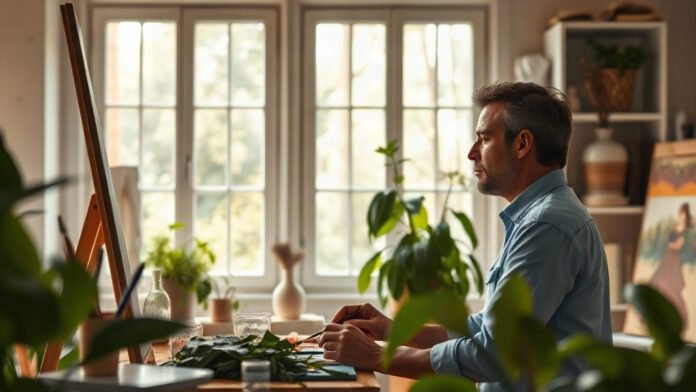
*A clinical study reveals which practice works better for stress, anxiety, and mood in later life*
KEY STATISTICS
- A randomized controlled trial found both art therapy and mindfulness reduced depression, anxiety, and stress in older adults living in care settings.
- Participants practiced these interventions over an 8-week period with measurable improvements tracked throughout.
- Both approaches showed clinically meaningful changes, suggesting choice and personal preference matter more than picking the “better” option.
If you’re in your late sixties or beyond and feeling stuck in a fog of worry, low mood, or restless anxiety, you’re not alone. A recent clinical trial compared two different approaches—art therapy and mindfulness—to see which one actually works for older adults managing depression, anxiety, and stress in residential care settings. The findings might surprise you: both work, and the real win is finding which one fits your life.
How These Practices Change Your Brain
When you’re stressed or anxious, your brain and body stay locked in a low-grade alert state. Both art therapy and mindfulness interrupt that cycle, but they do it through different pathways. One engages your hands and creative mind; the other calms your nervous system through focused attention.
- Art therapy activates regions tied to emotional processing and self-expression, shifting focus from worry to creative engagement.
- Mindfulness dampens the brain’s default stress-response network, lowering cortisol and promoting parasympathetic (rest-and-digest) activation.
- Both practices increase neuroplasticity—your brain’s ability to form new, healthier patterns—particularly important as we age.
- Regular practice rewires how your nervous system responds to daily stressors, not just in the moment but long-term.
Why This Age Group Struggles More
Older adults living in care facilities face unique stressors: loss of independence, separation from lifelong homes, and social isolation. These pressures compound existing health conditions and make depression and anxiety harder to treat with medication alone.
- Transition to group living triggers grief and identity loss, deepening anxiety and low mood.
- Reduced access to hobbies and creative outlets narrows emotional outlets and cognitive engagement.
- Medication side effects and chronic pain make non-drug interventions particularly valuable for this population.
- Social isolation—even in a shared building—is a risk factor that creative and mindful practices can directly address.
Watch for These Signs
- Withdrawing from meals, activities, or conversations you once enjoyed.
- Persistent worry, racing thoughts at night, or difficulty making simple decisions.
- Feeling hopeless about the future or expressing that life isn’t worth living.
- Changes in sleep (sleeping much more or less) or appetite without physical cause.
- Irritability, restlessness, or complaints of physical aches with no clear injury or illness.
- Difficulty concentrating or remembering recent conversations and events.
- Loss of interest in being with family or staff members—increasing isolation.
What Actually Works for You
The trial tested structured, guided sessions over 8 weeks. Real-world benefit depends on consistency and having access to trained facilitators. The good news: both approaches are low-risk, require no medication, and can be adapted to any mobility level.
- Art therapy suits people who love hands-on work—painting, drawing, sculpting—and process emotions through creation.
- Mindfulness works best for people who prefer quiet, internally focused practice and respond well to breath and body awareness.
- Combination approach: use both if possible; art in mornings, mindfulness in evenings, to target different times of day.
- Consistency beats intensity—weekly or twice-weekly sessions showed more benefit than sporadic practice.
Start Your Practice This Week
- Ask your healthcare provider or care facility about art therapy or mindfulness groups; many facilities now offer both.
- If art therapy appeals: begin with simple coloring, collage, or drawing; no artistic skill required.
- If mindfulness appeals: start with just 5 minutes of guided breathing (many free apps and videos available).
- Commit to a regular time—same day, same time each week—to build the habit.
- Track your mood and stress level before and after sessions using a simple 1–10 daily scale.
- Invite a friend or roommate to join you; shared practice increases accountability and social benefit.
- If one approach doesn’t resonate after 3–4 weeks, switch; personal fit matters more than the method itself.
The Sleep and Stress Connection
Sleep quality and emotional regulation are tightly linked, especially in older age. Both art and mindfulness improve sleep indirectly by calming the nervous system and reducing evening anxiety—a benefit the trial participants reported alongside mood gains.
- Anxious racing thoughts at bedtime often improve within weeks of consistent mindfulness or art practice.
- Creative engagement during the day reduces nighttime rumination and promotes deeper sleep.
- Regular practice lowers overall cortisol levels, helping your body’s natural sleep rhythm reset.
- Better sleep feeds back into better mood, creating an upward cycle—small changes compound over time.
Bottom Line
If you or a loved one is struggling with mood, anxiety, or stress in later life, these aren’t problems you have to simply accept or medicate away. Both art therapy and mindfulness have solid evidence behind them and genuinely help. The real choice isn’t which one is “better”—it’s which one appeals to you, and starting now.
Talk with your healthcare provider about access, pick the path that feels natural, and give it a consistent try. Relief is possible, and it may be as simple as picking up a paintbrush or taking a deep breath.
365 Live Long — always consult a qualified healthcare provider before making changes to your health routine.
Sources
- A randomized controlled trial comparing the efficacy of art therapy and mindfulness on depression, anxiety, and stress among elderly people living in old age homes — Journal of Education and Health Promotion
- General guidance on mental health in older adults — Mayo Clinic
- Mental health and aging fact sheet — NIH National Institute on Aging

