
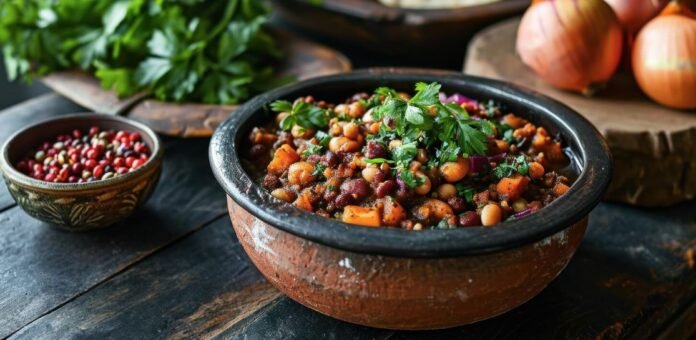
The world’s longest-lived people all eat one food in common — and it costs less than a dollar a day.
KEY STATISTICS
- People in Blue Zone communities consume legumes as a dietary staple at least four times per week, according to research published by the American Journal of Lifestyle Medicine.
- A landmark analysis of five Blue Zone populations found that legume consumption was the single strongest dietary predictor of surviving past 90 — more consistent than any other food group studied.
- A meta-analysis of dietary data from over 150,000 adults found that eating roughly one serving of legumes per day was associated with a 6 to 8 percent reduction in all-cause mortality risk.
Researchers who spent decades studying the world’s longest-lived populations — from Sardinia to Okinawa to the Seventh-day Adventist community in Loma Linda, California — kept finding the same thing on the plate. Not superfoods, not supplements, not complex protocols. Just beans.
Consistently, affordably, daily.
What Beans Actually Do
Legumes — which include lentils, chickpeas, black beans, kidney beans, and peas — are nutritionally dense in ways that matter deeply at the cellular level. They deliver a combination of soluble fiber, plant-based protein, resistant starch, and polyphenols that few other foods can match in a single serving.
The soluble fiber in legumes feeds beneficial bacteria in your gut, which then produce short-chain fatty acids like butyrate. Butyrate plays a direct role in reducing chronic low-grade inflammation — the same slow-burning inflammatory process linked to cardiovascular disease, type 2 diabetes, and accelerated cellular aging.
Legumes also have a remarkably low glycemic index compared to most carbohydrate-rich foods. They digest slowly, which means your blood sugar rises gradually rather than spiking sharply. Over time, this reduces the insulin burden on your body and lowers the risk of metabolic dysfunction.
The resistant starch in beans acts as a prebiotic — meaning it feeds your gut microbiome rather than being absorbed into your bloodstream. A healthier microbiome is now consistently linked to better immune function, lower inflammation, improved mood, and even sharper cognitive performance.
Why Your 30s Matter
Adults in their mid-twenties to mid-thirties are often in what researchers call the ‘metabolic setup’ decade. The habits and dietary patterns you establish now — including how often you eat fiber-rich, anti-inflammatory foods — shape your baseline inflammation levels, insulin sensitivity, and gut diversity heading into your forties.
Many people in this age group eat diets high in ultra-processed foods and low in dietary fiber. The average adult in Western countries consumes roughly half the recommended daily fiber intake, which means the gut microbiome is often starved of the substrates it needs to produce protective compounds.
This is also the decade when cardiovascular risk factors begin silently accumulating. Mildly elevated LDL cholesterol, slightly impaired fasting glucose, and early signs of arterial stiffness often have no symptoms — but they respond well to dietary fiber, which is one of the most evidence-backed tools for improving all three markers.
Starting a legume habit now gives your gut microbiome years to diversify and strengthen. It also gives your body the sustained fiber intake needed to support hormonal balance, blood sugar regulation, and healthy weight maintenance before those systems become harder to correct.
Warning Signs to Watch For
- You feel an energy crash mid-morning or mid-afternoon most days, which may signal blood sugar instability linked to low fiber intake
- Your digestion feels sluggish or irregular — fewer than one bowel movement per day can indicate insufficient dietary fiber
- You experience persistent bloating or gut discomfort, which in some cases reflects a microbiome that lacks diversity from too little prebiotic food
- Your LDL cholesterol or fasting blood sugar has crept upward on recent blood work, even if your doctor has not flagged it as urgent yet
- You feel full quickly when eating but hungry again within two hours — a pattern associated with low protein and fiber intake that legumes directly address
What Actually Helps
The most practical way to build a legume habit is to start with a quarter-cup serving added to something you already eat. Stir canned lentils into a soup, add chickpeas to a salad, or mix black beans into scrambled eggs. You do not need to overhaul your entire diet.
If you experience gas or bloating when you first introduce beans, this is a completely normal and temporary response. Your gut bacteria need a few weeks to adjust to the increase in fermentable fiber. Starting with smaller portions — two or three tablespoons — and increasing gradually over two to three weeks significantly reduces this discomfort for most people.
Canned legumes are nutritionally comparable to dried legumes that have been cooked from scratch. Rinsing canned beans removes a significant portion of the sodium added during processing. There is no meaningful nutritional reason to avoid canned beans if convenience is what makes the habit stick.
Soaking dried beans overnight and discarding the soaking water before cooking also reduces the oligosaccharides — the fermentable carbohydrates that cause gas — by a meaningful amount. Adding a strip of kombu seaweed or a pinch of asafoetida spice during cooking is a traditional technique that many people find further reduces digestive discomfort.
Aim for a minimum of four servings per week to match what the research shows in longevity-associated populations. One serving is roughly half a cup of cooked legumes. Daily consumption is the long-term goal, but consistency over months matters far more than perfection on any single day.
Action Plan Checklist
- Start with two tablespoons of canned, rinsed chickpeas or lentils added to your current meals — increase to a half-cup serving over three weeks to let your gut adapt gradually
- Keep one can of legumes in your kitchen at all times — lentils, black beans, or chickpeas — so the habit requires zero preparation when time is short
- If cooking dried beans, soak them for eight to twelve hours, discard the soaking water, and cook in fresh water to reduce gas-causing compounds significantly
- Track your legume intake loosely for two weeks — aim for four or more servings per week as your initial target before building toward daily consumption
- Pair your legume serving with a vegetable and a healthy fat such as olive oil or avocado to slow digestion further and improve the absorption of fat-soluble nutrients
The Overlooked Factor
One factor most people overlook when adding legumes is hydration. Dietary fiber absorbs water in the digestive tract — and if you are not drinking enough water alongside your increased fiber intake, the result can be constipation rather than the smooth digestion you are aiming for.
As a general guide, increasing your fiber intake significantly means your daily water intake should also increase. Aim for at least two liters of water on days when your diet is higher in fiber-rich foods. This is especially relevant in warmer months or if you exercise regularly.
Sleep is also more connected to your gut health than most people realize. Research from the National Institutes of Health and several microbiome studies suggests that poor or disrupted sleep reduces the diversity of gut bacteria — meaning that even if you are eating legumes regularly, chronically poor sleep may blunt some of the microbiome benefits. Treating sleep as part of your longevity strategy, not separate from it, helps your dietary changes work more effectively.
Bottom Line
Legumes are the most replicated longevity food in decades of Blue Zone research — not because they are exotic or expensive, but because they do multiple jobs at once: feeding your gut, steadying your blood sugar, reducing inflammation, and lowering cardiovascular risk. You do not need to eat them at every meal to see real benefit. Start with four servings a week, let your gut adapt, and build from there — your future self will have the data to thank you for it.
Always consult a qualified healthcare provider before making changes to your health routine.
Sources
- Blue Zones dietary patterns and longevity: a population-based analysis — American Journal of Lifestyle Medicine
- Legume consumption and risk of all-cause and cardiovascular mortality: a meta-analysis — BMJ Open
- Dietary fiber, gut microbiota, and metabolic health: evidence and clinical implications — National Library of Medicine — NIH
- The effect of legume consumption on markers of glycemic control and insulin resistance — Archives of Internal Medicine
- Fiber intake and chronic disease prevention in adults — Harvard T.H. Chan School of Public Health — The Nutrition Source

