
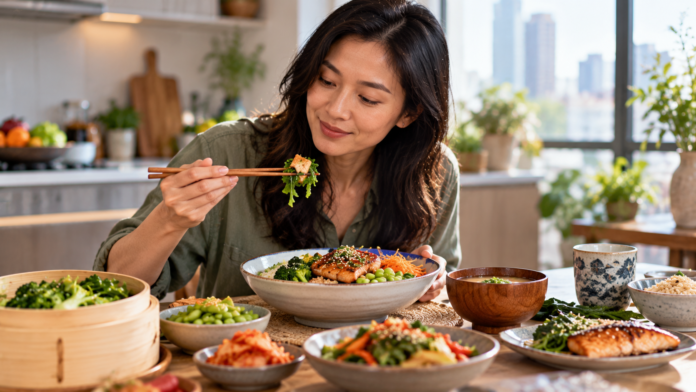
*How combining Mediterranean principles with Asian food traditions can reshape your daily meals—and why your 20s and 30s are the right time to start.*
KEY STATISTICS
- Plant-forward eating patterns are linked to lower rates of chronic disease in both Mediterranean and Asian populations.
- Young adults who adopt diverse whole-food diets early tend to maintain better metabolic health into middle age.
- Asia’s traditional food systems emphasize fermented foods, legumes, and whole grains—components increasingly recognized in longevity research.
You’ve probably heard about the Mediterranean diet—olive oil, fish, leafy greens. But if you’re looking for a eating pattern that speaks to your actual life and food preferences, there’s a quieter option gaining attention: a dietary approach that takes Mediterranean principles and roots them in the foods and cooking methods of Asia. It’s not about abandoning what works; it’s about building a food strategy that feels natural to you, uses ingredients you can actually find and afford, and supports the kind of long-term health that matters when you’re building your adult life.
What This Eating Pattern Actually Is
The Asian-Mediterranean dietary pattern isn’t a brand-new concept—it’s a recognition that the core principles of healthy eating (whole grains, legumes, abundant vegetables, healthy fats, minimal processed food) show up across different food cultures. When these two traditions overlap, they create a flexible framework that works for how modern young adults actually eat.
- Combines Mediterranean diet foundations (emphasis on plant foods, healthy fats, fish) with Asian staples like rice, soy, tea, and fermented vegetables
- Centers on whole grains, legumes, and seasonal vegetables as the core of most meals—similar macronutrient distribution to both traditions
- Incorporates traditional Asian cooking methods (steaming, stir-frying with minimal oil, slow simmering) that preserve nutrients and flavor
Why Your Age Matters Now
Your 20s and 30s feel like the time to eat however you want, but this decade actually sets the metabolic tone for the next 30 years. Early dietary patterns influence everything from blood sugar stability to arterial health, often without obvious symptoms until later. Building a sustainable eating approach now—one that fits your culture and taste—makes long-term adherence far more likely.
- Dietary habits formed in your 20s and 30s tend to persist; switching patterns later requires breaking established routines
- This age group often transitions to independent cooking and food choices, making it the ideal time to establish sustainable patterns
- Early adoption of plant-rich eating is associated with better cardiovascular and metabolic markers by 40s and 50s
Signs You May Need a Dietary Reset
- Persistent afternoon energy crashes or difficulty concentrating (may signal irregular blood sugar from refined carbs)
- Digestive bloating or irregular bowel patterns after meals (often improves with whole grains and fermented foods)
- Consistently eating processed or ultra-convenient meals more than 4 times per week
- Difficulty maintaining steady weight despite not overeating (metabolic flexibility often improves with whole-food diversity)
- Brain fog or mood swings that seem tied to meal timing (whole-food eating stabilizes both)
What Actually Works for Your Life
The practical power of an Asian-Mediterranean approach is that it works with your actual life, not against it. These food traditions already emphasize affordability, accessibility, and meals built around shared family or communal eating—exactly what young adults need when cooking time and budget are finite.
- Legumes (lentils, chickpeas, black beans, mung beans) are the protein anchor—affordable, shelf-stable, and central to both cuisines
- Fermented foods (kimchi, miso, tempeh, sauerkraut) support digestive health and are simple to incorporate into any meal
- Seasonal and local vegetables are cheaper and taste better; Asian and Mediterranean markets often have overlapping produce at lower cost
Your Starting Checklist This Week
- Stock your pantry: Add one legume you’ve never tried (red lentils, black chickpeas, adzuki beans) and one fermented condiment (miso paste or kimchi)
- Build one meal template: grain + legume + seasonal vegetables + healthy fat (olive oil, sesame oil, or coconut oil); repeat weekly
- Swap one convenience meal per week for a 20-minute whole-food version using your new pantry items
- Explore one ethnic grocery store or market in your area; compare prices and discover vegetables or ingredients you haven’t tried
- Commit to cooking one shared meal per week (family, friends, or meal prep) using this framework; consistency builds habit
The Overlooked Power of Tea Culture
Both Mediterranean and Asian food traditions center around herbal and steeped beverages—far more than just coffee or sugared drinks. Green tea, oolong, and herbal infusions have been part of daily life for centuries, and modern research increasingly recognizes their role in supporting steady energy and metabolic health. This isn’t a superfood claim; it’s simply a low-cost, low-effort habit that fits seamlessly into your day.
- Swapping even 1-2 sugared beverages per day for unsweetened tea reduces daily calorie and refined sugar intake significantly
- Tea rituals (morning, afternoon, after meals) naturally slow eating pace and improve digestion without extra effort
- Herbal teas common in both traditions—ginger, turmeric, mint, chamomile—offer flavor and mild digestive support at negligible cost
Bottom Line
The Asian-Mediterranean dietary pattern isn’t exotic or restrictive. It’s a practical way to eat using foods that are affordable, culturally meaningful, and genuinely good for your body. If you’re in your 20s or 30s and building your own food habits for the first time, this approach gives you a flexible framework that works whether you’re cooking for one or feeding a family.
Start with one new ingredient this week—a legume, a fermented food, a leaf of tea—and build from there. Small, consistent changes built on real food now create the health foundation you’ll thank yourself for later.
365 Live Long — always consult a qualified healthcare provider before making changes to your health routine.
Sources
- Towards an Optimal Diet for Health in Asia: The Asian-Mediterranean Dietary Pattern — Advances in Nutrition
- General dietary guidance for adults — Harvard Health Publishing

