
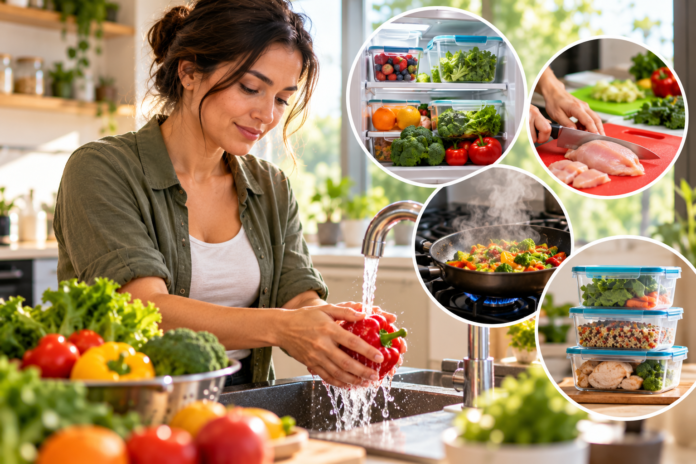
*Why clean eating goes beyond calories—what teens and young adults actually need to know*
KEY STATISTICS
- Young adults often overlook basic food hygiene despite understanding nutrition basics
- Cross-sectional research shows gaps between nutrition knowledge and food safety practice
- Foodborne illness risk increases when storage, handling, and preparation habits are rushed
You probably know that whole grains are better than white bread and that vegetables matter. But here’s what you might be missing: how you store, handle, and prepare food is just as important as *what* you eat. A recent study of adolescents and young adults in Central Kazakhstan revealed a troubling disconnect—many people understand nutrition but skip the food safety habits that actually keep meals safe and nutritious.
That gap between knowing better and doing better is exactly what we’re going to close today.
The science behind safe eating
Your body can’t absorb nutrients or stay healthy if bacteria or contamination make you sick. Food safety isn’t about being paranoid; it’s about understanding how foodborne illness happens and what conditions allow bacteria and pathogens to survive and multiply on your plate.
- Bacteria multiply rapidly at room temperature—leaving cooked food out invites growth within hours
- Cross-contamination (raw meat touching ready-to-eat foods) spreads pathogens that cause intestinal illness
- Improper storage temperatures allow harmful bacteria to survive in refrigerated and frozen items
- Unwashed produce and unclean surfaces concentrate pathogens you ingest without realizing
Why young adults slip up
Your 20s and early 30s are when independence and rushed routines often replace the food safety habits you may have learned at home. Busy schedules, budget constraints, and the appeal of convenience foods create perfect conditions for cutting corners on hygiene.
- Limited kitchen space and quick meal prep encourage shortcuts like skipping hand-washing or using one cutting board
- Cost-focused shopping sometimes leads to buying larger quantities that require careful storage you might not prioritize
- Eating on the go and reheating leftovers in a rush increases risk of undercooking or leaving food in danger zones
- Overconfidence—’I’ve eaten this way for years and haven’t gotten sick’—is a common trap that precedes foodborne illness
Signs your food safety may be slipping
- Stomach cramps, nausea, or diarrhea appearing 1–3 days after eating leftovers or eating out
- Repeatedly leaving cooked food on the counter for more than 2 hours without noticing
- Reusing the same cutting board for raw meat and vegetables in the same meal prep
- Storing raw meat above ready-to-eat foods in your fridge, allowing drips onto lower shelves
- Thawing frozen meat at room temperature instead of in the refrigerator overnight
- Not washing your hands after handling raw chicken, then preparing other foods immediately after
What actually changes behavior
Small, consistent changes to how you store, handle, and prepare food pay off far more than sporadic deep-cleaning efforts. The goal is building habits that feel automatic, not adding stress to your routine.
- Store raw meat on the lowest fridge shelf, below all ready-to-eat foods, to prevent dripping contamination
- Wash hands for 20 seconds with soap after handling raw meat, before eating, and after bathroom breaks
- Use separate cutting boards for raw meat and vegetables—color-coded or labeled boards reduce confusion in a busy kitchen
- Refrigerate leftovers within 2 hours (1 hour if room temperature exceeds 90°F) and label containers with the date
Your food safety checklist
- ☐ Check your fridge layout this week—move raw meat to the lowest shelf and organize ready-to-eat foods above
- ☐ Invest in one inexpensive cutting board dedicated to raw meat; keep it visibly separate or labeled
- ☐ Set a phone reminder for meals: ‘Check temp’ (170°F for poultry, 160°F for ground meat) before eating
- ☐ Label and date leftovers before putting them away; throw out anything older than 3–4 days
- ☐ Practice one new hygiene habit this week (e.g., hand-washing timing or surface wiping) until it feels natural
- ☐ If eating out or ordering delivery, refrigerate leftovers immediately—don’t leave them in the bag while you settle in
The stress-hygiene connection
Stress and fatigue are silent saboteurs of food safety. When you’re tired or overwhelmed, you’re more likely to skip handwashing, reuse utensils without rinsing, or misjudge how long food has been sitting out. Managing stress and prioritizing sleep isn’t just about mood—it directly protects your physical health.
- Sleep deprivation impairs decision-making, making you more likely to skip steps and take food safety shortcuts
- High stress narrows focus—you might forget to check if food smells off or looks discolored before eating
- Fatigue makes the ‘clean kitchen’ feel like a luxury rather than a baseline, so basic habits slip first
- Adequate sleep and stress management support the energy and attention you need for safe food handling
Bottom Line
You don’t need to be perfect, but you do need to be consistent. Food safety is the invisible foundation beneath every healthy meal. It’s not as glamorous as choosing organic or macrotracking, but skipping it can undo all your other good choices in a single bout of foodborne illness.
Start with one or two new habits from this list, let them stick, then add more. Your gut—and your health—will thank you.
365 Live Long — always consult a qualified healthcare provider before making changes to your health routine.
Sources
- Healthy Eating and Food Hygiene Among Adolescents in Central Kazakhstan: A Cross-Sectional Study — International Journal of Environmental Research and Public Health
- General guidance on foodborne illness prevention — CDC
- Food storage and safety guidelines — Mayo Clinic

