
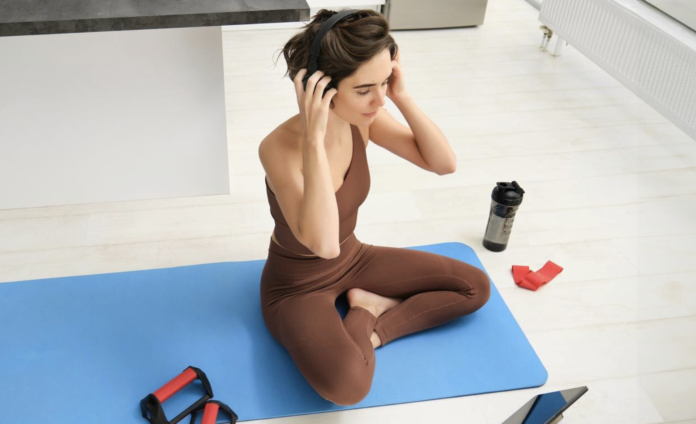
If you’re doing HIIT four or more times a week and feeling worse, your hormones may already be paying the price.
KEY STATISTICS
- Research published in the Journal of Endocrinology found that cortisol levels can rise by up to 50% after high-intensity exercise sessions lasting longer than 30 minutes.
- A study from the European Journal of Applied Physiology found that overreaching athletes showed significant suppression of both testosterone and estrogen within two weeks of excessive high-intensity training.
- The American Council on Exercise estimates that up to 60% of regular HIIT participants train at frequencies that exceed safe recovery thresholds for their fitness level.
You started doing HIIT because it promised maximum results in minimum time — and for a while, it delivered. But if you are training hard four, five, or six times a week and your energy, mood, libido, or sleep are suffering, the problem might not be your effort. It might be that your hormones are quietly breaking down under the pressure you are putting on them.
What HIIT Does Hormonally
Every time you do a high-intensity workout, your body triggers a stress response. Cortisol — your primary stress hormone — floods your system to mobilise energy, sharpen focus, and push through the effort.
In small doses, this is exactly what you want. That cortisol spike drives adaptation, builds fitness, and improves metabolic function. The problem starts when you do not give your body enough time to recover before the next spike.
When cortisol stays chronically elevated, it signals your body that it is under prolonged threat. Your brain then begins downregulating the production of reproductive hormones — specifically testosterone and estrogen — because survival takes priority over growth and reproduction.
In men, testosterone suppression from overtraining can reduce muscle-building capacity, lower motivation, and contribute to mood instability. In women, disrupted estrogen levels can interfere with the menstrual cycle, cause fatigue, and reduce bone density over time.
This is not a theory. It is a well-documented hormonal cascade that exercise scientists refer to as overreaching syndrome — and it can develop faster than most people expect.
Why Your 20s and 30s Matter
Adults between 25 and 35 are at a particularly vulnerable crossroads. This is the decade when hormonal output is naturally strong, which can mask the early warning signs of disruption.
You might feel tired but assume it is just work stress. Your libido might dip and you chalk it up to a busy life. Your mood might feel flat and you blame it on poor sleep — without realising the poor sleep is itself a symptom of elevated cortisol.
This age group also tends to have the highest motivation to train hard and the least experience recognising the line between productive effort and hormonal damage. Many people in their late twenties and early thirties are also juggling career pressure, relationship demands, and financial stress — all of which already push cortisol higher before a single workout begins.
Adding four or more HIIT sessions per week on top of a high-stress lifestyle is, for many people, the tipping point.
Warning Signs to Watch For
- Persistent fatigue that sleep does not seem to fix, even after a rest day
- Reduced libido or noticeable changes in sexual drive lasting more than two to three weeks
- Mood swings, irritability, or low motivation that feel disproportionate to your circumstances
- Disrupted sleep — particularly waking between 2am and 4am or struggling to fall asleep despite feeling exhausted
- Plateau or regression in fitness results despite training consistently and eating well
What Actually Helps
The most important shift you can make is reducing HIIT frequency to two or three sessions per week and replacing the remaining training days with lower-intensity movement. Zone 2 cardio — steady-state exercise at a pace where you can hold a conversation — actively lowers cortisol rather than spiking it.
Strength training performed at a moderate intensity two days per week also supports testosterone and estrogen balance without the same cortisol burden as repeated high-intensity intervals. The goal is not to do less — it is to vary the intensity so your hormones have time to reset between sessions.
Nutrition plays a critical supporting role. Chronically undereating, especially carbohydrates, amplifies cortisol output because low blood sugar is interpreted by the body as another form of stress. Eating enough whole food carbohydrates around training — oats, sweet potato, rice, fruit — helps buffer the cortisol response and supports hormonal recovery.
Sleep is non-negotiable. Testosterone in men is predominantly produced during deep sleep. Estrogen regulation in women is also tied to sleep quality and circadian rhythm.
If HIIT is disrupting your sleep, it is directly attacking the environment your hormones need to recover.
Action Plan Checklist
- Limit HIIT sessions to a maximum of two to three times per week with at least 48 hours between sessions
- Replace excess HIIT days with Zone 2 cardio — walking, cycling, or swimming at a conversational pace for 30 to 45 minutes
- Eat enough complex carbohydrates on training days to support cortisol buffering and hormonal recovery
- Prioritise seven to nine hours of sleep per night — treat it as part of your training programme, not an optional extra
- If symptoms persist after four weeks of reduced intensity, ask your GP for a morning cortisol, testosterone, or estrogen blood panel
The Overlooked Stress Factor
One factor almost nobody talks about is the compounding effect of life stress on training stress. Your body cannot distinguish between cortisol released during a 20-minute HIIT session and cortisol released during a difficult meeting at work.
If your daily stress load is already high, your cortisol baseline is already elevated before you even lace up your trainers. What feels like a manageable workout in isolation may be pushing you over a hormonal threshold when it stacks on top of everything else your body is already managing.
This is why two people doing the same HIIT programme can have completely different outcomes. One person might thrive while the other experiences hormonal disruption — not because their workouts are different, but because their total life stress is vastly different.
Track your resting heart rate each morning using a fitness watch or simply counting manually for 60 seconds. A resting heart rate that is consistently five to ten beats higher than your personal norm is one of the earliest and most reliable signs that your nervous system — and your hormones — are under excess strain.
Bottom Line
HIIT is a powerful tool, but more sessions do not mean better results — especially for your hormonal health. Two to three well-spaced sessions per week, supported by lower-intensity movement, quality sleep, and adequate nutrition, will deliver better long-term fitness than daily high-intensity training that quietly erodes your testosterone and estrogen. Work smarter, recover harder, and your body will give you far more back.
Always consult a qualified healthcare provider before making changes to your health routine.
Sources
- Cortisol and exercise: physiological responses and their clinical significance — Journal of Endocrinology
- Overreaching and overtraining syndrome in endurance and strength athletes — European Journal of Applied Physiology
- Exercise and testosterone: effects of intensity, frequency, and volume — National Institutes of Health — National Library of Medicine
- The role of sleep in hormonal regulation and athletic recovery — Harvard Health Publishing
- Stress hormones, reproductive function, and the HPA axis — Mayo Clinic

