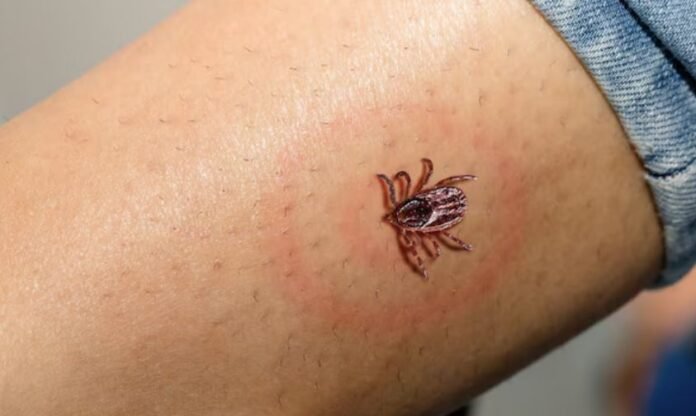
If your exhaustion, brain fog, and anxiety aren’t improving with rest, Lyme disease may be the diagnosis hiding in plain sight.
KEY STATISTICS
- Approximately 476,000 Americans are diagnosed with Lyme disease each year, according to the CDC — making it the most common vector-borne illness in the United States.
- Research published in the journal Clinical Infectious Diseases suggests that up to 20% of Lyme disease patients continue experiencing symptoms for months or years after standard antibiotic treatment.
- A study in BMC Public Health found that the average time to a correct Lyme disease diagnosis can exceed two years, during which patients are frequently misdiagnosed with anxiety, depression, or chronic fatigue syndrome.
You have been exhausted for months. You can’t focus at work, your joints ache for no clear reason, and your doctor has suggested burnout or anxiety. What if the real cause has been crawling beneath the surface — literally?
What Lyme Does Internally
Lyme disease is caused by the bacterium Borrelia burgdorferi, transmitted through the bite of infected black-legged ticks. The bite is often painless and the tick so small it goes unnoticed — which means many people never know they were bitten.
Once inside the body, Borrelia can travel through the bloodstream and embed itself in tissues, including the joints, nervous system, and heart. This is not a slow-moving infection — it disseminates quickly, often within days of the initial bite.
The immune response Lyme triggers looks remarkably similar to systemic stress responses. Inflammation, cortisol dysregulation, and nervous system disruption all occur — which is precisely why Lyme symptoms so closely mirror what we call burnout.
Why Your Age Is Vulnerable
Adults aged 25 to 35 are in a uniquely vulnerable position when it comes to delayed Lyme diagnosis. This is the age group most likely to normalize fatigue, brain fog, and mood changes as a product of demanding careers, poor sleep, or high stress.
This demographic is also statistically more active outdoors — hiking, trail running, camping, dog walking — which increases tick exposure significantly. Yet awareness of post-exposure protocols in this age group remains low.
Perhaps most critically, young adults in this range are often dismissed by both themselves and clinicians. Symptoms that might prompt further investigation in an older patient are regularly attributed to lifestyle factors in a 28-year-old — creating the ideal conditions for a missed diagnosis.
Warning Signs To Watch
- A circular, expanding red rash (erythema migrans) appearing days to weeks after a tick bite — present in roughly 70–80% of cases but often missed on darker skin tones
- Persistent fatigue that does not improve with rest, sleep, or reduced workload
- Joint pain or swelling that moves between different parts of the body — especially knees, wrists, and shoulders — without obvious injury
- Cognitive symptoms including memory lapses, word-finding difficulty, and inability to concentrate — commonly called ‘Lyme brain fog’
- Neurological symptoms such as facial palsy, tingling or numbness in the hands and feet, or headaches that feel different from your normal pattern
What Actually Helps
The most important thing you can do is stop assuming fatigue and cognitive symptoms are purely lifestyle-driven. If you have spent time outdoors in wooded, grassy, or brushy areas — even urban parks — and your symptoms have persisted for more than a few weeks, a tick-borne illness should be on your radar.
Tick checks matter more than most people realise. After outdoor activity, check your entire body including the scalp, behind the ears, armpits, groin, and behind the knees. Ticks often attach in warm, hidden areas and must feed for 36 to 48 hours before Lyme transmission typically occurs — so early removal dramatically reduces risk.
If you find a tick, remove it carefully with fine-tipped tweezers, pulling upward with steady pressure. Do not twist, burn, or use petroleum jelly. Record the date and preserve the tick if possible, then contact a healthcare provider, particularly if you develop any symptoms in the following weeks.
For those who have already received a Lyme diagnosis and completed antibiotic treatment, an anti-inflammatory approach to diet and lifestyle may support recovery. Prioritising quality sleep, reducing alcohol, managing stress, and eating a diet rich in whole foods, omega-3 fatty acids, and antioxidants can all help support immune function during recovery — though these are supportive strategies, not treatments.
Action Plan Checklist
- After any outdoor activity in tick-prone environments, do a full body tick check within two hours of returning home
- Wear light-coloured clothing and use EPA-approved insect repellents containing DEET or picaridin when spending time in wooded or grassy areas
- If you have been experiencing fatigue, joint pain, brain fog, and mood changes for more than four weeks without a clear cause, ask your doctor specifically about Lyme disease testing
- Request a two-tier blood test: the ELISA followed by a Western blot — and understand that early Lyme can produce false negatives, so clinical symptoms matter alongside results
- Keep a symptom journal tracking when symptoms began, their pattern, any outdoor activity, and any previous tick bites — this information is invaluable for accurate diagnosis
The Stress Masking Problem
One of the most overlooked factors in delayed Lyme diagnosis is the role that chronic stress and poor sleep play in masking the signal. When you are already running on empty, the additional fatigue and cognitive symptoms of Lyme disease do not stand out — they blend in perfectly.
This is also why mental health misdiagnosis is so common in Lyme patients. The neurological inflammation caused by Borrelia can genuinely produce anxiety, low mood, and irritability — symptoms that, without a Lyme context, look exactly like a generalised anxiety disorder or depression.
If you have been treated for anxiety or depression and your response to treatment has been partial or inconsistent, it is worth asking whether an underlying physical cause has been ruled out. This is not about dismissing mental health diagnoses — it is about making sure the full picture has been investigated.
Bottom Line
Lyme disease is more common than most young adults realise, and its symptoms are designed by biology to be mistaken for something else. The best protection is awareness — knowing your risk, checking for ticks, and advocating for thorough investigation if your symptoms don’t respond to rest and stress management. You know your body.
If something feels wrong, push for answers.
Always consult a qualified healthcare provider before making changes to your health routine.
Sources
- Lyme Disease Surveillance and Epidemiology — Centers for Disease Control and Prevention (CDC)
- Post-Treatment Lyme Disease Syndrome: What It Is and What It Isn’t — Clinical Infectious Diseases
- Diagnostic Delays and Misdiagnosis in Lyme Disease Patients — BMC Public Health
- Neurological Manifestations of Lyme Disease — Mayo Clinic Proceedings
- Lyme Disease: Diagnosis and Management — New England Journal of Medicine