
*How a natural compound supports clearer, healthier skin—and why your twenties matter for testing it.*
KEY STATISTICS
- Pomegranate extract showed measurable improvements in skin hydration and elasticity in a randomized clinical trial.
- The compound was well-tolerated with no serious adverse events reported in healthy adult volunteers.
- Skin health in your twenties and thirties shapes how your skin responds to support later in life.
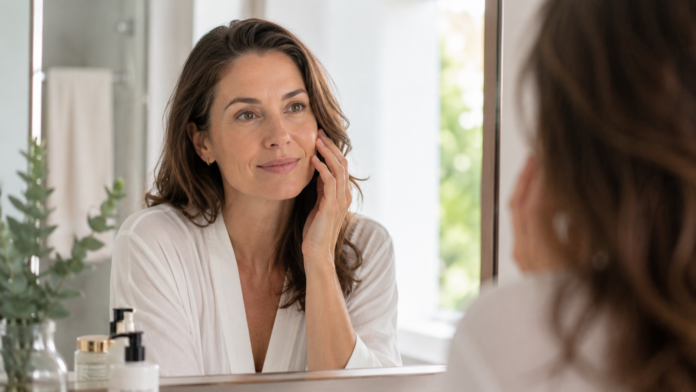
You’ve probably felt it: that moment when you catch your reflection and notice your skin doesn’t feel as fresh as it did a few years ago. Maybe it’s dryness creeping in, or a loss of that natural glow you took for granted. The good news is that your skin is responsive right now.
A recent clinical study found that pomegranate extract—a natural compound packed with antioxidants—can meaningfully support skin hydration and firmness. This isn’t hype; it’s science from a controlled trial. Let’s talk about what this means for you, and why now is the time to pay attention.
How Pomegranate Supports Skin
Your skin is constantly working to protect you and maintain hydration. Pomegranate extract contains polyphenols—powerful plant compounds that support your skin’s natural defenses against daily stress and environmental damage. When researchers tested this extract in healthy volunteers, they found real, measurable changes in how skin held moisture and bounced back.
- Polyphenols in pomegranate act as antioxidants, helping skin resist oxidative stress from sun and pollution.
- The extract boosts skin’s ability to retain water, reducing dryness and improving visible hydration.
- These compounds may support natural collagen maintenance, contributing to skin firmness and elasticity.
- The mechanism works at a cellular level without harsh chemicals or invasive procedures.
Why Your Skin Needs Support Now
Your twenties and thirties are a critical window. This is when your skin’s natural renewal slows down, but it’s also when support works most effectively. Establishing good habits now—including backing your routine with evidence-based compounds like pomegranate extract—sets the foundation for how your skin ages throughout your forties and beyond.
- Natural collagen production peaks in your early twenties, then gradually declines—starting now.
- Environmental damage (sun, stress, pollution) accumulates over years; early support prevents visible damage.
- Your skin’s barrier function is most responsive to supportive compounds during this life stage.
- Habits and nutrition you establish now directly influence skin health in your thirties and beyond.
Signs Your Skin May Benefit
- Persistent dryness, tightness, or flaking that doesn’t improve with regular moisturizer.
- Loss of firmness or elasticity, especially around cheeks, jawline, or under eyes.
- Uneven tone, dark spots, or increased sensitivity to products you’ve used before.
- Combination patterns—oily in some areas, dehydrated in others—suggesting compromised skin barrier.
- Feeling like your skin looks dull or lacks radiance despite sleep and hydration.
What Actually Moves the Needle
Supporting your skin goes beyond a single ingredient. Real change comes from pairing pomegranate extract with foundational habits: consistent sun protection, hydration, and a diet rich in whole foods. The clinical trial participants saw results, but they weren’t doing nothing else—they were living as healthy people do, and adding a targeted support.
- Daily SPF 30+ is non-negotiable; UV damage erases gains from any skin-support supplement.
- Drink enough water daily (aim for half your body weight in ounces); hydration starts inside.
- Eat antioxidant-rich whole foods—berries, leafy greens, nuts—to complement any topical or oral support.
- Sleep 7–9 hours; skin repairs itself during deep sleep, when growth hormone peaks.
Your Four-Week Starter Plan
- Commit to one full month of consistent sun protection (daily SPF) as your baseline.
- Add a pomegranate extract supplement or topical product to your routine; follow label dosing.
- Track one skin metric (hydration, firmness, or how clothes fit) weekly—journal it briefly.
- Pair the extract with 2–3 hydrating whole-food additions (nuts, citrus, leafy greens) this week.
- Schedule a skin-check baseline photo in natural light; compare in 8–12 weeks.
The Confidence Factor
Emotional buy-in matters. It’s easy to feel frustrated with skin changes—they feel personal, visible, unavoidable. But understanding *why* your skin is changing, and *what* you can do about it, transforms frustration into agency.
Pomegranate extract is just one tool, but it’s a science-backed one, which means you’re making a choice grounded in evidence, not marketing.
- Knowing your skin has a plan reduces anxiety; actionable steps feel empowering, not defeating.
- Evidence-based support feels different from guessing—you’re working *with* your skin, not against it.
- Visible improvements (even small ones) in firmness or glow reinforce that effort matters at your age.
- Sharing your progress normalizes skin-health conversations with peers facing the same concerns.
Bottom Line
Your skin is not betraying you—it’s simply responding to time, environment, and nutrition. Pomegranate extract, backed by clinical evidence, offers a meaningful way to support hydration and firmness during a critical decade for skin health. Combined with sun protection, hydration, and whole-food nutrition, it’s a practical, evidence-based tool that meets you where you are right now.
Start this week, stay consistent, and give it time. Your skin is listening.
365 Live Long — always consult a qualified healthcare provider before making changes to your health routine.
Sources
- Efficacy and safety of a proprietary Punica granatum extract in skin health—a randomized, placebo-controlled clinical study in healthy volunteers — American Journal of Translational Research
- General guidance on skin health and antioxidants — Mayo Clinic
- UV protection and skin aging prevention — Harvard Health

