
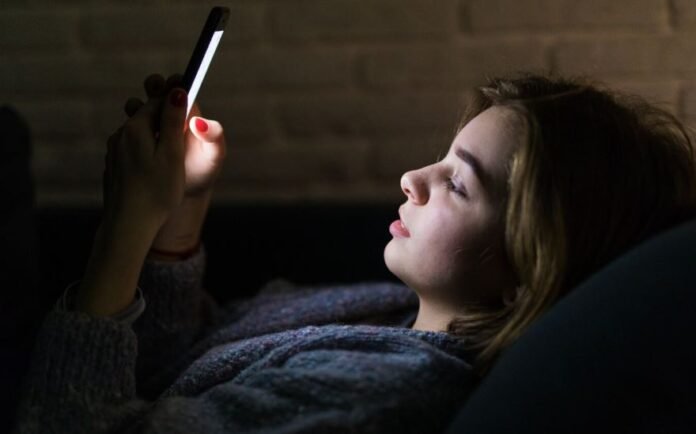
Your late-night scroll habit is quietly dismantling the sleep your body desperately needs to repair itself.
KEY STATISTICS
- 90% of adults in the US use an electronic device within one hour of bedtime, according to the National Sleep Foundation.
- Even two hours of evening screen exposure can suppress melatonin production by up to 22%, according to research published in the Journal of Clinical Endocrinology and Metabolism.
- Adults who get less than 7 hours of quality sleep are 3 times more likely to develop symptoms of depression and anxiety, according to the CDC.
You tell yourself it is just a few minutes — a quick check of Instagram, a YouTube video to wind down, a few texts before bed. But what feels like harmless downtime is actively interfering with the biological processes that keep your brain sharp, your mood stable, and your body recovered. The damage is not dramatic or immediate, which is exactly why most people never connect their fatigue, irritability, and brain fog back to what they were doing at 10pm the night before.
What Screens Do Inside
Your brain begins preparing for sleep hours before you actually close your eyes. A tiny gland called the pineal gland starts releasing melatonin — your body’s primary sleep hormone — in response to dimming light, signalling that night has arrived.
The blue-wavelength light emitted by smartphones, tablets, and laptop screens mimics daylight. When your eyes detect this light in the evening, your brain interprets it as a signal to stay alert, delay melatonin release, and suppress the onset of deep sleep stages.
This is not just about falling asleep later. The deeper issue is that your body cycles through distinct sleep stages — light sleep, deep slow-wave sleep, and REM sleep — in a specific sequence. Disrupting melatonin timing compresses these cycles, meaning you may sleep for seven or eight hours and still miss significant amounts of the restorative deep sleep your muscles, immune system, and memory consolidation depend on.
Why Your Age Makes This Worse
Adults between 25 and 35 are in a phase of life where demands are high and sleep is often the first thing sacrificed. Career pressure, social obligations, relationship stress, and the constant pull of content consumption create a perfect environment for chronic poor sleep to take root.
At this age, the brain is still completing important developmental consolidation — particularly in areas linked to emotional regulation and executive function. Poor deep sleep during your late twenties and early thirties is not neutral. It chips away at cognitive performance in ways that compound quietly over time.
There is also a metabolic angle. Sleep disruption in this age group is linked to elevated cortisol, increased appetite for high-calorie foods, and reduced insulin sensitivity — all of which can set the foundation for longer-term metabolic problems. The habits built now tend to calcify, making them harder to reverse in your forties.
Warning Signs to Watch For
- You wake up feeling unrefreshed even after a full night of sleep
- You rely on caffeine before 9am just to feel functional
- Your mood dips noticeably in the afternoon with no clear reason
- You struggle to concentrate or remember things you knew recently
- You feel wired at bedtime but exhausted throughout the day — a classic sign of disrupted cortisol rhythm
What Actually Helps Here
The most effective intervention is not an app or a supplement — it is a boundary between your screen time and your sleep time. Research consistently shows that a 60 to 90 minute screen-free window before bed gives your melatonin levels enough time to rise naturally and initiate deep sleep onset.
This does not mean you need to sit in silence staring at the wall. Reading a physical book, gentle stretching, journaling, or even a low-stimulation podcast with your phone face-down are all activities that allow your nervous system to shift into parasympathetic mode — the biological state required for genuine rest.
If eliminating screens feels unrealistic, the next most effective step is changing the nature of what you consume. Passive, low-stimulation content creates far less cognitive arousal than social media, news, or competitive games. Your brain responds not just to the light, but to the emotional and cognitive load of what it is processing before sleep.
Action Plan Checklist
- Set a hard screen-off time at least 60 minutes before your intended sleep time — use a phone alarm to remind you
- Enable Night Shift or a blue light filter from 7pm onward as a minimum harm-reduction step if screens cannot be avoided
- Charge your phone outside the bedroom so it is not the last thing you see and the first thing you reach for
- Replace the scroll habit with a physical anchor — a book, a journal, or a simple stretching routine — to build a new end-of-day association
- Track your morning energy score for two weeks on a simple 1–10 scale to see whether your evening habits are shifting your recovery quality
The Stress Loop You Overlook
There is a feedback loop that most people miss entirely. Scrolling before bed does not just suppress melatonin — the content itself elevates cortisol. News, social comparison, work emails, and emotionally charged videos all trigger low-level stress responses that keep your sympathetic nervous system activated well past the point when you put the phone down.
Elevated evening cortisol delays sleep onset and reduces the proportion of deep slow-wave sleep you actually get. The next morning, your cortisol rhythm starts from a higher baseline, which makes you feel more reactive, more anxious, and less mentally clear throughout the day.
Over time, this cycle becomes self-reinforcing. Poor sleep increases stress sensitivity, which makes you more likely to seek the dopamine relief of scrolling the following night, which further disrupts sleep. Recognising this loop is the first real step toward breaking it.
Bottom Line
Evening screen habits are not just a willpower problem — they are a biological one, and your body keeps score. Protecting even 60 minutes of screen-free time before sleep is one of the highest-return investments you can make in your daily energy, mental clarity, and long-term resilience. Small boundaries at night create measurably better days.
Always consult a qualified healthcare provider before making changes to your health routine.
Sources
- Evening use of light-emitting eReaders negatively affects sleep, circadian timing, and next-morning alertness — Proceedings of the National Academy of Sciences
- Artificial light at night and its impact on melatonin and sleep — Journal of Clinical Endocrinology and Metabolism
- Sleep and mental health: the bidirectional relationship — CDC — National Center for Chronic Disease Prevention
- Screen time before bed and sleep quality in young adults — NIH National Library of Medicine
- Blue light has a dark side: what you should know — Harvard Health Publishing

