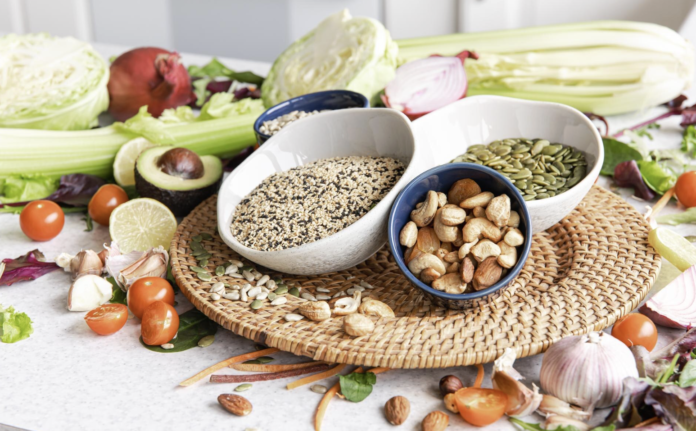
Flaxseeds and pumpkin seeds are trending for hormone balance — but what does the science actually say?
KEY STATISTICS
- Up to 80% of women experience at least one symptom of hormonal imbalance during their reproductive years, according to estimates from the American College of Obstetricians and Gynecologists.
- Flaxseeds are the richest known dietary source of lignans, plant compounds that interact with estrogen receptors in the body, according to research published in the Journal of Nutrition.
- A 2017 study in the journal Nutrients found that flaxseed supplementation was associated with modest improvements in menstrual cycle regularity in women with hormonal disruption.
If you have spent any time in wellness circles recently, you have probably seen seed cycling described as a natural way to balance estrogen and progesterone throughout your menstrual cycle. The idea sounds almost too simple: eat specific seeds during specific phases of your cycle and your hormones will follow. But is there real science behind this, or is it another trend dressed up in nutritional language?
How Seed Cycling Works
Seed cycling involves eating flaxseeds and pumpkin seeds during the follicular phase of the cycle — roughly days one to fourteen — then switching to sesame seeds and sunflower seeds during the luteal phase, roughly days fifteen to twenty-eight.
The reasoning is rooted in phytoestrogens and zinc. Flaxseeds contain lignans, which are plant-based compounds that can weakly bind to estrogen receptors and may help modulate estrogen activity during the first half of the cycle when estrogen is naturally rising.
Pumpkin seeds are rich in zinc, a mineral that supports the production of progesterone. Progesterone is the dominant hormone during the luteal phase, and adequate zinc levels are considered important for its synthesis.
Sesame seeds also contain lignans, while sunflower seeds provide selenium and vitamin E — both antioxidants that support overall reproductive hormone function. The idea is that each seed group provides targeted nutritional support that aligns with what the body needs at each phase.
Here is the honest caveat: direct clinical trials testing the full seed cycling protocol are limited. Most of the supporting evidence comes from studies on individual nutrients — flaxseed lignans, zinc, selenium — rather than the combined protocol itself. That does not make it useless, but it does mean claims should be proportionate to what the evidence currently shows.
Why Your 20s Matter
For women between 25 and 35, hormonal balance is not a distant concern. This is the decade when many people are coming off hormonal contraception, trying to conceive, managing irregular cycles, or noticing symptoms like PMS, mood shifts, or energy crashes that never used to be there.
Coming off the pill in particular can leave the body recalibrating its own natural hormone rhythm, sometimes for several months. During this window, nutritional support for hormone-related pathways may genuinely be useful, even if the evidence is not yet definitive.
Stress is also a significant hormone disruptor in this age group. Elevated cortisol suppresses progesterone production, which means that even women eating well and sleeping reasonably may be running with suboptimal progesterone if their stress load is high. Supporting the body with nutrient-dense, phytoestrogen-containing foods is a low-risk way to address one variable in a complex system.
Warning Signs to Watch
- Irregular periods or cycles that are consistently shorter than 21 days or longer than 35 days without a known cause
- Severe PMS symptoms including significant mood changes, bloating, breast tenderness, or heavy cramping in the week before your period
- Persistent fatigue in the second half of your cycle that is not explained by sleep or workload
- Acne flare-ups that follow a consistent hormonal pattern, particularly around ovulation or the week before menstruation
- Difficulty conceiving after several months of trying, which may signal an underlying hormonal imbalance worth investigating with a healthcare provider
What Actually Helps
The practical approach to seed cycling is straightforward. During days one to fourteen, add one to two tablespoons of ground flaxseeds and one to two tablespoons of pumpkin seeds to your daily food. Ground flaxseeds are important — whole flaxseeds often pass through the digestive system without being fully absorbed.
During days fifteen to twenty-eight, switch to one to two tablespoons each of sesame seeds and sunflower seeds. You can blend these into smoothies, stir them into oatmeal, scatter them over salads, or mix them into yoghurt.
Consistency matters more than perfection. Missing a day here and there is unlikely to undermine any benefit, but rotating the seeds reliably over two to three full cycles is the minimum timeframe most practitioners suggest before assessing whether any changes are noticeable.
It is also worth noting what seed cycling is not. It is not a replacement for medical treatment of diagnosed conditions like PCOS, endometriosis, or thyroid dysfunction. Think of it as a nutritional support strategy, not a cure.
For many women, it sits well alongside conventional care without any conflict.
Action Plan Checklist
- Track your cycle for at least one full month before starting so you know when your follicular and luteal phases begin and end
- During days 1–14, add 1–2 tablespoons each of freshly ground flaxseeds and raw pumpkin seeds to your daily meals
- During days 15–28, switch to 1–2 tablespoons each of ground sesame seeds and raw sunflower seeds daily
- Commit to at least two to three full cycles before evaluating whether symptoms like PMS, energy, or cycle regularity have shifted
- If you have a diagnosed hormonal condition or are currently on hormone therapy, discuss seed cycling with your healthcare provider before starting
The Liver Connection
The often-overlooked factor in any hormone conversation is the liver. Estrogen that is used by the body must be broken down and cleared efficiently through the liver and digestive system. If that clearance pathway is sluggish, estrogen can recirculate, contributing to the very symptoms seed cycling is meant to address.
The lignans in flaxseeds actually support healthy estrogen metabolism in the gut by promoting the clearance of used estrogen rather than its reabsorption. This is one reason why fibre intake and gut health are deeply connected to hormonal balance — and why seed cycling may work partly through gut mechanisms rather than direct hormonal action.
If you are supporting hormone health through food, it is worth also considering fibre intake from vegetables and legumes, limiting alcohol since it burdens liver clearance, and managing chronic stress, which directly suppresses progesterone. Seed cycling works best as part of a broader approach rather than as a standalone fix.
Bottom Line
Seed cycling is not a miracle protocol, and the direct clinical evidence is still catching up with the concept. But the individual nutrients involved — lignans, zinc, selenium, vitamin E — have genuine, evidence-backed roles in reproductive hormone function, and rotating these seeds across your cycle is a low-cost, low-risk addition to a balanced diet. If you are in your late twenties or early thirties and noticing hormonal symptoms, it is a practical starting point worth exploring alongside professional guidance.
Always consult a qualified healthcare provider before making changes to your health routine.
Sources
- Flaxseed and its lignans: effects on hormone-related conditions — Journal of Nutrition
- Dietary flaxseed as a strategy for improving human health — Nutrients
- Zinc and reproductive health: roles in hormone synthesis and fertility — National Institutes of Health — Office of Dietary Supplements
- Phytoestrogens and their health effect — Open Access Macedonian Journal of Medical Sciences
- Selenium and vitamin E in reproductive endocrinology — Mayo Clinic Proceedings