
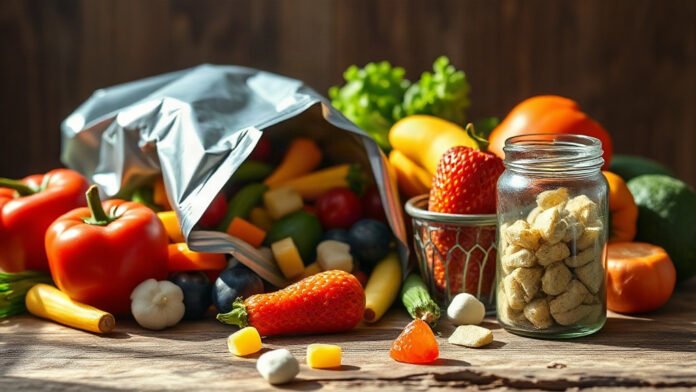
Your low-calorie snacks may look harmless — but the additives inside are quietly dismantling the bacterial colonies your body depends on.
KEY STATISTICS
- A 2022 study published in Nature found that emulsifiers commonly found in processed foods significantly reduced populations of beneficial gut bacteria, including Lactobacillus and Bifidobacterium strains, within just two weeks of regular consumption.
- Research from the NutriNet-Santé cohort study, tracking over 100,000 adults, found that those with the highest ultra-processed food intake had meaningfully worse gut microbiome diversity compared to those eating minimally processed diets.
- According to the NIH, the average American consumes more than 57% of their daily calories from ultra-processed foods — and many of those contain multiple emulsifiers and synthetic additives in a single serving.
You checked the calories. You checked the sugar. You even scanned for saturated fat.
But the number you never thought to look at — the one that actually matters for your long-term gut health — is buried in the ingredients list, listed under names most people cannot even pronounce.
What Additives Actually Do
Your gut is home to roughly 38 trillion microorganisms, and that community — your microbiome — acts as a second immune system, a mood regulator, and a metabolic engine all at once.
The problem starts with emulsifiers. These are ingredients like carboxymethylcellulose, polysorbate-80, and carrageenan, added to processed foods to improve texture and extend shelf life.
Research published in Nature demonstrated that these compounds disrupt the protective mucus layer lining your intestinal wall. Once that barrier thins, bacteria that should stay in your gut begin migrating toward the epithelial cells — triggering low-grade inflammation.
Beyond emulsifiers, artificial sweeteners like saccharin and sucralose have been shown in controlled trials to alter the ratio of gut bacteria, reducing strains associated with insulin regulation. This means the additives in a “diet” snack can quietly worsen blood sugar control over time.
The effect is not dramatic or immediate, which is exactly why it goes unnoticed for years. The damage accumulates slowly while calorie counts remain perfectly acceptable.
Why Your Twenties Matter
Adults aged 25 to 35 are at a particularly vulnerable stage for microbiome disruption. These are the years when dietary patterns solidify, work stress peaks, and convenience eating becomes a default — not an occasional choice.
Many people in this age group eat ultra-processed snacks daily without any visible symptoms. That absence of obvious symptoms creates a false sense of safety that delays meaningful dietary change.
Research also suggests that microbiome diversity established in your twenties and thirties sets a baseline that influences inflammatory risk, immune function, and metabolic health well into your forties and beyond. The habits built now are not just affecting today — they are programming your biology for decades.
Warning Signs to Watch For
- Bloating or gas that appears regularly after eating packaged snacks, even ones that seem mild or low-calorie
- Loose or inconsistent stools without an obvious dietary explanation — a sign your gut lining may be compromised
- Brain fog or unusual fatigue after meals, which can indicate gut-derived inflammation affecting neurological signalling
- Increased food cravings — especially for sugar and carbohydrates — even shortly after eating, potentially linked to disrupted gut bacteria influencing hunger hormones
- Frequent minor illnesses or slower recovery from colds, suggesting a weakened gut-associated immune response
What Actually Helps
The most effective starting point is not eliminating all processed food — it is identifying which snacks in your daily rotation contain emulsifiers and replacing them with whole-food alternatives.
Check ingredient labels for polysorbate-80, carboxymethylcellulose, carrageenan, and modified starch. If a snack contains two or more of these in a single serving, it is worth replacing — regardless of its calorie or macronutrient profile.
Swapping packaged crackers for oatcakes, rice cakes with nut butter, or plain nuts reduces your emulsifier load significantly without requiring calorie counting or meal prep.
Feeding your existing good bacteria matters just as much as protecting them. Prebiotic-rich foods like garlic, onions, leeks, green bananas, and chicory root provide the fermentable fibre that Lactobacillus and Bifidobacterium strains need to survive and multiply.
Diversity is the goal. Eating 30 or more different plant foods per week has been associated with significantly greater microbiome variety, according to research from the American Gut Project. That number sounds high, but it includes spices, herbs, seeds, and legumes — not just vegetables.
Action Plan Checklist
- Read ingredient lists on every packaged snack you buy regularly and flag any that contain emulsifiers, carrageenan, polysorbate-80, or artificial sweeteners
- Replace at least one ultra-processed snack daily with a whole-food option — plain nuts, fruit with nut butter, hard-boiled eggs, or vegetable sticks with hummus
- Add one prebiotic food to your diet each day — garlic cooked into meals, a green banana, or a portion of cooked and cooled potato counts toward this goal
- Track your plant food variety for one week using a simple tally — aim for at least 20 different plant foods as a starting target before building toward 30
- Give yourself a two-week window to notice changes — reduced bloating, more consistent energy, and improved digestion are often the first measurable signs of microbiome recovery
The Stress and Gut Link
There is one factor that accelerates microbiome disruption significantly, and most people in this age group are dealing with it daily: chronic stress.
Elevated cortisol alters intestinal permeability and changes the gut environment in ways that make it easier for harmful bacteria to outcompete beneficial ones. When you combine workplace stress with a diet high in emulsifiers, the combined effect on your gut barrier is considerably worse than either factor alone.
This does not mean stress management replaces dietary change — but it does mean that addressing snack quality while ignoring chronic stress will only get you partway there. Even basic stress reduction strategies like a ten-minute walk after lunch or a consistent sleep schedule can meaningfully support the gut repair process.
Bottom Line
Your snack habits may look responsible on the surface — low calorie, portion-controlled, grabbing something between meals — but the additives in those packages are working against your gut in ways that take years to show up visibly. Shifting toward whole-food snacks and adding prebiotic diversity to your diet is not a dramatic overhaul. It is a small, specific change with a measurable impact on one of the most important systems in your body.
Always consult a qualified healthcare provider before making changes to your health routine.
Sources
- Dietary emulsifiers impact the mouse gut microbiota promoting colitis and metabolic syndrome — Nature
- Association between ultra-processed food consumption and gut microbiome diversity — NutriNet-Santé Cohort Study, Cell Metabolism
- Artificial sweeteners induce glucose intolerance by altering the gut microbiota — Nature
- American Gut Project: plant diversity and microbiome richness in human adults — mSystems, American Society for Microbiology
- Gut microbiota features associated with Clostridioides difficile colonization in dairy cattle — NIH National Library of Medicine

