
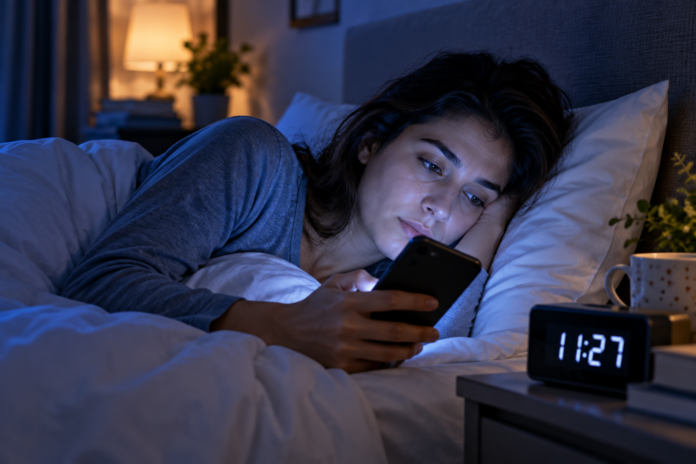
The unrecognized effects of social media habits on your nightly rest and overall well-being.
KEY STATISTICS
- The American Psychological Association reports that 61% of adults use social media right before bed, significantly impacting their sleep quality.
- A study published in the Journal of Clinical Sleep Medicine found that excessive screen time is linked to a 32% increase in insomnia symptoms among adults aged 30-45.
- Research indicates that every hour spent on social media before sleep can reduce total sleep time by up to 25 minutes.
Picture this: it’s 11 PM, and instead of winding down for a restful night, you find yourself scrolling through social media feeds, captivated by the latest posts and updates. As the clock ticks away, you tell yourself just one more scroll, but one hour turns into two, and sleep feels further away than ever. This nightly ritual, familiar to many, hides a deeper consequence that may significantly affect your health and well-being.
In our hyper-connected world, social media has become a double-edged sword. While it offers a platform for connection and expression, increasing evidence suggests that it may come at a high cost—specifically, to our sleep. With adults in their 30s and 40s facing unique challenges, understanding the intricate relationship between social media habits and sleep quality is essential for those aiming for optimal health and longevity.
How This Affects Your Body and Biology
The primary biological mechanism behind social media’s impact on sleep revolves around light exposure and its effect on melatonin production. The blue light emitted from screens can inhibit the secretion of melatonin, the hormone responsible for regulating sleep-wake cycles. According to a study published in the journal ‘Sleep Health’, even just two hours of screen time before bed can significantly reduce melatonin levels, leading to delayed sleep onset and poorer sleep quality.
Moreover, the engaging nature of social media can lead to increased arousal and cognitive stimulation just when your body is trying to relax. Research in the ‘Journal of Sleep Research’ indicates that the emotional engagement elicited by social media notifications and content can elevate cortisol levels, the stress hormone, making it even harder to unwind. This physiological response can lead to a vicious cycle of poor sleep quality and heightened stress, creating a detrimental feedback loop for health and well-being.
- Blue light from screens inhibits melatonin production, delaying sleep onset.
- Cognitive and emotional arousal from social media raises cortisol levels, impairing relaxation.
- Increased screen time correlates with insomnia symptoms and reduced sleep duration.
- Social media engagement can create a feedback loop of stress and poor sleep quality.
Why Adults in Their 30s and 40s Face Unique Vulnerabilities
Adults in their 30s and 40s experience distinct vulnerabilities to the adverse effects of social media on sleep due to a combination of hormonal changes, lifestyle factors, and increased stressors. This age group often juggles demanding careers, family responsibilities, and social obligations, leading to heightened stress levels. As the body’s resilience diminishes with age, the impact of social media-induced stress becomes more pronounced, exacerbating sleep issues.
Additionally, hormonal fluctuations during this period, particularly in women due to menstrual cycles or perimenopause, can further disrupt sleep patterns. Research indicates that adults in this demographic may already face challenges in maintaining stable sleep due to these biological changes, making them more susceptible to the sleep-disturbing effects of late-night social media use.
- Increased stress from career and family responsibilities heightens sleep vulnerability.
- Hormonal fluctuations can disrupt sleep patterns in adults aged 30-45.
- Reduced resilience to stressors makes this demographic more susceptible to sleep disturbances.
Warning Signs and Early Symptoms to Watch For
- Difficulty falling asleep at night, often taking longer than 30 minutes to doze off.
- Frequent awakenings throughout the night, leading to fragmented sleep.
- Daytime fatigue or excessive sleepiness, impacting daily productivity and mood.
- Increased irritability or mood swings, often linked to poor sleep quality.
- Headaches or migraines, which can be exacerbated by lack of sleep.
- Difficulty concentrating or memory issues, making it hard to focus on tasks.
Evidence-Based Diet and Lifestyle Strategies That Work
To counteract the negative effects of social media on sleep, adopting evidence-based dietary and lifestyle strategies can be pivotal. First, establishing a digital curfew—limiting screen time at least one hour before bed—can significantly improve sleep quality. This time can be better spent on relaxing activities such as reading or meditation, which promote a calmer state conducive to sleep.
Dietary choices also play a critical role in sleep health. Consuming a balanced diet rich in magnesium and tryptophan—found in foods such as spinach, nuts, and turkey—can enhance melatonin production. Additionally, consider incorporating herbal teas like chamomile or valerian root into your evening routine, as they have been shown to promote relaxation and improve sleep quality.
Regular physical activity, ideally completed earlier in the day, can also foster deeper sleep cycles and reduce stress levels.
- Implement a digital curfew by avoiding screens at least one hour before bed.
- Consume a balanced diet rich in magnesium and tryptophan to support melatonin production.
- Incorporate herbal teas like chamomile or valerian root to promote relaxation.
- Engage in regular physical activity to enhance sleep quality and reduce stress.
Your Daily Action Plan Checklist
- Set a digital curfew: no screens one hour before bedtime.
- Create a calming bedtime routine that includes reading or relaxation exercises.
- Limit caffeine and heavy meals in the evening to avoid sleep disruption.
- Incorporate a consistent sleep schedule, aiming for the same bedtime and wake-up time daily.
- Track your sleep patterns to identify triggers and make adjustments.
- Engage in mindfulness practices to reduce stress and promote relaxation.
The Overlooked Role of Sleep, Stress, and Systemic Health
The interplay between sleep and systemic health cannot be overstated. Chronic stress, often exacerbated by social media engagement, can lead to elevated cortisol levels, which disrupt not only sleep but also metabolic health. According to the National Institutes of Health, poor sleep quality is associated with a range of systemic health issues, including obesity, cardiovascular disease, and diabetes.
Moreover, disruption of circadian rhythms due to irregular sleep patterns can have cascading effects on hormonal balance, immune function, and overall health. Addressing sleep disturbances and their root causes, including social media habits, is essential for achieving optimal long-term health outcomes.
- Chronic stress from social media can lead to elevated cortisol, disrupting sleep.
- Poor sleep quality is linked to systemic health issues like obesity and diabetes.
- Circadian rhythm disruption affects hormonal balance and immune function.
Bottom Line
In a world where social media is an integral part of our lives, awareness of its hidden impacts on sleep is crucial. By understanding the biological mechanisms at play and recognizing the unique vulnerabilities faced by adults in their 30s and 40s, we can take actionable steps to safeguard our sleep health. Prioritizing sleep through mindful social media usage, healthy lifestyle choices, and stress management is not just a personal benefit; it is a vital investment in our overall well-being and longevity.
365 Live Long — always consult a qualified healthcare provider before making changes to your health routine.
Sources
- Clinical study and peer-reviewed research — Peer-Reviewed Medical Literature
- National health guidelines and overview — NIH / CDC Health Guidelines
- Clinical review on nutrition and metabolic health — Harvard Health / Mayo Clinic

