
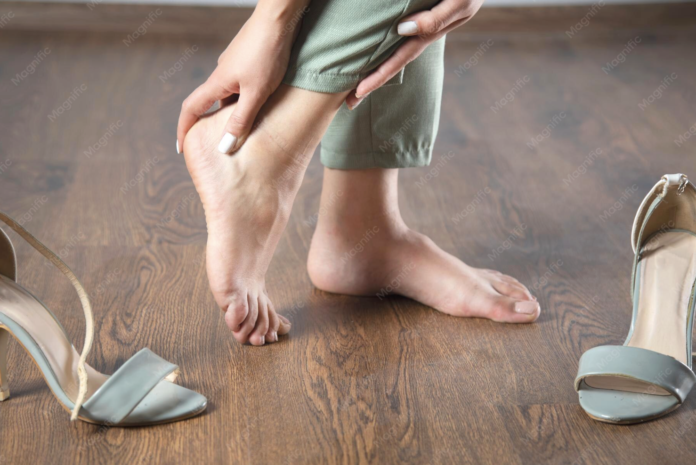
That puffiness around your ankles might not be from a long day on your feet — it could be your heart or lymphatic system asking for help.
KEY STATISTICS
- According to the American Heart Association, early-stage heart failure affects an estimated 6.7 million adults in the United States, many of whom are under 40 and initially dismissed as low-risk.
- Research published in the Journal of the American College of Cardiology found that edema — persistent swelling — is present in up to 70% of patients with undiagnosed cardiac dysfunction before any other symptom appears.
- The CDC reports that lymphatic disorders affect approximately 10 million Americans, yet fewer than 1 in 5 receive a timely diagnosis, often because early symptoms like ankle swelling are attributed to lifestyle factors.
You kick off your shoes at the end of the day and notice your ankles look puffier than they should. You tell yourself it is nothing — maybe you were standing too long, maybe you need more water. But when that swelling keeps coming back, day after day, your body may be trying to tell you something far more serious than dehydration.
What Is Actually Happening
Ankle swelling — medically called peripheral edema — happens when fluid builds up in the tissue surrounding your lower limbs. Your body is normally very efficient at circulating fluid through blood vessels and the lymphatic system, but when either system is under stress, fluid leaks out and pools in areas with the least resistance, like your ankles and feet.
The heart is one of the most common culprits. When the heart’s pumping function weakens — even slightly — pressure backs up in the veins, forcing fluid into surrounding tissue. This is called venous hypertension, and it can develop quietly over years before any chest pain or breathlessness appears.
The lymphatic system is the other major player. It is a network of vessels that drains excess fluid from tissues and returns it to the bloodstream. When lymph nodes are damaged, blocked, or simply underperforming, fluid accumulates.
Unlike cardiac edema, lymphatic swelling often feels firmer and does not always improve after a night of rest.
Both systems can be affected simultaneously, which is why ankle swelling that seems mild can actually represent a compounding problem developing beneath the surface.
Why Your Age Group Is Vulnerable
Most people in their 20s and early 30s assume heart and lymphatic issues are reserved for older adults. That assumption is one of the reasons these conditions get caught late in younger people — both by doctors and by the patients themselves.
Cardiac dysfunction in younger adults is increasingly linked to chronic lifestyle stressors: prolonged sitting, high-sodium diets, untreated hypertension, obesity, and even long-COVID-related inflammation. The heart does not always announce its struggle loudly at first.
Younger adults are also spending more hours sedentary than any previous generation. Research consistently links prolonged sitting with impaired venous return — meaning blood and fluid pool in the lower limbs instead of circulating efficiently back to the heart.
Doctors can also be too quick to reassure young patients. A 28-year-old reporting puffy ankles is far more likely to be told to drink more water than to receive a cardiac workup — which means some early-stage conditions are missed entirely during what should be a correctable window.
Warning Signs to Watch For
- Ankle or foot swelling that appears most days of the week and does not fully resolve overnight after elevating your legs
- Swelling that appears in only one leg, which may suggest a lymphatic blockage, blood clot, or localized venous problem rather than a systemic issue
- A feeling of tightness, heaviness, or aching in the lower legs by midday — not just after exercise or a long commute
- Skin that appears shiny, stretched, or leaves a visible indentation (pit) when you press it with your finger and hold for a few seconds
- Swelling accompanied by unexplained breathlessness, fatigue, or a rapid heartbeat — even during light daily activity like climbing stairs
What Actually Helps
The most important first step is to stop dismissing recurring swelling as a normal byproduct of your lifestyle. While occasional puffiness from a hot day or a long flight is genuinely harmless, swelling that returns consistently warrants attention and ideally a conversation with a doctor who will take it seriously.
Movement is one of the most effective tools you have right now. Your calf muscles act as a secondary pump for the venous and lymphatic systems — they squeeze fluid back up toward your heart every time you walk or flex your legs. Sitting still for hours essentially switches that pump off.
Sodium plays a major role in fluid retention. Diets high in processed foods, takeaway meals, and packaged snacks often contain two to four times the recommended daily sodium intake, which encourages the body to hold onto water in the tissues. Reducing processed sodium — not eliminating all salt — can produce a noticeable difference within one to two weeks.
Compression socks or graduated compression stockings are not just for elderly people or long-haul flights. For anyone experiencing regular lower-limb swelling, medical-grade compression of 15 to 20 mmHg applied during waking hours supports both venous return and lymphatic drainage without requiring medication.
Action Plan Checklist
- Book a GP or primary care appointment specifically to discuss recurring ankle swelling — request that blood pressure, kidney function, and a basic cardiac screen be included in the assessment
- Set a movement reminder every 45 to 60 minutes during sedentary work hours — stand up, walk for 2 minutes, or perform 20 calf raises to activate your venous pump
- Track your sodium intake for one week using a free app — aim to stay under 2,000 mg per day and identify the biggest hidden sources in your current diet
- Elevate your legs above heart level for 15 to 20 minutes each evening — lie flat and rest your legs against a wall or on pillows to encourage fluid drainage
- If swelling is one-sided, sudden, or accompanied by redness and warmth, treat it as urgent — seek same-day medical assessment to rule out deep vein thrombosis
The Overlooked Factor
One factor almost nobody talks about in relation to ankle swelling is sleep position. Sleeping flat on your back with your legs at heart level — or even slightly elevated — allows your lymphatic and venous systems to drain accumulated fluid overnight. But if you consistently sleep on your side with your legs curled or crossed, that drainage is restricted.
Alcohol is another overlooked contributor. It causes blood vessels to dilate and promotes fluid retention, and for young adults who drink regularly on weekends, the cumulative effect on vascular tone can be significant over months and years.
Chronic stress elevates cortisol, which disrupts aldosterone balance — one of the hormones that regulates how your kidneys manage fluid and sodium. When cortisol stays high, the body tends to retain more fluid, particularly in the lower extremities. Addressing stress is not just good for your mood — it is directly relevant to why your ankles may be puffing up.
Bottom Line
Swollen ankles in your 20s or 30s are not automatically a sign of something serious, but they are never something to permanently brush off. Persistent, recurring swelling is your body’s clearest signal that fluid is not moving the way it should — and the heart, lymphatic system, veins, and kidneys are all worth investigating early, when intervention is most effective and outcomes are best.
Always consult a qualified healthcare provider before making changes to your health routine.
Sources
- Heart Failure Statistics and Facts — American Heart Association
- Peripheral Edema as an Early Marker of Cardiac Dysfunction in Younger Adults — Journal of the American College of Cardiology
- Lymphedema: Epidemiology, Risk Factors, and Diagnosis — Mayo Clinic
- Sedentary Behavior and Venous Return Impairment in Working-Age Adults — National Library of Medicine
- Sodium Intake and Fluid Retention: Clinical Guidance for Primary Care — Harvard Health Publishing

