
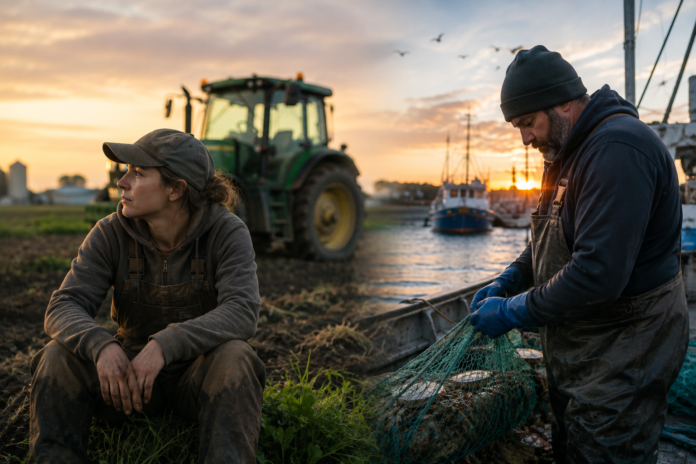
Rural work comes with unique stressors—and fewer resources to help.
KEY STATISTICS
- Agricultural and fishing communities experience higher rates of depression, anxiety, and stress-related disorders compared to urban populations.
- Social isolation, limited access to mental health services, and economic uncertainty are key vulnerabilities in rural occupational settings.
- Early intervention and community-based support systems can meaningfully reduce mental health burden in farming and fishing populations.
If you or someone you know works the land or the sea, you’re navigating a world most city dwellers never see. The physical demands of farming and fishing are obvious—long hours, unpredictable weather, equipment risks. But the mental health challenges?
Those often go unspoken. Research shows that farmers and fishermen face distinct psychological vulnerabilities tied directly to their work environment and lifestyle, from chronic financial stress to profound isolation. Understanding these risks isn’t about doom; it’s about recognizing what’s real so you can build better support before burnout takes hold.
How Rural Work Affects Mental Health
Mental health disorders in agricultural and fishing communities aren’t simply individual struggles—they’re shaped by specific occupational and environmental factors. These aren’t the same stressors office workers face, and they require different understanding and approaches.
- Economic unpredictability: crop failures, market volatility, debt cycles, and weather-driven income loss create chronic financial anxiety.
- Occupational isolation: limited peer support, dispersed communities, and 24/7 work demands reduce social connection and recovery time.
- Physical and mental load overlap: injury risk, physical exhaustion, and reliance on equipment create compounding stress without clear boundaries between work and rest.
Why Your 20s and 30s Matter
Young adults in farming and fishing face a unique intersection of pressures. You may be inheriting family operations while facing unprecedented economic pressures, or building a new career in an industry with shrinking margins and environmental uncertainty.
- Early-career pressure: establishing yourself in a capital-intensive industry during economic instability increases stress and perfectionism.
- Delayed help-seeking: younger farmers and fishermen often normalize overwork and struggle in silence, mistaking burnout for normal.
- Limited mental health literacy: rural areas often lack awareness campaigns and normalized language around mental health disorders common in urban settings.
Warning Signs to Watch For
- Persistent difficulty sleeping or early waking despite physical exhaustion, or sleeping only when completely overwhelmed.
- Increased irritability or emotional withdrawal from family, especially after financial setbacks or work stress.
- Loss of interest in activities outside work, or inability to take days off without guilt or anxiety.
- Drinking or substance use increasing as a way to unwind or cope with worry, particularly in evening hours.
- Persistent physical complaints (headaches, stomach pain, body tension) without clear medical cause.
- Difficulty concentrating on routine tasks or repeatedly ruminating about money, weather, or work outcomes.
- Suicidal thoughts or feeling hopeless about the future of your operation or career.
Practical Changes That Actually Work
Supporting mental health in agricultural and fishing work requires targeted strategies that acknowledge your real constraints—you can’t simply ‘work less’ in seasonal industries. The focus is building resilience within your actual lifestyle, not against it.
- Create non-negotiable rest windows: even short breaks (30 minutes daily, one full day weekly) reduce cumulative burnout and improve decision-making.
- Build structured peer connection: join farmer or fisherman groups (online or in-person) where you speak openly about challenges without judgment or isolation.
- Separate work and home spaces when possible: even small physical or mental boundaries reduce the 24/7 blur that amplifies stress.
Your Action Plan This Week
- Identify one trusted person (family member, peer, counselor) you’ll check in with about stress levels—no fixing required, just naming it.
- Schedule one off-work activity you actually enjoy and protect it like a farm commitment—no cancellations for ‘just this once.’
- Research mental health resources specific to rural or agricultural communities (online therapy, peer groups, crisis lines) and save contacts.
- Track sleep and mood for three days to spot your personal warning pattern—financial news spikes anxiety, weather stress hits hardest, etc.
- Ask your doctor or local health clinic about depression and anxiety screening; many now offer confidential, no-judgment assessments for rural workers.
The Overlooked Role of Autonomy
Economic stress and social isolation feed each other in rural work. But one factor often goes overlooked: the erosion of financial control and decision-making power. When markets, weather, or external pressures force decisions on you, the sense of helplessness can be as damaging as the financial loss itself.
- Loss of agency amplifies mental health risk: when external forces dominate outcomes, depression and anxiety increase even if income stays stable.
- Control over small decisions matters: having some choice in daily operations or workflow reduces helplessness and improves psychological resilience.
- Community advocacy protects individuals: participating in farmer organizations or collective action reduces the sense of facing challenges alone.
Bottom Line
Working in farming or fishing means living with pressures that city-based mental health advice rarely addresses. The good news: recognizing these specific vulnerabilities is the first step toward building real support. Mental health disorders in rural communities are treatable, but only if you name them first.
Reach out to someone this week—a peer, a family member, or a provider who understands your world.
365 Live Long — always consult a qualified healthcare provider before making changes to your health routine.
Sources
- Mental Disorders and Rural Living Conditions: Analysis of Vulnerabilities in Farmers and Fishermen — Ciência & Saúde Coletiva
- General Guidance on Mental Health Conditions and Access — CDC

