
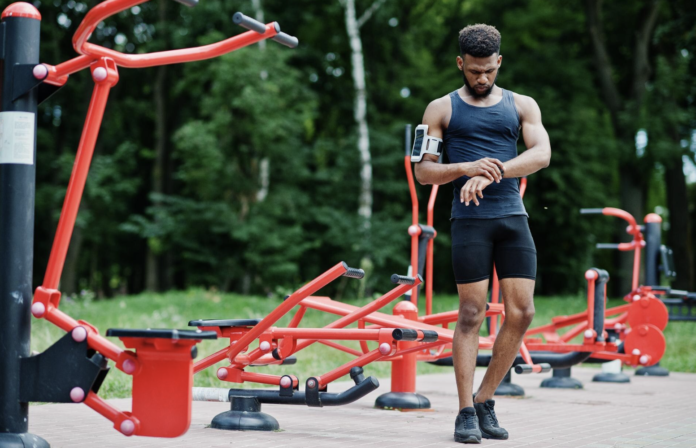
Your treadmill is comfortable, convenient, and quietly holding back your body and brain.
KEY STATISTICS
- Research published in Environmental Science and Technology found that outdoor exercisers reported 50% more improvements in mental well-being than indoor exercisers.
- A study in the Journal of Experimental Biology showed that treadmill running requires approximately 1–5% less energy expenditure than outdoor running at the same speed, indicating reduced muscular demand.
- According to research from the University of Exeter, just five minutes of outdoor exercise can measurably boost mood and self-esteem.
You lace up, step on the belt, and run five miles without ever actually going anywhere. It feels productive, but your stabilizer muscles are barely working, your brain is barely stimulated, and your body is adapting to a surface that does not exist in the real world. The treadmill is not a replacement for outdoor running — it is a simplified version of it.
What Your Body Actually Does
When you run outside, the ground is never perfectly flat. Every micro-variation in terrain — a slight incline, a pebble, a patch of uneven pavement — forces your ankles, hips, and deep core muscles to make constant real-time adjustments.
A treadmill belt does part of the work for you. The moving surface pulls your foot backward, which reduces the demand on your hamstrings and glutes compared to propelling yourself forward on firm ground.
Neurologically, outdoor running also activates different brain pathways. Your visual cortex, spatial processing centers, and proprioceptive system all work together to navigate changing terrain, creating a far richer neurological stimulus than staring at a screen in a climate-controlled room.
Research suggests that exposure to natural environments while exercising triggers greater reductions in cortisol and amygdala activity — the brain region associated with stress and threat response. This is not simply a mood bonus. It is a measurable physiological difference in how your body recovers from effort.
Why Your Age Group Matters
Adults between 25 and 35 are often in the middle of sedentary work schedules, high-stress professional environments, and limited outdoor time. The treadmill feels like an efficient fix — but efficiency is not the same as completeness.
At this age, your stabilizer muscles, proprioceptive systems, and connective tissues are still highly adaptable. That means now is the optimal window to build the functional movement patterns that protect you from injury later.
Relying primarily on treadmill running during your late twenties and early thirties can create muscular imbalances that show up in your forties as chronic knee pain, hip tightness, and poor balance. The habits you build now determine your movement quality for decades.
Warning Signs to Watch For
- You feel mentally flat or unmotivated even after a solid treadmill session
- Your ankles and hips feel stiff or unstable during everyday activities like walking on uneven ground
- You have hit a fitness plateau despite consistent mileage — your body has fully adapted to the controlled surface
- You notice your mood does not lift after indoor runs the way it used to
- You feel strong on the treadmill but awkward or unbalanced during outdoor runs or hikes
What Actually Helps
The transition from treadmill to outdoor running does not need to be immediate or dramatic. Start by replacing one or two weekly treadmill sessions with an outdoor run on a local trail, park path, or residential street with natural variation.
Slope and surface matter more than speed. Running on grass, gravel, or light trail engages far more stabilizer muscles than flat pavement, and far more than any treadmill setting. Even a slight incline on outdoor terrain requires different muscle recruitment than an incline setting on a treadmill belt.
The mental benefit compounds with consistency. Studies consistently show that green spaces — parks, trails, tree-lined paths — produce stronger psychological recovery than urban concrete routes. You do not need a mountain.
A local park twice a week is enough to begin shifting your neurological response to exercise.
Do not abandon the treadmill entirely if it serves a genuine purpose, such as running in dangerous weather or fitting in a lunchtime workout. Use it as a supplement, not a substitute. The goal is to make outdoor running your default and the treadmill your backup.
Action Plan Checklist
- Replace at least two treadmill runs per week with outdoor sessions on varied terrain such as a park path, trail, or neighborhood route with hills
- Start each outdoor run with five minutes at a slower pace to allow your stabilizer muscles and proprioceptive system to warm up properly
- Choose routes with at least one natural incline or surface change — even a grass verge or gravel path counts
- Leave your headphones behind for one outdoor run per week to allow full sensory engagement with your environment, boosting the neurological benefit
- After four weeks of regular outdoor running, reassess your ankle stability and hip mobility — most people notice measurable improvement in both
The Overlooked Sleep Factor
One consistently overlooked factor is what happens after the run ends. Outdoor running exposes you to natural light, which regulates your circadian rhythm and supports melatonin production at night.
This means your outdoor runs are also improving your sleep quality — something a treadmill in a fluorescent-lit gym cannot replicate. Better sleep accelerates muscle repair, improves mood stability, and supports healthy cortisol patterns the next morning.
Even a thirty-minute morning run outside can anchor your entire sleep-wake cycle for the day. This is a compounding benefit that treadmill runners largely miss, and it is one of the most underappreciated reasons outdoor running produces better long-term health outcomes.
Bottom Line
Treadmills are not useless, but they are incomplete. Outdoor running activates the stabilizer muscles, proprioceptive pathways, and neurological circuits that a moving belt simply cannot challenge. If you are in your twenties or thirties and want to build a body and a brain that hold up for decades, getting outside regularly is not optional — it is foundational.
Always consult a qualified healthcare provider before making changes to your health routine.
Sources
- Differential mental health effects of nature walks and treadmill exercise — Environmental Science and Technology, NIH National Library of Medicine
- Biomechanics of treadmill versus overground locomotion — Journal of Experimental Biology
- The mental and physical health outcomes of green exercise — International Journal of Environmental Health Research, University of Exeter
- Nature and mental health: An ecosystem service perspective — Science Advances, American Association for the Advancement of Science
- Proprioception and neuromuscular control in joint stability — Journal of Athletic Training, National Athletic Trainers Association

