
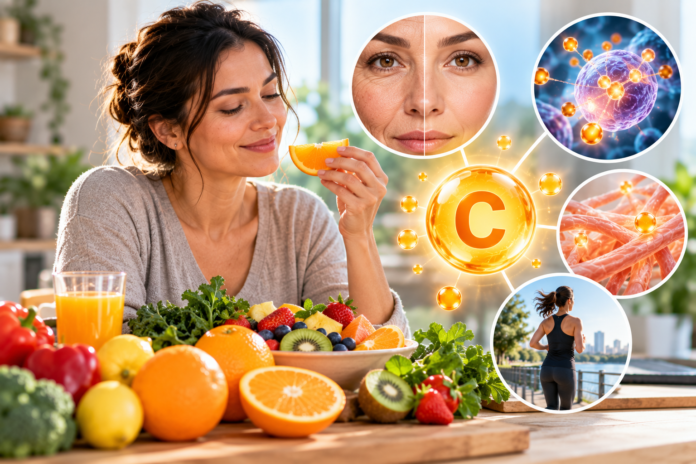
*How this common nutrient supports your body’s natural defenses against cellular aging*
KEY STATISTICS
- Vitamin C acts as a powerful antioxidant, protecting cells from damage linked to aging processes.
- Most adults don’t meet daily vitamin C recommendations through diet alone.
- Cellular aging involves multiple interconnected processes—vitamin C influences several of them simultaneously.
You’ve probably heard that vitamin C supports immunity, but there’s a quieter story happening at the cellular level. As you move through your late 20s and 30s, your cells face mounting pressure from oxidative stress and inflammation—the twin drivers behind visible aging and chronic disease risk. New research suggests vitamin C may do more than fight colds; it actively addresses some of the fundamental ways our bodies age.
Here’s what you need to know to decide if your intake is truly enough.
How Vitamin C Fights Cellular Aging
Aging isn’t one single process—it’s a cascade of changes happening simultaneously in your cells. Vitamin C plays a supporting role in several of these pathways, particularly by neutralizing harmful molecules called free radicals and reducing inflammation that accumulates over time.
- Neutralizes free radicals that damage DNA, proteins, and cell membranes—a process central to aging.
- Supports collagen synthesis, which declines naturally with age and affects skin, joints, and connective tissue.
- Enhances mitochondrial function, helping cells generate energy more efficiently as metabolism slows with age.
- Reduces inflammation markers associated with age-related disease, from cardiovascular decline to cognitive changes.
Why Your Age Matters Now
Your 20s and 30s are a critical window. While you may feel invincible, cellular aging is already underway—and oxidative stress accelerates during this decade. You’re also at the stage where dietary habits lock in, making nutrition choices now shape your health trajectory.
- Cellular antioxidant defenses begin declining in your late 20s, making external sources of vitamin C more important.
- Poor nutrition habits formed now compound over decades; vitamin C intake is one habit that scales impact.
- Early signs of oxidative stress (chronic fatigue, slow wound healing, persistent inflammation) often go unrecognized in this age group.
Signs You May Need More Vitamin C
- Wounds, cuts, or small injuries that take longer than usual to heal.
- Frequent minor infections or colds, or recovery that feels unusually slow.
- Persistent joint or muscle soreness after exercise, or poor recovery between workouts.
- Skin that feels dull, lacks elasticity, or shows early signs of sagging.
- Chronic fatigue or low energy despite adequate sleep.
- Swollen or bleeding gums when brushing teeth.
- Easy bruising or small red marks on skin.
What Actually Helps: Diet First
Getting enough vitamin C doesn’t require supplements—though they can help if diet falls short. Focus on eating a variety of vitamin C-rich foods throughout the day, since your body doesn’t store this nutrient and excretes excess amounts.
- Eat 2-3 servings of vitamin C-rich produce daily: citrus, berries, kiwi, bell peppers, broccoli, and leafy greens.
- Pair vitamin C sources with iron-rich foods (spinach, legumes) to enhance absorption of both nutrients.
- Cook gently or eat raw when possible; high heat degrades vitamin C content in vegetables.
- Consider a modest supplement (250–500 mg daily) only if food intake consistently falls short, and discuss dosing with a provider.
Your Action Plan Checklist
- Track your vitamin C intake for three days using a food diary or app to see where you stand.
- Add one new vitamin C-rich food to your regular rotation this week—try kiwi, red bell peppers, or fresh berries.
- Schedule a 15-minute meal prep session weekly to prep raw vegetables and fruits for snacking.
- If you suspect deficiency (slow healing, infections, gum bleeding), discuss lab testing with your doctor before supplementing.
- Pair vitamin C intake with consistent exercise and stress management for maximum cellular benefit.
- Reassess your intake seasonally; winter months often mean less fresh produce and higher intake needs.
The Sleep and Stress Factor
Sleep and stress management quietly amplify or diminish vitamin C’s protective effects. When you’re chronically sleep-deprived or stressed, your body burns through antioxidants faster—meaning adequate intake alone won’t fully protect you without addressing these foundations.
- Poor sleep increases oxidative stress, meaning your cells need more antioxidant support—including vitamin C—to recover.
- Chronic stress elevates cortisol, which accelerates collagen breakdown and reduces your body’s ability to use vitamin C efficiently.
- Prioritizing 7–9 hours of quality sleep and a consistent stress-management practice (exercise, meditation, time outdoors) maximizes the benefit of adequate vitamin C intake.
- These three factors—nutrient intake, sleep, and stress—work synergistically; neglecting any one undermines the others.
Bottom Line
Vitamin C isn’t a fountain of youth, but it is one of the most accessible tools you have right now to support your cells as they age. The evidence suggests this common nutrient addresses multiple aging pathways simultaneously—from protecting DNA to supporting the structures that keep skin and joints youthful. The practical move: assess your current intake, add a few more vitamin C-rich foods to your diet, and ensure sleep and stress management are solid.
Small, consistent choices made in your 20s and 30s compound into measurably different aging trajectories by your 50s and beyond.
365 Live Long — always consult a qualified healthcare provider before making changes to your health routine.
Sources
- Vitamin C as a Potential Geroprotector: Interactions with Aging Hallmarks and Implications for Healthy Longevity — Nutrients
- General Guidance on Nutrient Intake and Aging — National Institutes of Health

