
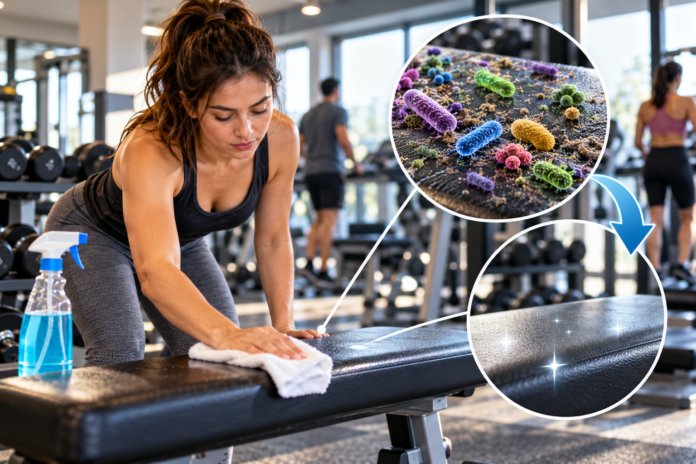
The microbes thriving on fitness equipment and how to spot a truly clean facility
KEY STATISTICS
- Fitness equipment surfaces host hundreds of bacterial colonies that survive standard daily wipes.
- Manual cleaning combined with hydrogen peroxide nebulization can significantly reduce surface microorganisms in gym environments.
- Shared equipment in busy gyms creates continuous microbial transfer between users throughout the day.
You wipe down the bench after your workout. The gym staff did a quick sweep this morning. But what if the microbes on that equipment bar aren’t actually gone—just temporarily hidden?
New research into deep-cleaning methods at gyms reveals that standard daily cleaning routines miss a critical layer of contamination, and that combination approaches work far better than either method alone.
How Biofilms Build Up
When bacteria and other microorganisms colonize gym equipment, they don’t sit as isolated cells—they form biofilms, protective layers that cling to surfaces and resist standard surface wipes. Understanding how these layers form and what actually removes them is crucial to grasping why conventional gym cleaning often falls short.
- Microorganisms on fitness equipment surfaces stick together and create protective biofilm layers resistant to routine wipe-downs.
- Hydrogen peroxide nebulization—a fine mist dispersed through the air—penetrates surfaces and breaks down biofilm structure at the microbial level.
- Manual cleaning removes visible debris and loose microbes, but combined with nebulization, it achieves deeper penetration and more complete removal.
- The combination approach targets microbes at multiple stages: mechanical removal plus chemical disruption equals significantly reduced colony counts.
Why Young Adults Face Risk
People in their late 20s to mid-30s often have strong immune systems, but gym environments still pose real risks, especially during high-stress periods or after intense training when immunity temporarily dips. This age group also tends to frequent busy gyms during peak hours—exactly when surface contamination is highest.
- Intense training temporarily suppresses immune function, making you more vulnerable to surface-borne pathogens for 3–24 hours post-workout.
- Peak-hour gym sessions expose you to freshly contaminated equipment from hundreds of other users sharing the same space.
- Small cuts, skin abrasions, or dermatitis—common in active adults—create entry points for bacteria on shared equipment.
- This age group often skips post-gym hygiene steps, increasing transfer of gym microbes to face, mouth, and other contact surfaces.
Signs of Gym Surface Contamination
- Recurring skin infections or rashes appearing in areas that contact gym equipment within 48–72 hours of your workout.
- Unusual respiratory symptoms (mild cough, throat irritation) appearing a few days after visiting a particularly busy gym session.
- Persistent folliculitis (small red bumps) on shoulders, chest, or inner thighs where you’ve made direct contact with benches or machines.
- Gastrointestinal upset in the hours or days after a gym visit, suggesting potential ingestion of contaminated surface bacteria.
- Nail bed or cuticle infections that emerge after regular gym sessions, especially on hands that grip bars frequently.
Protect Yourself at the Gym
Protecting yourself starts with understanding that you can’t see cleanliness—you have to assess it based on visible standards and gym protocols. Smart gym hygiene goes beyond your own wipe-down and includes choosing facilities that invest in comprehensive cleaning methods.
- Always wipe equipment before and after use with provided disinfectant—this removes loose bacteria but doesn’t eliminate biofilm.
- Shower immediately post-workout or at least wash your face, arms, and hands; this removes surface microbes before they colonize your skin.
- Wear long sleeves or compression gear to minimize direct skin contact with equipment, especially at older or understaffed facilities.
- Ask gym staff about their cleaning protocol—reputable facilities use or plan to use combination methods (manual plus nebulization or electrostatic spray).
Your Gym Safety Checklist
- Before joining or renewing membership, observe cleaning practices during peak hours—look for staff actively disinfecting, not just wiping.
- Request your gym’s written cleaning protocol and ask specifically whether they use any mist-based or nebulization systems alongside manual cleaning.
- Establish a personal post-gym ritual: shower within 60 minutes, wash your gym bag weekly, and replace towels after every workout.
- If you have recurring skin or respiratory infections tied to gym sessions, inform your healthcare provider and consider switching facilities.
- Choose gyms that post cleaning timelines publicly and maintain consistent staff presence during peak usage windows.
Don’t Overlook Air Quality
Ventilation and air circulation often get overlooked in gym cleanliness discussions, but they’re just as critical as surface disinfection. Fresh air movement both reduces airborne microbial load and helps nebulized disinfectant reach equipment more effectively, making it a hidden factor in facility quality.
- Gyms with poor ventilation trap respiratory microbes in the air, increasing risk of viral and bacterial respiratory infections during peak hours.
- Hydrogen peroxide nebulization works best in well-ventilated spaces where the mist can circulate and reach all equipment surfaces evenly.
- Open windows, functioning HVAC systems, and air purifiers all support both surface cleaning and airborne pathogen reduction.
- Request information about your gym’s ventilation system—modern facilities should use HEPA filtration or equivalent air exchange rates.
Bottom Line
Standard daily gym cleaning removes surface dirt but often misses the deeper microbial colonies hiding in biofilms on equipment. Research shows that combining manual cleaning with hydrogen peroxide nebulization or similar mist-based methods significantly reduces microorganism counts in fitness environments. While your gym’s cleaning matters, your personal hygiene—showering promptly, avoiding direct skin contact, and maintaining awareness of contamination—remains your most reliable defense.
Choose facilities that prioritize comprehensive cleaning methods, ask questions about their protocols, and trust your instincts about cleanliness standards.
365 Live Long — always consult a qualified healthcare provider before making changes to your health routine.
Sources
- Effectiveness of Hydrogen Peroxide Nebulization Combined with Manual Cleaning in Reducing Surface-Associated Microorganisms in an Indoor Fitness Environment — Microorganisms
- General guidance on infection prevention and hygiene — CDC
- Exercise and immune function overview — NIH

