
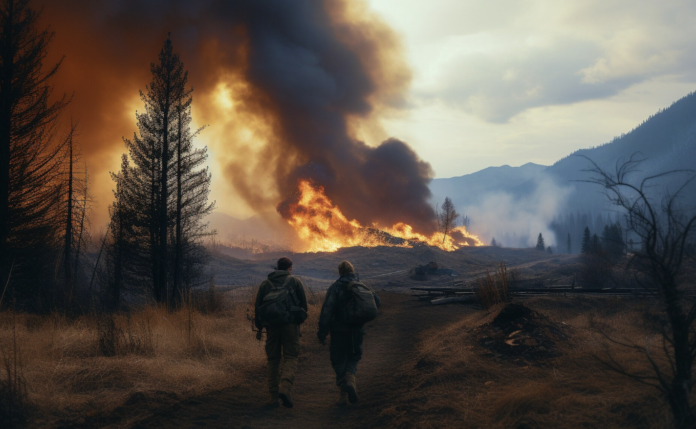
*Why young adults are breathing in a silent health threat—and what to do about it*
KEY STATISTICS
- Wildfire smoke contains fine particulate matter (PM2.5) that penetrates deep into lung tissue and enters the bloodstream.
- Young adults often underestimate smoke exposure because symptoms can be delayed or mistaken for seasonal allergies.
- The World Health Organization identifies wildfire smoke as a frequently underestimated public health risk, particularly in regions with seasonal fire activity.
You might notice the haze during fire season, but do you feel it? Wildfire smoke doesn’t announce itself with dramatic symptoms—it creeps into your lungs quietly, often dismissed as seasonal irritation or poor air quality. For adults in their 20s and 30s, this invisibility is dangerous.
Unlike older adults who recognize respiratory warning signs immediately, younger people often brush off early damage until it accumulates into real problems. Understanding what wildfire smoke actually does to your body—and how to protect yourself—matters now, not later.
What Smoke Does Inside
When you breathe wildfire smoke, you’re inhaling tiny particles called PM2. 5 that are small enough to bypass your body’s natural defenses and lodge deep in your lungs. These particles trigger inflammation, reduce oxygen flow, and can even cross into your bloodstream, affecting your heart and brain.
The damage happens whether or not you feel it.
- PM2.5 particles penetrate the deepest sections of your lungs, where gas exchange occurs, reducing oxygen absorption.
- Smoke exposure triggers airway inflammation and increases mucus production, tightening airways similar to asthma-like responses.
- Particles and toxic gases enter the bloodstream and circulate systemically, affecting heart rate, blood pressure, and inflammation markers.
- Repeated exposure compounds oxidative stress in lung tissue, accelerating cellular damage over time.
Why Your 20s and 30s Matter
Your age works against you here. Young adults have healthy lungs, which creates a false sense of security—you feel fine, so you assume you are fine. But that same youthful resilience masks cumulative damage happening underneath.
By the time warning signs appear, weeks or months of inflammation may have already occurred.
- Younger lungs have higher reserve capacity, masking early damage that would trigger symptoms in older adults.
- Smoke-related inflammation in young adults establishes patterns that increase respiratory disease risk later in life.
- This age group is more likely to exercise outdoors during smoky days, increasing exposure and inhalation volume.
- Young adults often lack baseline respiratory screening, so pre-existing sensitivities go undetected until smoke exposure hits.
Signs You May Be Affected
- Persistent dry cough or throat irritation that lingers after smoke has cleared.
- Shortness of breath during normal activities (climbing stairs, walking) that’s unusual for you.
- Chest tightness, pressure, or mild pain when breathing deeply or during exertion.
- Watery or itchy eyes, sinus congestion, or nasal irritation without a typical cold.
- Unusual fatigue or difficulty concentrating, even after sleep—systemic inflammation at work.
- Wheezing or a tight feeling in your chest when inhaling deeply or after physical activity.
- Worsening of any pre-existing asthma, allergies, or respiratory conditions.
Habits That Protect Your Lungs
You can’t control where fires start, but you can control your exposure and how your body responds. Smart choices during high-smoke days—indoors, air filtration, hydration—reduce the particles entering your lungs. Supporting your respiratory system with basic habits also builds resilience against damage.
- Stay indoors during heavy smoke days; close windows and use HEPA-rated air filters in your bedroom and main living spaces.
- Switch to indoor workouts or postpone intense exercise on high-AQI (Air Quality Index) days—heavy breathing pulls more particles deeper into lungs.
- Drink extra water during smoke season to thin respiratory secretions and support mucus clearance in your airways.
- Use a properly fitted N95 or P100 mask only when outdoors during smoky conditions—cloth masks don’t block PM2.5.
Your Action Plan This Week
- Check your local Air Quality Index (AQI) daily during fire season via airnow.gov or your phone’s weather app.
- Invest in a HEPA air filter for your bedroom if you live in a fire-prone region—you spend 7+ hours there nightly.
- Stock N95 masks at home now, before smoke season hits; they expire, so replace annually.
- Track any respiratory changes in a simple note—cough, breathlessness, chest tightness—to share with your doctor if symptoms persist.
- Identify indoor alternatives for your regular exercise routine (gym, home workouts, swimming) for high-smoke days.
Why Sleep Matters Most
Sleep quality plummets during heavy smoke exposure, even if you’re indoors with filters running. Smoke particles irritate airways while you’re lying down, disrupting deep sleep stages and leaving you more vulnerable to both respiratory infection and inflammation. Protecting sleep during fire season is its own critical defense.
- Sleep deprivation weakens immune response, making your lungs less able to clear particles and fight inflammation.
- Lying flat increases irritation of inflamed airways; using an extra pillow to elevate your head slightly can ease nighttime coughing.
- Poor sleep spikes cortisol and inflammatory markers, accelerating the systemic damage wildfire smoke already triggers.
- Maintaining consistent sleep (7–9 hours) during high-smoke periods actively reduces the severity and duration of respiratory symptoms.
Bottom Line
Wildfire smoke feels invisible because it doesn’t hurt—not immediately. But that’s exactly what makes it dangerous for your age group. You’re resilient enough to ignore early warning signs, yet old enough that the damage compounds into real risk.
The WHO flagged this problem precisely because young, healthy adults underestimate it. Check your air quality, protect your sleep, use a mask outdoors on heavy smoke days, and take a persistent cough seriously. Small actions now prevent larger health costs later.
365 Live Long — always consult a qualified healthcare provider before making changes to your health routine.
Sources
- Wildfire smoke: a frequently underestimated health risk — World Health Organization (WHO) — Google News
- General air quality and respiratory health guidance — CDC
- Wildfire smoke health effects and PM2.5 exposure — EPA / AirNow

