
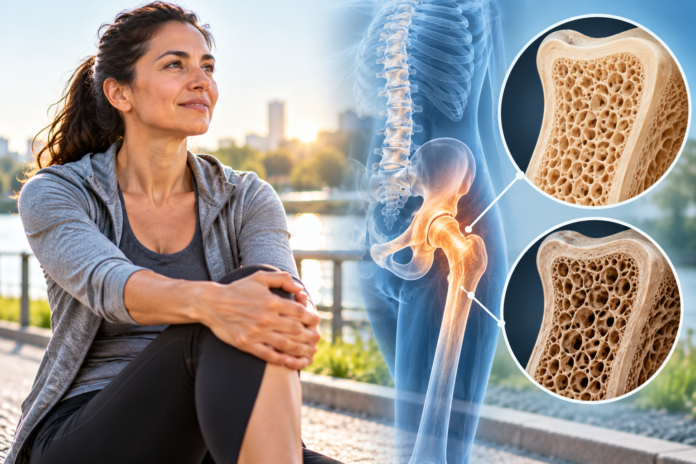
Why bone density matters now—and how diet and movement shape your long-term health
KEY STATISTICS
- Bone loss accelerates in your late 20s and early 30s if foundational strength habits aren’t established
- Muscle and bone are metabolically linked—weakness in one directly reflects decline in the other
- Dietary protein, calcium, and vitamin D deficiency are among the earliest detectable markers of aging at the cellular level
You probably don’t think much about your bones. They feel solid, they work fine, and there’s no pain—so why worry? But emerging research suggests your bones are quietly sending signals about your overall aging trajectory right now.
Scientists increasingly view bone density and bone quality as a biomarker of how fast your body is aging at the cellular level. The good news: unlike your chronological age, your biological age—what your bones reveal about your health—is still largely in your hands.
The Science Behind Bone Aging
Your bones aren’t just a structural scaffold. They’re living tissue that constantly breaks down and rebuilds, and that process is tightly regulated by diet, movement, and hormones. When your body ages at an accelerated rate, bone metabolism is often one of the first systems to show visible decline.
- Bone is dynamic tissue that constantly remodels—old bone is removed and new bone is deposited throughout your life
- This remodeling process depends on sufficient protein, calcium, vitamin D, and mechanical stress from movement
- When any of these factors drops, bone quality declines before density loss becomes apparent on scans
- Poor bone health reflects broader metabolic dysfunction, including weakened muscle, impaired circulation, and cellular stress
Why Your 20s and 30s Matter
Your 25–35 age window is critical. This is when peak bone mass is typically still being built or maintained, yet many young adults adopt sedentary habits and marginal nutrition that compromise this foundation. Missing the opportunity to establish strong bones now sets a trajectory for accelerated aging later.
- Bone density peaks around age 30—habits formed now determine whether you maintain or lose bone quality across your 40s and beyond
- Sedentary work (sitting 8+ hours daily) combined with low protein intake creates a ‘double hit’ that signals accelerated aging to bone
- Young adults often show early markers of bone turnover imbalance without realizing it until significant loss occurs
- Correcting these habits now is far more effective than trying to rebuild bone density later
Warning Signs to Watch For
- Frequent muscle cramps, twitches, or weakness—suggests low calcium or magnesium affecting both bone and muscle
- Loss of grip strength or difficulty opening jars—reflects bone and muscle decline happening together
- Persistent fatigue or slow recovery from light exercise—may indicate nutritional deficiency affecting bone turnover
- Rounded shoulders or gradual height loss—early sign of postural weakness linked to spinal bone changes
- Frequent minor fractures, dental problems, or slow wound healing—all correlate with systemic bone health decline
- Joint or bone pain that comes and goes without injury—can reflect bone remodeling imbalance
What Diet and Exercise Actually Help
The pathway to strong bones isn’t complicated. It combines consistent resistance movement, adequate protein and key minerals, and realistic habit stacking. These changes don’t require a gym membership or a restrictive diet—they require consistency and knowing where to start.
- Resistance training or weight-bearing exercise 3–4 times weekly stimulates bone-building cells and reinforces the bone-muscle connection
- Protein intake of 0.8–1.0 grams per pound of body weight supports both muscle and bone turnover
- Calcium-rich foods (dairy, leafy greens, fortified plant options) and vitamin D (sunlight, fatty fish, supplements) are non-negotiable for bone remodeling
- Walking, stair climbing, or dancing counts—any activity that loads your skeleton signals it to stay strong
Your Practical Action Checklist
- Eat a palm-sized serving of protein at each meal (eggs, fish, poultry, legumes, dairy, or tofu) to meet bone turnover needs
- Add 10–15 minutes of bodyweight or resistance work 3× weekly: push-ups, squats, lunges, or light weights
- Include one calcium-rich food daily: Greek yogurt, cheese, canned fish with bones, or fortified plant milk
- Get 15–30 minutes of sunlight exposure most days, or take a vitamin D supplement (1,000–2,000 IU daily) if you live in low-light regions
- Measure grip strength monthly or perform a simple squat test to track muscle-bone connection; decline signals need for dietary or exercise adjustments
The Sleep and Stress Factor
Sleep and stress directly influence bone remodeling hormones—particularly cortisol and growth hormone. Chronic stress or poor sleep accelerates bone loss and signals rapid aging at the cellular level. This is often overlooked because it feels less ‘obvious’ than diet and exercise, yet it may be the most powerful lever in your control.
- Chronic high cortisol from stress actively breaks down bone faster than it builds—prioritizing sleep and stress management protects bone directly
- Growth hormone, released during deep sleep stages, is essential for bone remodeling; poor sleep disrupts this process
- Aim for 7–9 hours of consistent sleep and one stress-reduction practice daily (walking, meditation, or time in nature) to support bone health
- Regular relaxation shifts your nervous system from ‘breakdown’ to ‘build’ mode—literally affecting how your bones age
Bottom Line
Your bones are a living report card of how your body is aging. The choices you make in your late 20s and early 30s—how much you move, how much protein you eat, how well you sleep, and how you manage stress—determine whether your bones stay strong and send signals of healthy aging or decline. The encouraging part: bone responds quickly to change.
Within weeks of consistent resistance training and adequate nutrition, your body begins to shift back toward growth and repair. Start now, and your bones will thank you for decades to come.
365 Live Long — always consult a qualified healthcare provider before making changes to your health routine.
Sources
- Bone as a biomarker of ageing and senescence — PubMed Central / Biology
- General guidance on bone health and osteoporosis prevention — NIH Osteoporosis and Related Bone Diseases National Resource Center
- Protein and calcium requirements for bone health — Mayo Clinic

