
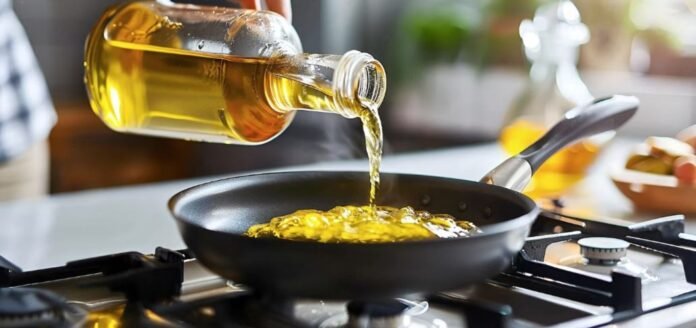
The seed oil hiding in your kitchen may be quietly dismantling your cells from the inside out.
KEY STATISTICS
- Linoleic acid now makes up an estimated 8–10% of total calorie intake in Western diets — up from around 2% a century ago, according to research published in the journal Nutrients.
- A 2020 review in the journal Progress in Lipid Research found that excess linoleic acid can impair mitochondrial membrane function, reducing the cell’s ability to generate energy efficiently.
- The World Health Organization estimates that chronic inflammatory diseases — many linked to oxidative stress from excess polyunsaturated fat metabolism — account for 60% of all deaths globally.
You switched to vegetable oil because you thought it was healthier than butter. That single decision, repeated across millions of kitchens over the past five decades, may be one of the most consequential dietary shifts in modern health history. The culprit hiding inside those bottles is a fatty acid called linoleic acid — and the science around it is far more troubling than most health headlines let on.
What Linoleic Acid Does
Linoleic acid is an omega-6 polyunsaturated fatty acid (PUFA) found in high concentrations in soybean oil, sunflower oil, corn oil, canola oil, and safflower oil. Your body cannot make it, so technically it is an essential fat — but essential does not mean more is better.
When linoleic acid is consumed in large amounts, it gets incorporated directly into cell membranes, including the inner membranes of your mitochondria — the structures responsible for producing cellular energy. This matters enormously, because mitochondrial membranes are meant to be relatively stable and resistant to oxidation.
Polyunsaturated fats like linoleic acid are chemically fragile. They are highly susceptible to oxidation, meaning they react with oxygen and break down into toxic byproducts called oxidised lipids and reactive aldehydes, including 4-hydroxynonenal (4-HNE). These compounds have been linked to mitochondrial damage, DNA strand breaks, and chronic low-grade inflammation.
When your mitochondria are swimming in oxidised linoleic acid metabolites, their ability to produce ATP — your cellular fuel — becomes impaired. The result is not dramatic. It is slow, cumulative, and invisible.
You feel it as fatigue, brain fog, and sluggish recovery long before any test flags a problem.
Why Your 30s Matter
Adults in their 25 to 35 age window are in a critical window. Your mitochondrial density is still relatively high compared to older adults, but your dietary choices right now are literally building the cellular architecture you will live in for the next four decades.
Seed oils are not just in your frying pan. They are in restaurant food, packaged snacks, protein bars, salad dressings, mayonnaise, and fast food — consumed in quantities that would have been unrecognisable to your grandparents. The average young adult eating a typical Western diet is consuming roughly 20 to 30 grams of linoleic acid per day, far above what longevity researchers consider a safe threshold.
Research on longevity and mitochondrial health consistently points to oxidative stress as a primary driver of accelerated cellular ageing. The earlier you reduce your exposure to oxidation-promoting fats, the more mitochondrial health you preserve going into your 40s and 50s — the decades where metabolic disease risk climbs sharply.
Warning Signs To Watch
- Persistent low energy that does not improve with sleep or rest — a possible signal of impaired mitochondrial ATP production
- Frequent brain fog, difficulty concentrating, or mental fatigue with no obvious cause
- Slow post-exercise recovery, unusual muscle soreness, or reduced physical resilience
- Low-grade systemic inflammation markers on blood tests, such as elevated high-sensitivity CRP
- Skin that is slow to heal, excessively dry, or reacting poorly to minor irritants — the skin reflects cellular membrane quality
What Actually Helps
The longevity diet literature — from researchers like Dr Valter Longo at the USC Longevity Institute and the work behind Blue Zone dietary analysis — consistently points toward low omega-6 intake as a shared feature of long-lived populations. The goal is not to eliminate all fat. It is to shift the ratio.
The recommended replacement is stable, low-PUFA fats with a track record of supporting rather than damaging cellular membranes. Extra virgin olive oil is the most evidence-backed swap, rich in oleic acid (a monounsaturated fat) and polyphenols that actively reduce oxidative stress. It has been associated with reduced cardiovascular risk, lower inflammatory markers, and improved mitochondrial function in multiple clinical studies.
Grass-fed butter and ghee, cold-pressed coconut oil for high-heat cooking, and beef tallow are options gaining traction in longevity-focused nutrition circles. These fats are more saturated, which makes them chemically stable under heat — meaning they do not oxidise into harmful aldehydes the way seed oils do when you cook with them.
The key dietary shift is reading ingredient labels consistently. Seed oils are hidden in almost every processed food on the shelf. Reducing them requires intentional purchasing, home cooking, and asking questions when eating out.
Action Plan Checklist
- Swap vegetable, soybean, canola, and sunflower oil in your kitchen for extra virgin olive oil or ghee — starting today, not gradually
- Read ingredient labels on every packaged food you buy and eliminate products listing soybean oil, sunflower oil, or ‘vegetable oil’ in the first five ingredients
- Cook at home more often — restaurant food is one of the largest hidden sources of seed oil exposure in a typical Western diet
- Increase your omega-3 intake through fatty fish (sardines, salmon, mackerel) at least twice a week to rebalance your omega-6 to omega-3 ratio toward the recommended 4:1 or lower
- Request a high-sensitivity CRP and lipid panel blood test from your GP to baseline your current inflammatory status before making dietary changes
The Heat Makes It Worse
There is one factor that dramatically worsens the linoleic acid problem — heat. When seed oils are heated to cooking temperatures, the oxidation process accelerates sharply, producing aldehydes at levels that researchers have described as genuinely concerning.
A 2015 study from De Montfort University found that sunflower oil heated to frying temperature produced aldehyde concentrations up to 20 times higher than levels considered safe by the World Health Organisation. The same study found that butter and coconut oil produced far lower aldehyde concentrations under identical conditions.
This means the damage is not just about how much seed oil you eat in a cold salad dressing. It is amplified every time you fry, sauté, or roast with it. Switching your cooking fat is one of the highest-leverage single changes you can make to reduce oxidative load on your cells.
Bottom Line
Linoleic acid is not inherently evil — your body needs small amounts of it. The problem is the industrial-scale flooding of the food supply with seed oils over the past 60 years, which has pushed consumption far beyond what your cells can handle without oxidative consequences. Swapping your cooking oil is one of the simplest, most researched, and most underrated steps you can take right now to protect your mitochondria, reduce inflammatory load, and give your body a better chance at the kind of healthy longevity you are working toward.
Always consult a qualified healthcare provider before making changes to your health routine.
Sources
- Dietary linoleic acid and human health: Focus on cardiovascular and cardiometabolic effects — Nutrients
- Mitochondrial membrane lipid remodelling in pathophysiology: A new target for diet and therapeutic interventions — Progress in Lipid Research
- Aldehydes produced from heated polyunsaturated cooking oils: A health concern — BMJ — correspondence, De Montfort University research
- Longevity diet: Linking nutrition, metabolism and longevity — Cell — Longo et al.
- Oxidative stress, inflammation, and cancer: How are they linked? — Free Radical Biology and Medicine

