
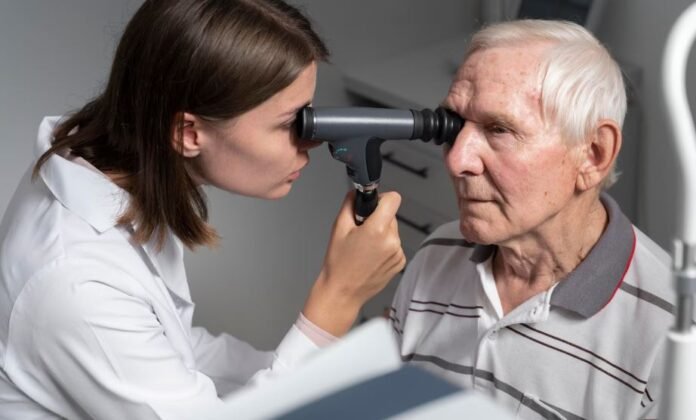
Scientists can now detect early signs of cognitive decline in your eyes — years before symptoms appear.
KEY STATISTICS
- A 2023 study in JAMA Ophthalmology found that retinal imaging could identify Alzheimer’s-related changes up to 20 years before a clinical diagnosis.
- According to the Alzheimer’s Association, 1 in 3 seniors dies with Alzheimer’s or another dementia — but the disease begins silently decades earlier.
- Research published in The Lancet found that up to 40% of dementia cases are linked to modifiable risk factors that begin accumulating in your 20s and 30s.
You probably think of dementia as something to worry about in your 60s or 70s. But the changes that eventually lead to cognitive decline can begin quietly in your brain decades earlier — and remarkably, your eyes may be the first place those changes become visible. A routine eye exam may soon be one of the most powerful tools for catching dementia risk early enough to actually do something about it.
What Your Eyes Reveal
The retina is not just a sensory structure — it is a direct extension of the central nervous system. It shares the same embryonic origin as the brain and is connected to it via the optic nerve, which means changes in brain tissue are often mirrored in the retinal layer.
Researchers have found that amyloid plaques — the same protein deposits associated with Alzheimer’s disease — accumulate in the retina as well as in brain tissue. Using high-resolution retinal imaging, scientists can now detect these deposits non-invasively, without a spinal tap or expensive PET brain scan.
Retinal imaging also measures the thickness of different nerve fiber layers in the eye. Thinning of these layers has been associated with accelerated neurodegeneration, including changes seen in early Alzheimer’s, Parkinson’s disease, and vascular dementia. This makes the retina a genuinely useful window into what is happening inside your brain.
Why Your 30s Matter
Most people in their 20s and 30s assume dementia prevention is irrelevant to them. That assumption is quietly dangerous. The neurological and vascular processes that drive dementia begin accumulating damage long before any memory loss or cognitive symptom appears.
Risk factors like chronic inflammation, high blood pressure, poor sleep, insulin resistance, and smoking all begin affecting the brain’s blood vessels during early adulthood. By the time you are in your 40s, some of that damage is already years old.
This is why the 25–35 age window matters so much. Lifestyle changes made now — before significant damage has occurred — carry far greater protective value than interventions made at 55 or 60. The retina gives researchers and clinicians a way to see that early damage and motivate earlier action.
Warning Signs to Watch
- Frequent difficulty finding words during normal conversation — not just an occasional slip
- Recurring brain fog that does not resolve with rest or better sleep
- Noticeable changes in your ability to concentrate for longer than 20–30 minutes
- A family history of early-onset dementia or Alzheimer’s disease in a parent or grandparent
- Persistent high blood pressure, blood sugar irregularities, or untreated sleep apnea — all known contributors to vascular brain damage
What Actually Helps
The most important thing to understand is that retinal screening is a detection tool, not a treatment — but what it reveals can guide meaningful prevention. Cardiovascular health and brain health are deeply connected, so protecting one protects the other.
A diet rich in omega-3 fatty acids, leafy greens, and antioxidants supports both retinal integrity and neurological health. The Mediterranean diet in particular has consistent research backing for reducing dementia risk over time.
Regular aerobic exercise increases blood flow to the brain and supports the growth of new neural connections. Even 150 minutes of moderate activity per week — a brisk walk most days — has been shown in multiple studies to slow cognitive aging. Managing blood pressure, blood sugar, and sleep quality in your 30s may be the single most impactful set of actions you can take for your brain’s long-term health.
Action Plan Checklist
- Book a comprehensive eye exam this year — ask specifically about retinal health and whether advanced imaging such as OCT (optical coherence tomography) is available
- Know your numbers: get blood pressure, fasting glucose, and cholesterol checked if you have not done so in the past year
- Add omega-3s to your diet through fatty fish like salmon or sardines at least twice per week, or discuss supplementation with your doctor
- Prioritise 7–9 hours of sleep consistently — poor sleep is one of the fastest ways to accelerate amyloid buildup in the brain
- Reduce or eliminate smoking and limit alcohol consumption — both are independently linked to retinal damage and accelerated neurodegeneration
The Blood Sugar Connection
There is one overlooked factor that connects your retinal health and your dementia risk in a way most people never consider: chronic blood sugar dysregulation. You do not need to be diabetic for this to be relevant.
Even mild, repeated blood sugar spikes — from ultra-processed foods, skipped meals, or low physical activity — cause low-grade inflammation in blood vessel walls throughout the body, including those supplying the retina and the brain. Over years, this quietly degrades the tiny vessels that keep both organs healthy.
Researchers now use the term “type 3 diabetes” informally to describe the insulin resistance patterns observed in Alzheimer’s brain tissue. Keeping blood sugar stable through balanced meals, reduced refined carbohydrates, and regular movement is therefore one of the most direct ways to protect both your vision and your cognitive future.
Bottom Line
Your eyes are not just for seeing — they are a real-time readout of your brain’s health. Emerging retinal screening technology means that early dementia risk may one day be detected at a standard eye appointment, long before symptoms appear. The habits you build in your 20s and 30s around sleep, blood sugar, cardiovascular health, and diet are your most powerful tools for making sure what those scans reveal stays healthy.
Always consult a qualified healthcare provider before making changes to your health routine.
Sources
- Retinal imaging as a biomarker for Alzheimer’s disease — JAMA Ophthalmology
- Dementia prevention, intervention, and care: 2020 report of the Lancet Commission — The Lancet
- Amyloid-beta deposits in the retina of patients with Alzheimer’s disease — National Library of Medicine / PubMed
- Alzheimer’s disease facts and figures — Alzheimer’s Association
- Modifiable risk factors for dementia and cognitive decline — Harvard Health Publishing

