
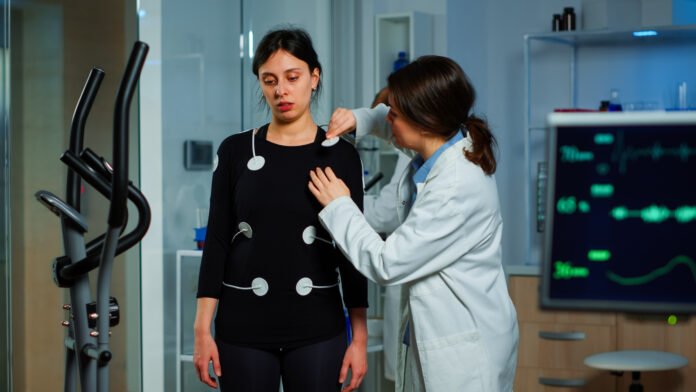
The single most powerful predictor of how long you will live has nothing to do with your weight, cholesterol, or blood pressure — and most people have never heard of it.
KEY STATISTICS
- A landmark study in JAMA Network Open found that low cardiorespiratory fitness is associated with a higher risk of all-cause mortality than smoking, diabetes, or heart disease.
- Research published in the Mayo Clinic Proceedings showed that individuals with elite VO2 max scores had a 5x lower risk of death compared to those in the lowest fitness category.
- The American Heart Association now formally recognises cardiorespiratory fitness as a clinical vital sign — yet most routine health checks never test it.
There is a number that predicts your risk of dying from almost any cause better than nearly any other health metric your doctor currently measures. It is called VO2 max, and it reflects how efficiently your body uses oxygen during exercise. The remarkable part is that you can improve it at any age — including right now, in your twenties and thirties.
What VO2 Max Measures
VO2 max stands for maximal oxygen uptake. It measures the maximum rate at which your heart, lungs, and muscles can consume oxygen during intense exercise.
When this number is high, your cardiovascular system is efficient, your cells produce energy cleanly, and your organs are well supplied with oxygenated blood. When it is low, your body is working harder than it should just to get through the day.
Researchers now understand that VO2 max reflects the health of almost every major system in the body simultaneously — cardiac output, lung capacity, mitochondrial density, and circulatory efficiency. This is why it predicts mortality so powerfully. It is not measuring one risk factor.
It is measuring the overall vitality of your entire biological engine.
Why Your Thirties Matter
Most people in their twenties and early thirties assume heart disease and mortality risk are decades away. That assumption is where the danger lives.
VO2 max begins declining around age 25 at roughly 1 percent per year in sedentary individuals. By your mid-thirties, without deliberate training, you can have lost meaningful cardiorespiratory capacity without feeling any obvious symptoms.
The habits you build now — or fail to build — directly determine where your VO2 max sits at 45, 55, and 65. The research is consistent: people who maintain or improve their cardiorespiratory fitness in early adulthood enter middle age with dramatically lower risk of heart disease, stroke, metabolic disorders, and cognitive decline.
Warning Signs to Watch For
- You feel breathless climbing two or three flights of stairs at a normal pace
- Moderate exercise such as a brisk 20-minute walk leaves you winded or unusually fatigued
- Your resting heart rate is consistently above 80 beats per minute
- You notice your exercise performance has declined over the past year without a clear reason
- You feel physically drained after activities that used to feel easy or routine
What Actually Helps
The most effective way to improve VO2 max is through structured cardiovascular training — specifically a combination of moderate steady-state cardio and high-intensity interval training, or HIIT.
HIIT has the strongest evidence behind it. Short bursts of near-maximum effort followed by recovery periods force your heart and lungs to adapt, increasing stroke volume and improving how efficiently your muscles extract oxygen from the blood.
A practical starting point is two HIIT sessions per week — such as 4 to 6 rounds of 30 seconds hard effort followed by 90 seconds easy recovery — combined with two to three longer moderate sessions like a 30 to 45 minute run, cycle, or swim.
Strength training also contributes. Building lean muscle mass improves mitochondrial density, which supports better oxygen utilisation even at rest. You do not need to choose between cardio and weights — you need both.
Action Plan Checklist
- Add two HIIT sessions per week using any cardio modality — cycling, running, rowing, or swimming all work equally well
- Build a base of 150 minutes of moderate-intensity cardio per week as recommended by the American Heart Association
- Track your resting heart rate each morning — a downward trend over weeks is a direct sign your VO2 max is improving
- Use a fitness tracker or smartwatch that estimates VO2 max and log your score monthly to measure progress
- Reduce prolonged sitting by standing or walking for at least 5 minutes every hour — even small activity breaks support cardiovascular adaptation
The Sleep Connection Nobody Mentions
One factor that almost nobody connects to VO2 max is sleep quality. Poor sleep consistently suppresses cardiovascular recovery, raises resting heart rate, and blunts the adaptation your body makes after exercise.
When you train hard and sleep poorly, your heart and lungs do not rebuild as efficiently. The training stimulus is there — but the physiological response is dampened.
Aiming for seven to nine hours of consistent, quality sleep is not just good for energy. It is an active part of improving your cardiorespiratory fitness. Treat sleep as a training tool, not an afterthought.
Bottom Line
VO2 max is not a number reserved for elite athletes. It is a reflection of how well your body sustains life — and the evidence is now clear that improving it is one of the most powerful investments you can make in your long-term health. Start with consistent cardio, add intervals, prioritise sleep, and watch one of your most important health metrics move in the right direction.
Always consult a qualified healthcare provider before making changes to your health routine.
Sources
- Cardiorespiratory Fitness and All-Cause Mortality in Healthy Men and Women — JAMA Network Open
- Association of Cardiorespiratory Fitness with Long-term Mortality Among Adults Undergoing Exercise Treadmill Testing — Mayo Clinic Proceedings
- Importance of Assessing Cardiorespiratory Fitness in Clinical Practice — A Case for Fitness as a Clinical Vital Sign — Circulation, American Heart Association
- High-Intensity Interval Training and Cardiorespiratory Fitness in Adults — British Journal of Sports Medicine
- Sleep Duration and Cardiovascular Risk Factors in Young Adults — National Institutes of Health, National Library of Medicine

