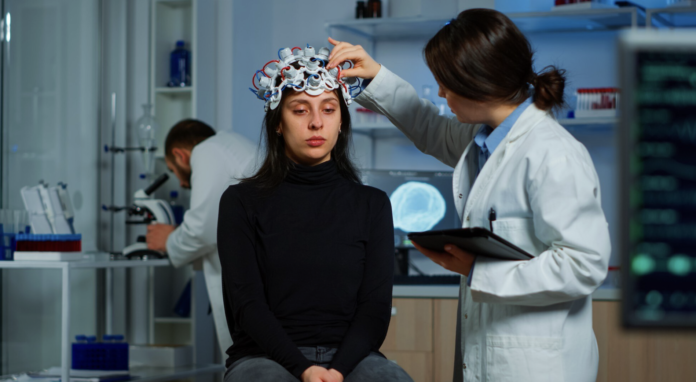
How trauma to specific brain regions can suddenly awaken extraordinary artistic abilities in ordinary people.
KEY STATISTICS
- Studies show 10% of traumatic brain injury patients develop new creative abilities they never had before.
- Damage to the left anterior temporal lobe increases artistic skills in 1 in 2,000 brain injury cases.
- Acquired savant syndrome affects roughly 40 documented cases worldwide, with most involving sudden artistic talent.
Jason Padgett was a college dropout who cared more about partying than learning. Then two men attacked him outside a karaoke bar, leaving him with a severe concussion. When he recovered, he could suddenly see complex mathematical patterns everywhere and became obsessed with drawing intricate geometric fractals — despite never showing artistic interest before.
How Brain Trauma Creates Artists
Acquired savant syndrome occurs when brain trauma damages inhibitory circuits in the left hemisphere. This damage can “unlock” dormant abilities in the right hemisphere that were previously suppressed.
The left anterior temporal lobe normally acts like a filter, suppressing detailed sensory processing to help us focus on big-picture thinking. When this region is damaged, the brain suddenly gains access to raw sensory data it usually ignores.
Neuroimaging studies show that newly creative brain injury patients have increased activity in areas responsible for visual processing, pattern recognition, and fine motor control. Their brains literally rewire themselves to process information differently.
Why Young Adults Are Vulnerable
Adults in their twenties and thirties face the highest risk for traumatic brain injuries due to active lifestyles and risk-taking behaviors. Car accidents, sports injuries, and physical altercations peak during these years.
Your brain is still developing until age 25, making young adults particularly vulnerable to lasting changes from trauma. The neural pathways that determine creativity and cognitive processing are still forming during this critical period.
While most brain injuries cause problems, the rare cases of enhanced creativity remind us how little we understand about our brain’s hidden potential. The same neural flexibility that makes young adults vulnerable also makes them more likely to experience dramatic positive changes.
Signs of Enhanced Creativity
- Sudden intense interest in art, music, or mathematics after head trauma
- Obsessive attention to visual details and patterns you never noticed before
- Compulsive need to create or draw, especially geometric or mathematical designs
- Enhanced ability to see relationships between colors, numbers, or spatial concepts
- Dramatic personality changes toward perfectionism or artistic pursuits
Nurturing Your Creative Brain
You can’t intentionally trigger acquired savant syndrome, nor should you want to — brain injuries carry serious risks. However, you can nurture your existing creative potential through targeted brain training.
Regular drawing practice, even simple sketching, strengthens neural pathways between visual processing and motor control. Learning a musical instrument creates similar cross-hemispheric connections that enhance pattern recognition.
Meditation and mindfulness practices can temporarily quiet left-brain analytical functions, allowing right-brain creativity to emerge more naturally. Many artists report their best ideas come during relaxed, unfocused states.
Your Creative Development Plan
- Practice drawing for 15 minutes daily, focusing on detailed observation rather than artistic skill
- Learn a musical instrument or take up photography to strengthen visual-spatial processing
- Try meditation or mindfulness exercises to quiet analytical thinking
- Engage in pattern-based activities like puzzles, origami, or geometry
- Protect your brain with helmets during sports and safe driving practices
The Sleep-Creativity Connection
Sleep plays a crucial role in creative breakthroughs by allowing unusual neural connections to form. During REM sleep, your brain makes random associations between normally unconnected ideas.
Many acquired savants report vivid dreams and disrupted sleep patterns after their injuries. This suggests that altered sleep architecture might contribute to their enhanced abilities.
Prioritizing quality sleep and even strategic napping can help your brain make the creative connections that trauma patients experience artificially. The key is giving your mind permission to wander without analytical interference.
Bottom Line
While acquired savant syndrome represents an extreme and rare outcome of brain trauma, it reveals the extraordinary creative potential lying dormant in all of us. Rather than waiting for an accident to unlock these abilities, you can actively nurture your brain’s creative capacity through practice, mindfulness, and protecting the neural flexibility you already have.
Always consult a qualified healthcare provider before making changes to your health routine.
Sources
- Acquired savant syndrome and traumatic brain injury — Frontiers in Neurology
- The sudden emergence of artistic talent following brain injury — Journal of Neuropsychiatry
- Neural mechanisms underlying acquired savant abilities — Brain and Cognition