
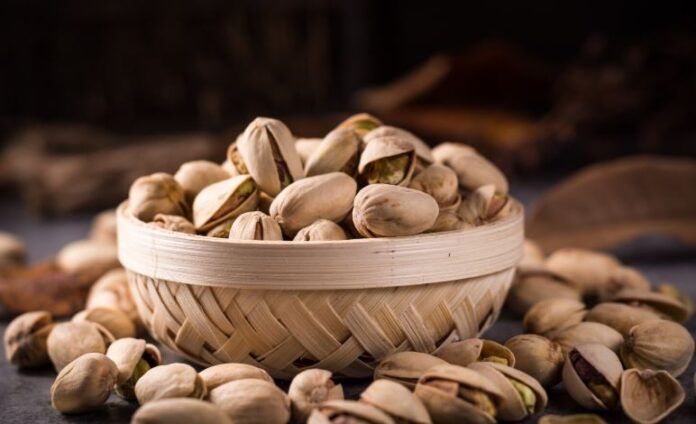
The post-workout snack hiding in plain sight may be doing more for your muscles overnight than anything else in your kitchen.
KEY STATISTICS
- A 2023 study found that pistachio consumption after resistance exercise increased muscle protein synthesis markers by approximately 20% more than an equivalent calorie serving of other tree nuts.
- Pistachios contain all nine essential amino acids, making them one of the only plant foods classified as a complete protein source — a distinction shared by very few nuts.
- According to research published in Nutrients, adults who ate pistachios post-exercise showed measurably faster overnight recovery compared to a carbohydrate-matched control group.
You finish your workout, reach for something quick, and probably do not think twice about what you grab. But emerging research suggests the humble pistachio may be one of the most underrated recovery tools available — not because of what it does in the gym, but because of what it does while you are sleeping.
How Overnight Muscle Repair Works
During sleep, your body enters its primary muscle repair window. Growth hormone surges, inflammation from exercise begins to resolve, and muscle protein synthesis — the process of rebuilding damaged muscle fibres — runs at its highest rate of the day.
For that synthesis to happen efficiently, your body needs a steady supply of amino acids. Most people do not realise that what they eat in the two to three hours before bed directly influences how well that overnight repair process runs.
Pistachios are unusual among nuts because they contain all nine essential amino acids, including leucine, which is the specific amino acid that triggers the muscle protein synthesis pathway. This is why pistachios behave more like a protein food than a fat-and-fibre snack.
Why Your Recovery Is Slowing
Adults between 25 and 35 are often at a frustrating crossroads. They are old enough for muscle recovery to start taking slightly longer than it did at 20, but young enough to assume everything is still fine.
After the mid-twenties, anabolic hormone levels — particularly growth hormone and testosterone — begin a slow but measurable decline. Recovery becomes more dependent on nutritional support, not just exercise volume.
This is also the decade when most people are training harder, sitting at desks for longer, and sleeping less. That combination creates a genuine recovery deficit that builds quietly over months and years if the nutritional side is not addressed.
Warning Signs to Watch For
- You feel sore for more than 48 hours after a moderate workout, even when sleep is adequate
- Your strength gains have plateaued despite consistent training and no change in programme
- You wake up feeling tired rather than rested after nights that followed a late workout
- You experience muscle tightness or heaviness in the morning that takes longer than usual to clear
- Your appetite for protein foods has dropped, or you regularly skip post-workout nutrition
What Actually Helps
Adding pistachios to your post-workout routine does not require a dramatic overhaul. A serving of around 40 to 50 grams — roughly a small handful — eaten within two hours of finishing exercise appears to be where the benefit begins.
That window matters because muscle cells are more receptive to amino acid uptake during that period. Waiting until the following morning means the primary synthesis window has already closed.
Pistachios also contain magnesium, which supports muscle relaxation and deep sleep quality. The combination of leucine-rich protein and magnesium in a single food makes pistachios a practical dual-action recovery snack rather than just a source of convenient calories.
Action Plan Checklist
- Eat a 40–50g serving of unsalted pistachios within two hours of finishing resistance or cardio training
- Pair pistachios with a small amount of complex carbohydrate such as oat crackers or a piece of fruit to support insulin-mediated amino acid uptake
- Avoid roasted and salted varieties where possible — raw or dry-roasted unsalted pistachios retain more of their nutritional profile
- Track your post-workout snack consistently for four weeks and note changes in next-day soreness and energy on waking
- Do not rely on pistachios alone for total daily protein — use them as a targeted recovery supplement alongside a varied, protein-adequate diet
The Overlooked Sleep Factor
There is one factor that determines whether any post-workout nutrition actually works, and most people overlook it entirely: sleep duration.
Muscle protein synthesis is a sleep-dependent process. Eating the right foods before bed is only effective if you are achieving seven to nine hours of quality sleep. Without sufficient deep sleep, growth hormone secretion drops significantly, and the repair window your pistachios are supporting simply does not open properly.
If you are consistently sleeping fewer than six hours, no snack — pistachio or otherwise — will fully compensate. Optimising sleep alongside post-workout nutrition is not optional; it is the mechanism through which the nutrition actually works.
Bottom Line
Pistachios are not a supplement or a trend — they are a whole food with a genuinely useful amino acid and micronutrient profile that supports overnight muscle repair in a way most snacks do not. For adults in their late twenties and thirties who are training regularly and want faster, more consistent recovery, adding a small handful after exercise is one of the most practical, evidence-supported changes you can make right now.
Always consult a qualified healthcare provider before making changes to your health routine.
Sources
- Pistachio consumption and muscle protein synthesis following resistance exercise — Nutrients Journal
- Dietary protein and muscle mass: translating science to application and health benefit — Nutrients Journal
- Leucine as a pharmaconutrient in health and disease — Current Opinion in Clinical Nutrition and Metabolic Care
- Sleep and muscle recovery: endocrinological and molecular basis for a new and promising hypothesis — Medical Hypotheses
- Protein timing and its effects on muscular hypertrophy and strength in individuals engaged in weight-training — Journal of the International Society of Sports Nutrition

