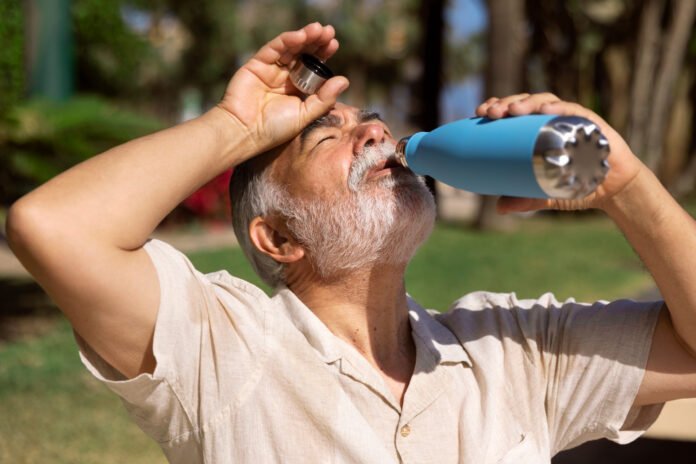
Why summer heat affects your heart, hydration, and energy differently now—and what to do about it
KEY STATISTICS
- Adults over 45 face compounded heat risk due to changes in how the body regulates temperature and fluid balance
- Heat-related illness can progress quickly, sometimes without obvious early warning signs in older adults
- Certain medications commonly taken by this age group can interfere with your body’s natural cooling response
You’ve always handled summer heat fine. But lately, an afternoon in the sun leaves you exhausted, dizzy, or with a headache that won’t quit. This isn’t weakness—it’s biology.
After 45, your body’s heat management system changes in ways many people don’t see coming. Your sweat response weakens, your thirst cue becomes less reliable, and medications you may take can throw off your internal cooling. Understanding these shifts and taking small, targeted steps now can mean the difference between enjoying summer and spending it sidelined.
How Your Body Regulates Heat
Heat illness isn’t just about temperature—it’s about how your body moves heat away from your core. Your cardiovascular system, nervous system, and kidneys all work together to keep you safe. As we age, this system becomes less efficient at detecting heat stress and responding quickly.
- Sweat glands become less responsive, reducing your body’s primary cooling mechanism
- Blood vessels respond more slowly to redirect blood toward the skin for heat release
- Thirst sensation dulls, making dehydration easier to miss until symptoms appear
- Kidney function changes can affect electrolyte balance and fluid retention during heat exposure
Why This Age Group Faces Unique Risk
Your age group is not automatically at higher risk—but the combination of common changes in your 40s and 50s creates a real vulnerability. This includes shifts in how your heart pumps, medication side effects, and sometimes reduced physical activity, all of which compound heat stress.
- Reduced cardiovascular efficiency means your heart works harder to pump blood and cool your body
- Blood pressure medications, diuretics, and certain antidepressants can impair your heat regulation
- Chronic conditions like diabetes or heart disease amplify heat sensitivity and dehydration risk
- Loss of muscle mass reduces your body’s ability to regulate internal temperature effectively
Warning Signs to Watch For
- Dizziness, lightheadedness, or feeling faint—even when sitting down in shade
- Nausea, headache, or muscle cramps that come on during or after heat exposure
- Confusion, irritability, or changes in mental clarity you don’t usually experience
- Heavy sweating followed by suddenly *no* sweating—a sign your cooling system is failing
- Weak or rapid pulse, shortness of breath, or chest discomfort in hot conditions
- Fatigue so severe you can’t complete normal activities, even after rest
- Skin that feels cold and clammy despite the heat around you
What Actually Helps in Heat
You don’t need to hide indoors all summer. Simple, deliberate changes to hydration, activity timing, and clothing work well for this age group. The key is staying ahead of heat stress rather than waiting to feel symptoms.
- Drink water consistently throughout the day—before, during, and after time outdoors, not just when thirsty
- Shift outdoor activities to early morning or evening; avoid peak heat hours (11 a.m. to 4 p.m.)
- Wear light-colored, loose-fitting, moisture-wicking clothing; cotton and linen work better than synthetics in humidity
- Take regular cool breaks in air-conditioning or shade; even 10 minutes indoors resets your core temperature
Your Heat Safety Checklist
- Review medications with your doctor—ask which ones affect hydration or heat tolerance, especially diuretics and blood pressure meds
- Test your home’s cooling setup before a heat wave hits; ensure air-conditioning works or plan alternative cool spaces nearby
- Set a phone reminder to drink water every hour during hot days, not waiting for thirst
- Wear a simple wristwatch or fitness tracker that alerts you to unusual heart rate changes during heat exposure
- Identify a neighbor, friend, or family member to check on during heat events; establish a buddy system
- Stock electrolyte beverages (coconut water, sports drinks) alongside plain water for longer outdoor time
- Know the location of air-conditioned public spaces (libraries, malls, community centers) within 10 minutes of home
Sleep Quality and Heat Stress
Heat doesn’t stop affecting you after sunset. Poor sleep from overheating or dehydration reduces your body’s ability to recover and adapt to heat the next day. A single night of disrupted sleep can reduce your body’s ability to recover and may increase vulnerability to heat illness the following afternoon.
- Keep bedroom temperature below 70°F if possible; use fans strategically to create air flow without direct drafts
- Hydrate before bed, but not so much that you’re waking to urinate frequently—balance is key
- Wear breathable sleepwear and use cotton sheets; avoid heavy blankets during hot months
- If air-conditioning isn’t available, place a bowl of ice in front of a fan to create cooler air circulation
Bottom Line
Heat sensitivity after 45 is real, but it’s not inevitable. By understanding how your body’s cooling system has shifted, watching for early warning signs, and making small adjustments to hydration, timing, and clothing, you can keep summer enjoyable and safe. The goal isn’t to avoid heat altogether—it’s to respect it and plan ahead so your body can handle it well.
365 Live Long — always consult a qualified healthcare provider before making changes to your health routine.
Sources
- Health risks from extreme heat — Google News — Health risk alerts
- Heat-related illness in older adults — CDC — General guidance on heat illness and prevention
- Aging and temperature regulation — Mayo Clinic — General resource on age-related changes in thermoregulation