
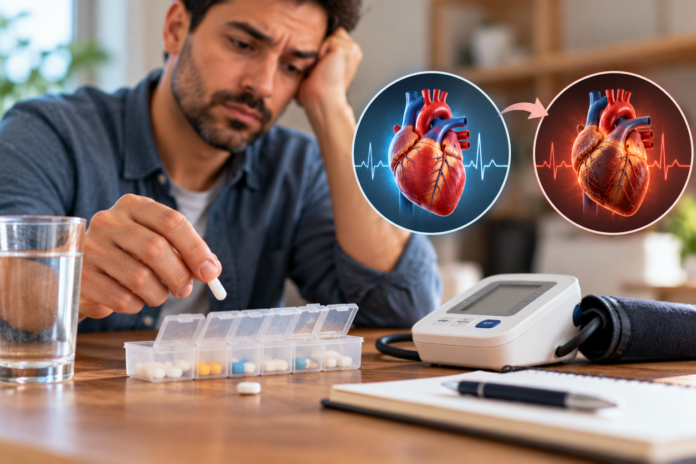
*Why missing blood pressure doses may erase months of heart health gains*
KEY STATISTICS
- Missing even a few doses of blood pressure medication can significantly reduce cardiovascular protection, according to recent health research.
- Young adults aged 25–35 face unique adherence challenges due to irregular routines, busy schedules, and lack of symptom awareness.
- Consistent medication adherence is essential to maintain the heart-protective benefits doctors prescribe for long-term health.
You start a blood pressure medication, your numbers improve, and your doctor gives you the all-clear. So you think: one skipped dose won’t hurt. But research suggests otherwise.
Missing even occasional doses of blood pressure medication can undo weeks or months of cardiovascular benefit—leaving your heart nearly as vulnerable as if you’d never taken the drug at all. For people in their late twenties through mid-thirties who are just beginning blood pressure management, this reality is especially important to understand, because the habits you form now set the stage for decades of heart health ahead.
How Blood Pressure Meds Work
Blood pressure medication works by maintaining consistent protection against the forces that damage blood vessel walls over time. When you take doses regularly, your arteries stay elastic, your heart doesn’t overwork, and your risk of clots and ruptures stays low. Miss doses, and that protection collapses quickly.
- Blood pressure drugs lower the force pushing against artery walls, preventing stiffness and scarring over years.
- Consistent dosing maintains a stable drug level in your bloodstream—gaps create fluctuating protection windows.
- Even short gaps allow blood pressure to spike, which can trigger inflammation and micro-damage to vessel linings.
- The heart adapts to medication; inconsistent doses force it to repeatedly adjust, increasing strain.
Why Your Age Matters Most
Your twenties and early thirties are when many people first encounter high blood pressure or pre-hypertension, often before they feel sick. That makes it dangerously easy to deprioritize medication when life gets hectic. Unlike older adults managing multiple chronic conditions, you may not yet feel the daily stakes of consistency.
- Young adults often have no symptoms, making it tempting to skip doses without immediate consequences.
- Irregular work schedules, travel, and social commitments disrupt daily routines that anchor medication habits.
- Early-stage high blood pressure is reversible with perfect adherence—but poor consistency wastes this window.
- Habits formed now influence medication behavior for the next 50+ years of your life.
Signs You May Be Missing Doses
- You can’t recall if you took today’s pill without checking your pill organizer or bottle.
- Your home blood pressure readings are creeping upward again despite being on medication.
- You’ve refilled your prescription late more than once in the past six months.
- You forget doses when traveling, on weekends, or during busy work weeks.
- Your doctor mentions your blood pressure has worsened at your last two appointments.
- You’ve stopped taking the medication on your own because you ‘feel fine’ without it.
Diet & Exercise Still Matter
Lifestyle changes like diet and exercise matter enormously, but they work best alongside consistent medication if you’ve been prescribed one. The combination approach—not one or the other—is what actually protects your heart over decades.
- A low-sodium diet (under 2,300 mg daily) enhances medication effectiveness and prevents blood pressure spikes on off days.
- 150 minutes of moderate aerobic activity weekly strengthens your heart’s efficiency and improves medication response.
- Regular exercise and consistent dosing together reduce your cardiovascular risk far more than either alone.
- Stress management and adequate sleep improve medication adherence and lower baseline blood pressure naturally.
Your Adherence Action Plan
- Set a daily phone alarm or app reminder at the exact time you take your medication—treat it like a recurring calendar event.
- Use a pill organizer or smart pill bottle that alerts you if you forget; check it every morning before coffee.
- Keep your medication bottle visible on your bathroom counter or kitchen table, not hidden in a cabinet.
- Ask your doctor about once-daily formulations if you currently take twice-daily doses; fewer pills = fewer chances to miss.
- Schedule your prescription refill one week early, so running out doesn’t become an excuse to skip doses.
- Tell a family member or roommate to remind you if they notice you haven’t taken your pill—peer accountability helps.
- Review your blood pressure log at every doctor visit to spot patterns of missed doses or inconsistency.
The Sleep & Stress Connection
Sleep deprivation and chronic stress both worsen blood pressure and weaken your motivation to stick with medication. If you’re struggling with adherence, your sleep and stress levels may be the real barriers, not willpower.
- Poor sleep raises cortisol and adrenaline, which increase blood pressure and make medication less effective.
- Stress and fatigue reduce executive function, making it harder to remember daily habits—including your pill.
- Seven to nine hours of consistent sleep improves both blood pressure control and medication adherence dramatically.
- Addressing sleep quality and stress management may be the fastest way to make medication adherence automatic.
Bottom Line
Missing blood pressure medication doses is not a minor slip—it can erase months of cardiovascular protection in days. For people in your twenties and thirties, consistency now builds the foundation for a healthier heart in midlife and beyond. The good news: adherence is entirely within your control.
Simple strategies like phone reminders, pill organizers, and involving a trusted person in your routine can make perfect adherence automatic. Your future self will thank you for taking this seriously today.
365 Live Long — always consult a qualified healthcare provider before making changes to your health routine.
Sources
- Missing Blood Pressure Medication May Cut Heart Benefits to Almost Zero — Everyday Health / Google News
- General guidance on hypertension and medication adherence — CDC
- Blood pressure management and cardiovascular risk reduction — Mayo Clinic

