
*How insomnia quietly rewires what and when you eat—and what you can actually do about it*
KEY STATISTICS
- People experiencing insomnia symptoms often report significantly different eating patterns and physical activity levels compared to those sleeping well.
- Many adults in their 20s and 30s don’t realize their late-night eating habits and exercise avoidance may be driven by poor sleep, not just willpower.
- Understanding the link between sleep problems and lifestyle choices opens a path to sustainable change that doesn’t start with strict dieting.
You’ve tried the diet. You’ve downloaded the fitness app. You swear you’ll hit the gym tomorrow, but 11 p.
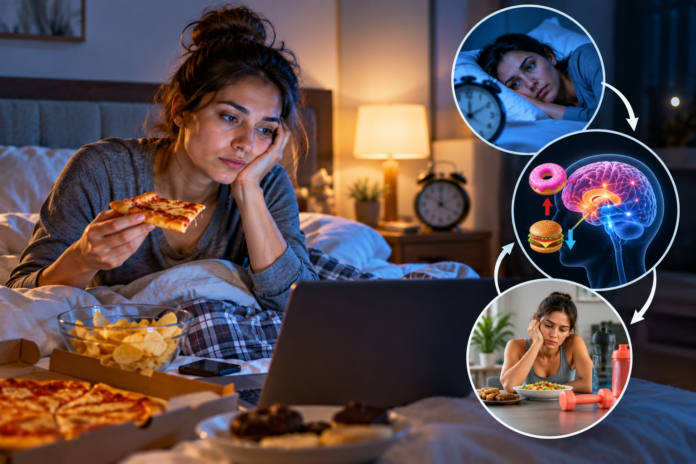
m. rolls around and you’re stress-eating pizza in bed, wide awake. Here’s what nobody tells you: that cycle might not be a character flaw—it might be insomnia quietly rewriting your relationship with food and movement.
A growing body of research shows that people struggling with sleep don’t just feel tired; they experience genuine shifts in hunger hormones, energy levels, and food choices that make healthy eating feel impossibly hard. The good news? Understanding this connection is the first step to breaking free.
How Sleep Loss Hijacks Your Choices
When insomnia takes hold, your body’s chemistry changes in ways that directly influence what you eat and how you move. Sleep loss doesn’t just make you tired; it alters hormone levels that control hunger and appetite, while also draining the physical and mental energy needed for exercise. Your brain is essentially running on fumes, pushing you toward quick-energy foods and away from the gym.
- Poor sleep elevates cortisol (stress hormone), which can increase cravings for high-calorie, high-sugar foods for quick energy.
- Sleep deprivation lowers leptin (fullness hormone) and raises ghrelin (hunger hormone), making you feel hungrier even after eating.
- Reduced sleep impairs prefrontal cortex function, weakening your ability to resist cravings and stick to plans you’d normally follow.
- Chronic poor sleep drains glycogen stores, making your body crave carbohydrates and making exercise feel physically exhausting.
Why Your Twenties and Thirties Are Vulnerable
Your 20s and 30s are years of high stress, irregular schedules, and late-night habits—a perfect storm for insomnia that gets mistaken for motivation problems. This age group often blames themselves for poor diet choices and sedentary behavior, never connecting it back to the sleep they’re losing to work deadlines, scrolling, or anxiety. Unlike someone older with obvious medical conditions, you might not think to link your insomnia to your eating patterns at all.
- Young adults often have unpredictable sleep schedules due to work, school, or social demands, making insomnia feel ‘normal’ rather than a problem to solve.
- Cultural pressure to be ‘productive’ can mask insomnia symptoms—you push through tiredness instead of addressing the root cause.
- This age group frequently tries restrictive diets while sleep-deprived, multiplying the challenge and ensuring failure that feels personal, not physiological.
- Hormonal sensitivity in your 20s and 30s means sleep loss hits harder; your body’s hunger signals become more chaotic than they might be later in life.
Signs Your Insomnia Is Driving Your Food Choices
- Eating much later in the evening than usual, especially high-calorie or sugary foods, while feeling stuck awake.
- Skipping planned exercise sessions but having energy for late-night activities—a sign fatigue is selective, not total.
- Intense cravings for carbs or caffeine that feel impossible to resist, paired with poor sleep the night before.
- Eating the same portion sizes but feeling hungry sooner, or finishing meals without remembering if you enjoyed them.
- Waking up groggy with no motivation to move, yet feeling wired and hungry by mid-afternoon.
- Noticing your snacking increases significantly on nights you sleep poorly, especially on subsequent days.
- Feeling frustrated that ‘willpower’ isn’t working, even though your habits were manageable when you were sleeping better.
Diet and Movement Changes That Actually Stick
The key is not to add more discipline—it’s to remove the friction that sleep deprivation creates. Research shows that when people address their insomnia, their food choices and activity levels often improve without additional effort. You’re not starting with a diet plan or a workout schedule; you’re starting with sleep as the foundation that makes everything else possible.
- Delay restrictive eating changes until sleep improves, then introduce them gradually; fighting poor sleep and hunger cravings simultaneously is unsustainable.
- Focus on regular movement (walks, stretching, low-intensity activity) rather than intense exercise, which can worsen insomnia if done too late in the day.
- Avoid caffeine after early afternoon and heavy meals close to bedtime—both disrupt sleep and trigger the hunger-craving cycle the next day.
- Eat protein-rich breakfasts and early lunches to stabilize blood sugar, reducing the afternoon energy crashes that lead to evening snacking.
Your Sleep-First Action Checklist
- Track your sleep for one week (bedtime, wake time, quality) before making any diet or exercise changes; see the baseline.
- Establish a consistent sleep schedule: same bedtime and wake time daily, even weekends, to reset your body’s hunger signals.
- Remove phones and screens from your bedroom and stop scrolling 30 minutes before bed; light exposure worsens insomnia and late-night eating.
- Keep your bedroom cool (around 65-68°F) and dark; temperature and darkness directly influence sleep quality and next-day appetite.
- After one week of better sleep, reassess your food cravings and energy levels; many shift naturally before you add any new ‘rules.’
- If insomnia persists after consistent sleep habits for 2-3 weeks, consider speaking with a healthcare provider about underlying causes.
- Practice one gentle movement session (15-20 min walk, yoga, or stretching) in the morning or early afternoon; avoid intense workouts within 6 hours of bedtime.
The Stress-Sleep-Eating Cycle You’re Missing
One of the most overlooked factors is how stress and anxiety directly fuel insomnia, which then fuels the behaviors you blame yourself for. You’re not weak when you eat poorly and skip the gym while sleep-deprived; you’re caught in a cycle that your nervous system has learned to repeat. Breaking that cycle means calming your mind first, not punishing your body with stricter rules.
- Anxiety about sleep (worrying you won’t fall asleep) often causes insomnia more than any single habit; acceptance and consistency quiet this fear.
- Stress eating during insomnia serves a real purpose—carbs temporarily boost serotonin, so your body is self-medicating for the low mood poor sleep creates.
- Breaking the cycle requires self-compassion, not shame; guilt about eating poorly while sleep-deprived only increases cortisol and worsens insomnia.
- Mindfulness, deep breathing, or gentle stretching before bed addresses both the nervous system and the next-day food choices that follow poor sleep.
Bottom Line
Your insomnia isn’t a character flaw, and neither are the eating and activity changes that follow it. When your brain and body are deprived of sleep, they respond predictably—with hunger, fatigue, and cravings that no amount of willpower can override. The breakthrough happens when you stop fighting your habits and start protecting your sleep.
Once you sleep better, the diet and exercise pieces often fall into place naturally, without the force and frustration that never worked before.
365 Live Long — always consult a qualified healthcare provider before making changes to your health routine.
Sources
- Diet and physical activity behaviours among people with insomnia symptoms: a cross-sectional survey to understand treatment needs and acceptability — Health Psychology and Behavioral Medicine
- General guidance on sleep and nutrition — NIH National Center for Sleep Medicine
- Stress hormones and appetite regulation — Harvard Health Publishing

